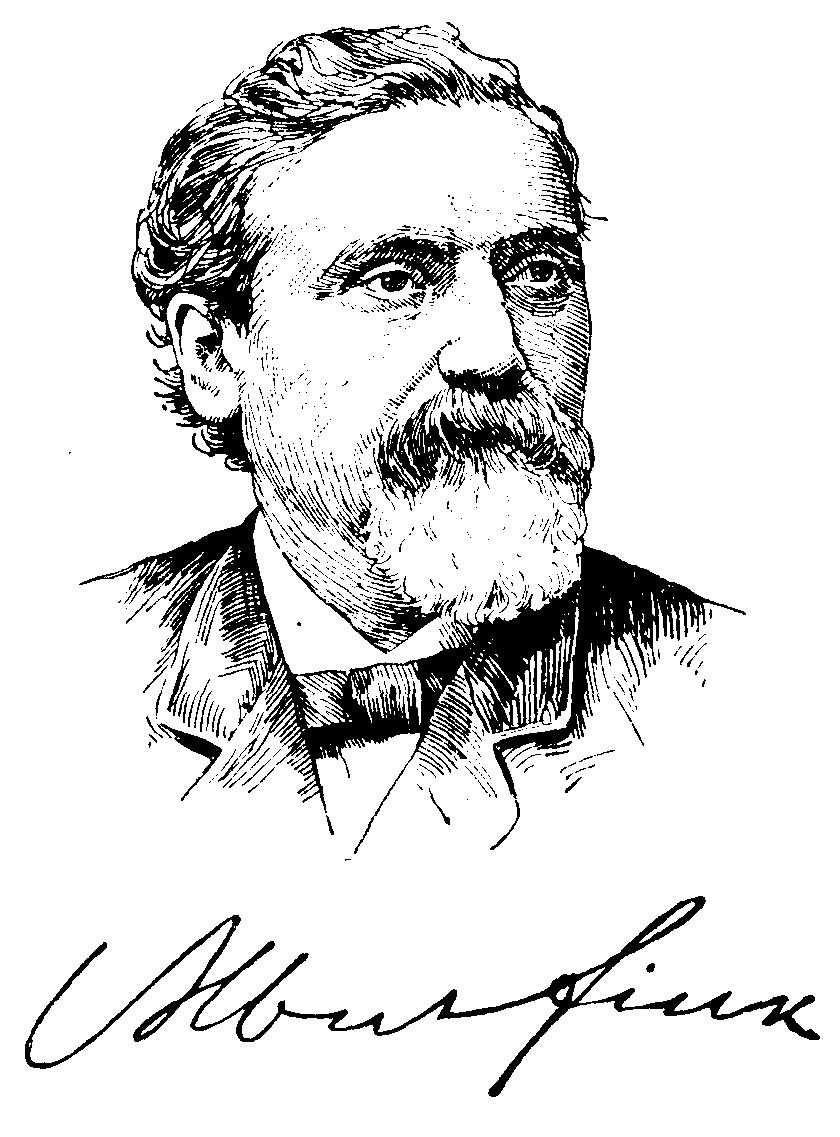
Appleton's Cyclopedia of American Biography, edited by James
Grant Wilson, John Fiske and Stanley L. Klos. Six volumes, New York: D. Appleton
and Company, 1887-1889 and 1999. Virtualology.com warns that these 19th Century
biographies contain errors and bias. We rely on volunteers to edit the historic
biographies on a continual basis. If you would like to edit this biographyplease
submit a rewritten biography in text form.
If acceptable, the new biography will be published above the 19th Century
Appleton's Cyclopedia Biography citing the volunteer editor
Virtual American Biographies
Over 30,000 personalities
with thousands of 19th Century illustrations, signatures, and exceptional life
stories. Virtualology.com
welcomes editing and additions to the
biographies. To become this site's editor or a contributor
Click Here
or e-mail Virtualology here.
FINK, Albert, civil engineer, born near Frankfort-on-the-Main, Germany, 27 October 1827. He was graduated at the Polytechnic institute, Darmstadt, in 1848, where he studied architecture, and immigrated to this country in 1849. He soon found employment as draughtsman in the service of the Baltimore and Ohio railroad, and became chief office assistant of Benjamin H. Latrobe. In this capacity he had the superintendence of the design and construction of buildings and bridges. That portion of the road between Cumberland and Wheeling being then in process of construction, Mr. Fink designed and supervised the building of the first important iron bridges in this country, that over the Monongahela River and the viaduct over Trey Run. After this portion of the road was completed, the section from Grafton to Parkersburg was begun, and many of the bridges and tunnels were built under his supervision. During this time Mr. Fink was also consulting engineer of the Norfolk and Petersburg railway, then building, and designed the bridge at Norfolk. In 1857 he left the service of the Baltimore and Ohio road, and became assistant to George McLeod, chief engineer of the Louisville and Nashville road. While connected with the latter corporation he built the Green River Bridge, that over the Cumberland at Nashville, and the great bridge over the Ohio at Louisville.
During the civil war he served as chief engineer and superintendent of the road and machinery department. During this period bridges were destroyed, connections severed, and the operating force kept constantly on the alert to guard against disaster and repair the gaps. The money loss involved by these depredations, the damage caused by which Mr. Fink was called upon to make good, was estimated at not less than $620,450. In 1865 he was made general manager, and in 1870 elected vice president. The financial crisis of 1873 led him to study the question of the cost of transportation, and he subsequently issued two pamphlets on the subject. About the same time the growing evils of unrestrained railway competition forced upon his mind the necessity for a remedy, and suggested the possibility of cooperation instead of warfare on the part of rival corporations. This led him to de vise his plan for the creation of the Southern railway and steamship association, which was adopted.
In October 1875, Mr. Fink resigned the office of vice president and general manager of the Louisville and Nashville road, and undertook the organization and management of the above named association, with the title of "general commissioner." In June 1877, he set out on a visit to his native land. Arrived in New York, he was waited on by Messrs. Vanderbilt, Jewett, Scott, and Garrett, presidents of the four great trunk lines of railway, who requested that he should remain in that City and attempt the organization of a "pool" of the westbound traffic of these roads, on the plan of a division of tonnage, which he had succeeded in putting into operation in the south. Mr. Fink accordingly accepted the commissionership of the trunk lines, and has been able to affect a complete revolution in the traffic management of the more important American railways.
Unauthorized Site:
This site and its contents are not affiliated, connected,
associated with or authorized by the individual, family,
friends, or trademarked entities utilizing any part or
the subject's entire name. Any official or affiliated
sites that are related to this subject will be hyper
linked below upon submission
and Evisum, Inc. review.
Please join us in our mission to incorporate The Congressional Evolution of the United States of America discovery-based curriculum into the classroom of every primary and secondary school in the United States of America by July 2, 2026, the nation’s 250th birthday. , the United States of America: We The
People. Click Here