Historical Biographies - A stan klos Company
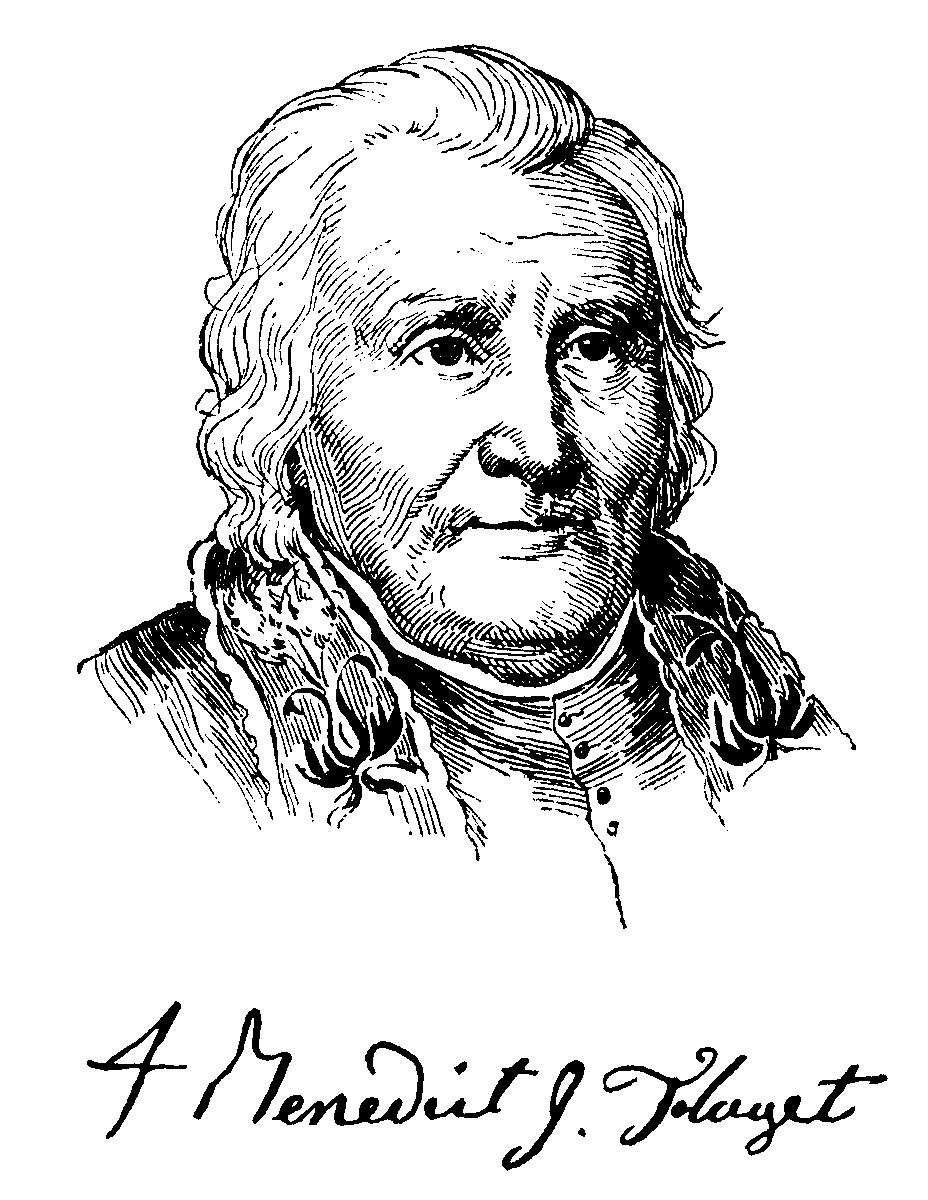
FLAGET, Benedict Joseph, R. C.
bishop, born in Contournat, Auvergne, France, 7 November 1763;
died in Nazareth, Kentucky, 11 February 1850. He was first educated in the
College of Billom, and afterward took a course of philosophy in the University
of Clermont. He then studied theology at the Sulpician College in the same City,
and became a member of that society in 1783. He continued his studies at Issy,
near Paris, and in 1788 was ordained priest. He was professor of dogmatic
theology for two years in the University of Nantes, and filled the same office
in the seminary of Angers at the beginning of the French revolution.
He was obliged to flee, and came in 1792 to Baltimore,
Maryland, whence he was at once sent by Dr. Carroll as chaplain to Vincennes,
then a military post in the northwest. During six months of delay at Pittsburgh
he acted as chaplain to the Catholics in the army of General Wayne, who was
organizing a force to attack the Indians. His congregation at Vincennes was
composed of 700 half-breeds, who were little better than savages, and his
success in civilizing them was considerable, He was recalled in 1795 and sent to
Georgetown College, where he was professor for three years.
In 1798 he accompanied two other Sulpicians to Havana for
the purpose of establishing a College in that City, but they met with opposition
from the native clergy, and were forbidden to perform any priestly function.
Father Flaget's two companions withdrew from the island, but, as he was
prostrated by yellow fever, they had to leave him behind.
On his recovery he became tutor to the sons of a wealthy
Cuban, and, on the death of the archbishop, was restored to his sacerdotal
privileges. During this period he rendered great service to the Orleans princes,
which was warmly reciprocated when Louis Philippe became king of the French.
Father Flaget left Havana in 1801, taking with him
twenty-three young Cubans to be educated at Georgetown College. The ensuing
seven years were spent in College duties and missionary labors. About the year
1804 he had petitioned to be received into the order of Trappists, the severest
in the Roman Catholic Church, but in 1808 he was appointed bishop of Bardstown,
Kentucky, and though he made several efforts to be released, and went to Europe
for this purpose, he was consecrated on his return in 1810.
He arrived at Bardstown in the following year. The number
of priests in his diocese, which extended from the Atlantic states to the
Mississippi, and from the lakes to the thirty-fifth parallel, was only seven,
with ten chapels, and six more in course of erection. To meet the demand for
priests he gave great attention to the diocesan seminary.
In 1817 he was able to send missionaries to the French and
Indian communities living around the great lakes, as well as to supply Indiana
and Michigan. By his request he was given an assistant, Father David, in 1819,
and in the following years he was engaged in a correspondence with Rome relative
to the creation of new sees. He was the first to suggest the erection of an
archiepiscopal see in the west. His advice was also sought by the Propaganda
with regard to affairs external to the Church in the United States, and a
controversy that existed for some time between the Sulpicians of Canada and the
bishop of Quebec was decided according to his suggestion. He attended the first
provincial council at Baltimore in 1829, and in the following year, owing to
declining health, resigned his see.
His resignation was accepted, but so great were the
opposition of the clergy and laity of the west that he was compelled to withdraw
it. During the cholera epidemic of 1833 his attention to the afflicted of all
classes and creeds excited general admiration.
In 1834 he received a new coadjutor in the person of Bishop
Chabrat. Up to this time he had erected four Colleges, a large female orphan
asylum and infirmary, eleven academies for girls, and had introduced three
religious sisterhoods and four religious orders of men.
He was in
Europe from 1835 till 1839, and in 1841 the seat of his diocese was removed from
Bardstown to Louisville. In 1843 he built a convent and hospital at his own
expense, and in 1848 was instrumental in establishing a colony of Trappists at
Gethsemane, fourteen miles from Bardstown. The remainder of his life, owing to
his infirmities and his extreme age, was passed in strict retire
Edited Appletons Encyclopedia by John
Looby, Copyright © 2001 VirtualologyTM
FLAGET, Benedict Joseph, R. C. bishop, born in Contournat, Auvergne, France, 7 November 1763; died in Nazareth, Kentucky, 11 February 1850. He was first educated in the College of Billom, and afterward took a course of philosophy in the University of Clermont. He then studied theology at the Sulpitian College in the same City, and became a member of that order in 1783. He continued his studies at Issy, near Paris, and in 1788 was ordained priest. He was professor of dogmatic theology for two years in the University of Nantes, and filled the same office in the seminary of Angers at the beginning of the French revolution. He was obliged to fly, and came in 1792 to Baltimore, Maryland, whence he was at once sent by Dr. Carroll as chaplain to Vincennes, then a military post in the northwest. During six months of delay at Pittsburgh he acted as chaplain to the Catholics in the army of General Wayne, who was organizing a force to attack the Indians. His congregation at Vincennes was composed of 700 half-breeds, who were little better than savages, and his success in civilizing them was considerable, He was recalled in 1795 and sent to Georgetown College, where he was professor for three years.
In 1798 he accompanied two other Sulpitians to Havana for the purpose of establishing a College in that City, but they met with opposition from the native clergy, and were forbidden to perform any priestly function. Father Flaget's two companions withdrew from the island, but, as he was prostrated by yellow fever, they had to leave him behind. On his recovery he became tutor to the sons of a wealthy Cuban, and, on the death of the archbishop, was restored to his sacerdotal privileges. During this period he rendered great service to the Orleans princes, which were warmly reciprocated when Louis Philippe became king of the French. Father Plaget left Havana in 1801, taking with him twenty-three young Cubans to be educated at Georgetown College. The ensuing seven years were spent in College duties and missionary labors. About the year 1804 he had petitioned to be received into the order of Trappists, the severest in the Roman Catholic Church, but in 1808 he was appointed bishop of Bardstown, Kentucky, and though he made several efforts to be released, and went to Europe for this purpose, he was consecrated on his return in 1810. He arrived at Bardstown in the following year. The number of priests in his diocese, which extended from the Atlantic states to the Mississippi, and from the lakes to the thirty-fifth parallel, was only seven, with ten chapels, and six more in course of erection. To meet the demand for priests he gave great attention to the diocesan seminary.
In 1817 he was able to send missionaries to the French and Indian communities living around the great lakes, as well as to supply Indiana and Michigan. By his request he was given an assistant, Father David, in 1819, and in the following years he was engaged in a correspondence with Rome relative to the creation of new sees. He was the first to suggest the erection of an archiepiscopal see in the west. His advice was also sought by the propaganda with regard to affairs external to the Church in the United States, and a controversy that existed for some time between the Sulpitians of Canada and the bishop of Quebec was decided according to his suggestion. He attended the first provincial council at Baltimore in 1829, and in the following year, owing to declining health, resigned his see. His resignation was accepted, but so great were the opposition of the clergy and laity of the west that he was compelled to withdraw it. During the cholera epidemic of 1833 his attention to the afflicted of all classes and creeds excited general admiration. In 1834 he received a new coadjutor in the person of Bishop Chabrat. Up to this time he had erected four Colleges, a large female orphan asylum and infirmary, eleven academies for girls, and had introduced three religious sisterhoods and four religious orders of men. He was in Europe from 1.835 till 1839, and in 1841 the seat of his diocese was removed from Bardstown to Louisville. In 1843 he built a convent and hospital at his own expense, and in 1848 was instrumental in establishing a colony of Trappists at Gethsemane, fourteen miles from Bardstown. The remainder of his life, owing to his infirmities and his extreme age, was passed in strict retirement.