Appleton's Cyclopedia of American Biography, edited by James
Grant Wilson, John Fiske and Stanley L. Klos. Six volumes, New York: D. Appleton
and Company, 1887-1889 and 1999. Virtualology.com warns that these 19th Century
biographies contain errors and bias. We rely on volunteers to edit the historic
biographies on a continual basis. If you would like to edit this biographyplease
submit a rewritten biography in text form.
If acceptable, the new biography will be published above the 19th Century
Appleton's Cyclopedia Biography citing the volunteer editor
Virtual American Biographies
Over 30,000 personalities
with thousands of 19th Century illustrations, signatures, and exceptional life
stories. Virtualology.com
welcomes editing and additions to the
biographies. To become this site's editor or a contributor
Click Here
or e-mail Virtualology here.
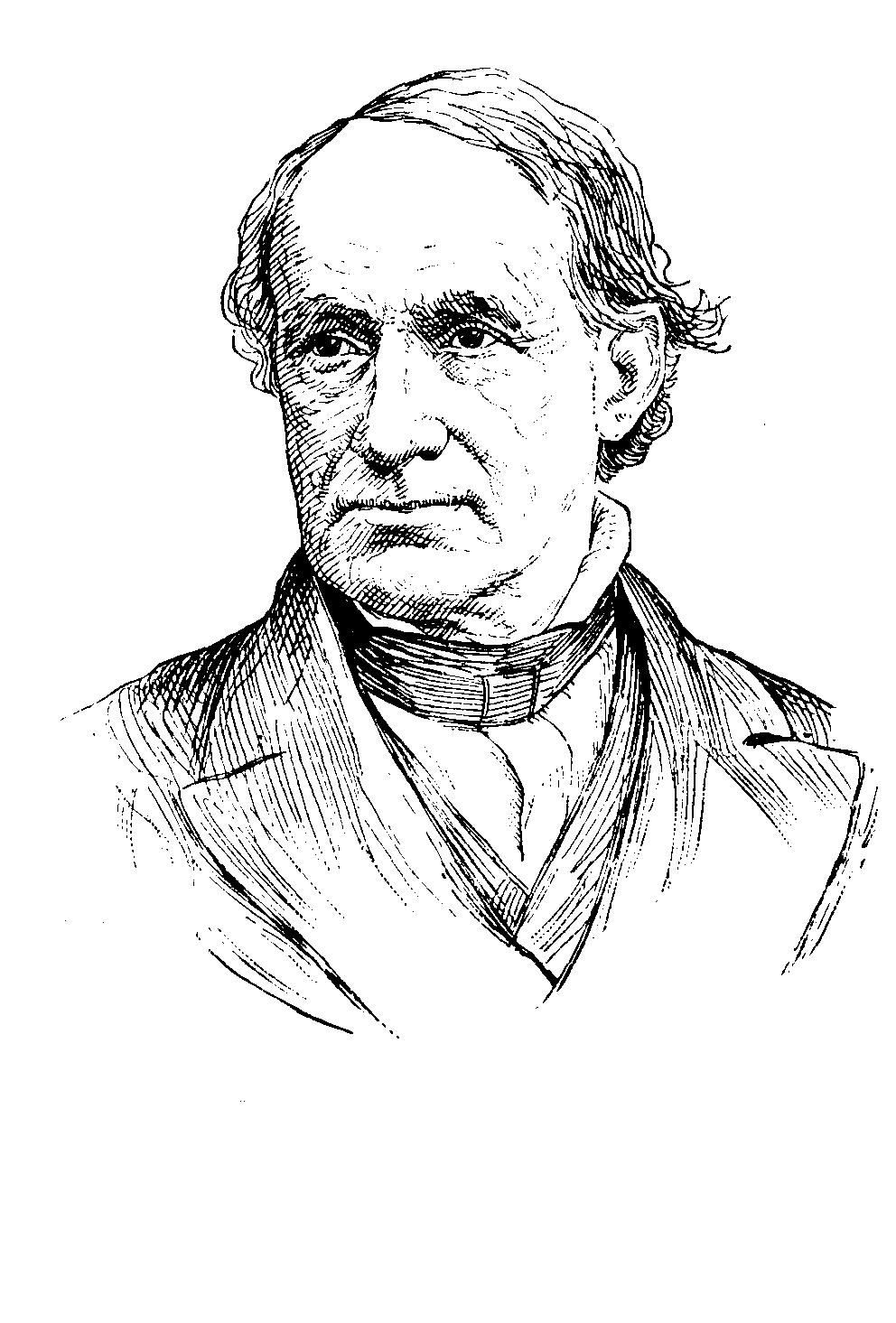
CUSHING, Caleb, statesman, born in Salisbury, Massachusetts, 17 January 1800; died in Newburyport, Massachusetts, 2 January 1879. He was graduated at Harvard in 1817, and for two years was a tutor in mathematics and natural philosophy. He then studied law, was admitted to the bar, and settled in Newburyport. He rose rapidly in his profession, and, although busily engaged with his practice, found time to devote to literature and politics, and was a frequent contributor to periodicals. In 1825 he was elected a representative to the lower house of the Massachusetts legislature, and in 1826 a member of the state senate. At this time he belonged to the then Republican Party. In 1829 Mr. Cushing visited Europe, and remained abroad two years. In 1833 he was again elected a representative from Newburyport to the Massachusetts legislature for two years, but in 1834 was elected from the Essex north district of Massachusetts a representative to congress, and served for four consecutive terms, until 1843. He supported the nomination of John Quincy Adams for the presidency, and was a Whig until the accession of John Tyler. When the break in the Whig party occurred, during the administration of President Tyler, Mr. Cushing was one of the few northern Whigs that continued to support the president, and became classed as a democrat. Soon afterward he was nominated for secretary of the treasury, but the senate refused to confirm him. He was subsequently confirmed as commissioner to China, and made the first treaty between that country and the United States. On his return he was again elected a representative in the Massachusetts legislature.
In 1847 he raised a regiment for the Mexican war at his own expense, became its colonel, and was subsequently made brigadier-general. While still in Mexico he was nominated by the Democratic Party of his state for governor, but failed in the election. From 1850 till 1852 he was again a member of the legislature of his native state, and, at the expiration of his term, was appointed associate justice of the state Supreme Court. In 1853 President Pierce appointed him U. S. attorney general, from which office he retired in 1857. In 1857, 1858, and 1859 he again served in the legislature of Massachusetts. In April 1860, he was president of the Democratic national convention in Charleston, South Carolina, and was among the seceders from that body who met in Baltimore. At the close of 1860 he was sent to Charleston by President Buchanan, as a confidential commissioner to the secessionists of South Carolina; but his mission effected nothing.
Mr. Cushing was frequently employed during the civil war in the departments at Washington, and in 1866 was appointed one of the three commissioners to revise and codify the laws of congress. In 1868 he was sent to Bogota to arrange a diplomatic difficulty. In 1872 he was one of the counsel for the United States at the Geneva conference for the settlement of the Alabama claims, and in 1873 was nominated for the office of chief justice of the United States; but the nomination was subsequently withdrawn. A year later he was nominated and confirmed as minister to Spain, whence he returned home in 1877. His publications include a "History of the Town of Newbury-port" (1826); "The Practical Principles of Political Economy" (1826); "Historical and Political Review of the Late Revolution in France" (2 vols., Boston, 1833); "Reminiscences of Spain" (2 vols., Boston, 1833); "Growth and Territorial Progress of the United States" (1839); "Life of William H. Harrison" (Boston, 1840); and "The Treaty of Washington" (New York, 1873).
Unauthorized Site:
This site and its contents are not affiliated, connected,
associated with or authorized by the individual, family,
friends, or trademarked entities utilizing any part or
the subject's entire name. Any official or affiliated
sites that are related to this subject will be hyper
linked below upon submission
and Evisum, Inc. review.
Please join us in our mission to incorporate The Congressional Evolution of the United States of America discovery-based curriculum into the classroom of every primary and secondary school in the United States of America by July 2, 2026, the nation’s 250th birthday. , the United States of America: We The
People. Click Here