Appleton's Cyclopedia of American Biography, edited by James
Grant Wilson, John Fiske and Stanley L. Klos. Six volumes, New York: D. Appleton
and Company, 1887-1889 and 1999. Virtualology.com warns that these 19th Century
biographies contain errors and bias. We rely on volunteers to edit the historic
biographies on a continual basis. If you would like to edit this biographyplease
submit a rewritten biography in text form.
If acceptable, the new biography will be published above the 19th Century
Appleton's Cyclopedia Biography citing the volunteer editor
Virtual American Biographies
Over 30,000 personalities
with thousands of 19th Century illustrations, signatures, and exceptional life
stories. Virtualology.com
welcomes editing and additions to the
biographies. To become this site's editor or a contributor
Click Here
or e-mail Virtualology here.
WALCOT, Charles Melton, actor, born in London, England, in 1815; died in Philadelphia, Pennsylvania, 10 May, 1868. He was educated at Eton, and became an architect, but left his profession for the stage, came to this country, made his first appearance in 1839 in Charleston, So C., and acquired popularity. He frequently played at the old Olympic theatre and at Wallack's, but in 1866 removed to Philadelphia. He was particularly excellent in eccentric comedy, and was also a prolific playwright. Among his original and arranged plays are "The Course of True Love "(1839); "Washington, or Valley Forge" (1842); "The Custom of the Country" (1848) ; "The Haunted Man" (1848); " David Copperfield" (1848)" " Hoboken " (1849) . "Edith " (184:9) ; " One Cast for Two Suits" (1854); " Hiawatha" (1855)" and "A Good Fellow" (1857). His songs include "My Love is a Sailor Boy " and "My own Little Rose."--His son, Charles Melton, actor, born in Boston, Massachusetts, 1 July, 1840, was graduated at St. John's college, Fordham, New York, in 1858, and in that year made his debut in Charleston. He is successful in light comedy and is a member of the Lyceum theatre company of New York.
Unauthorized Site:
This site and its contents are not affiliated, connected,
associated with or authorized by the individual, family,
friends, or trademarked entities utilizing any part or
the subject's entire name. Any official or affiliated
sites that are related to this subject will be hyper
linked below upon submission
and Evisum, Inc. review.
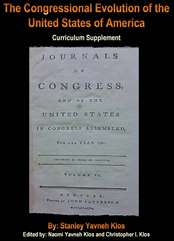
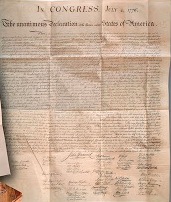
Please join us in our mission to incorporate The Congressional Evolution of the United States of America discovery-based curriculum into the classroom of every primary and secondary school in the United States of America by July 2, 2026, the nation’s 250th birthday. , the United States of America: We The
People. Click Here