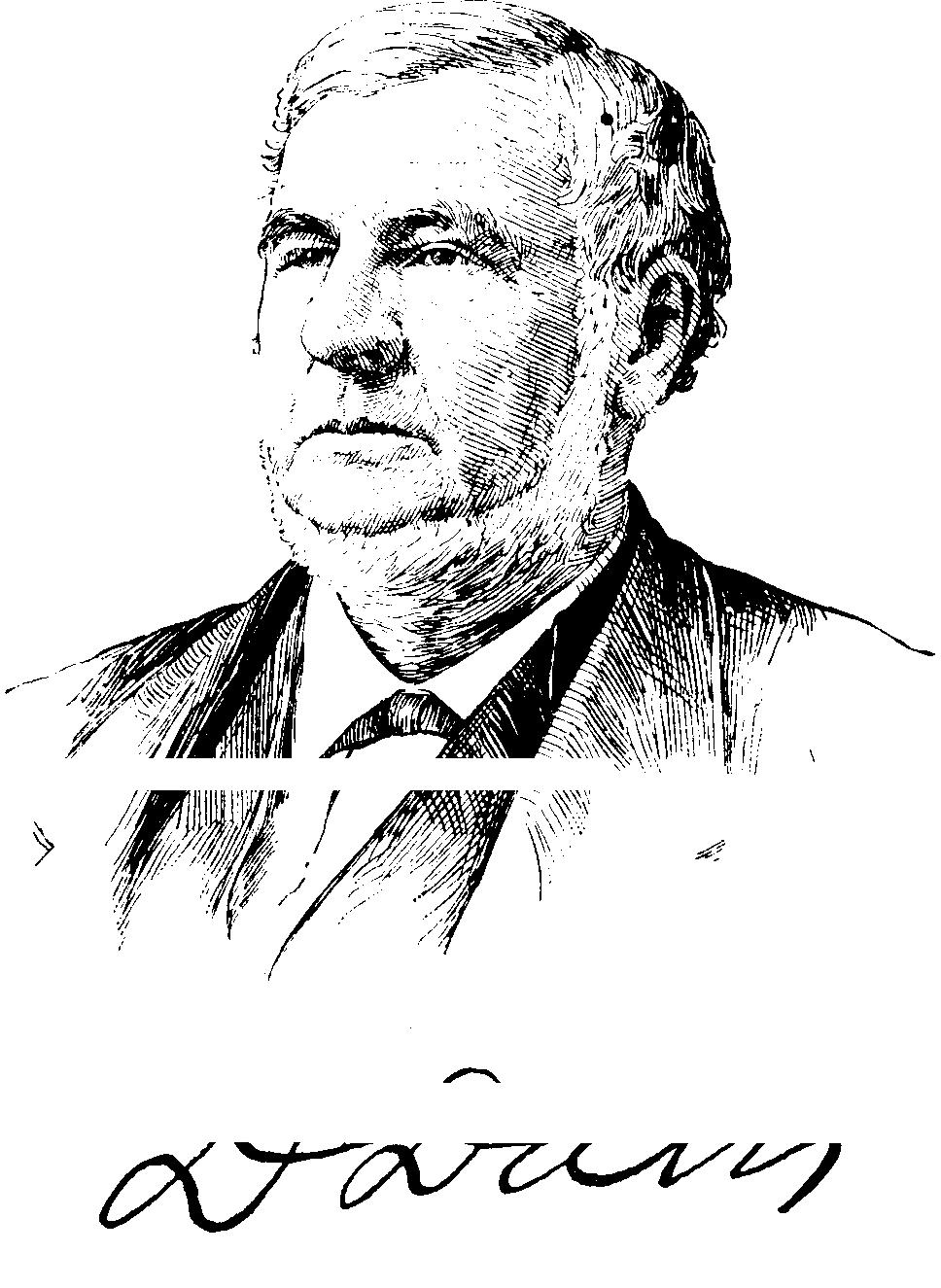
Appleton's Cyclopedia of American Biography, edited by James
Grant Wilson, John Fiske and Stanley L. Klos. Six volumes, New York: D. Appleton
and Company, 1887-1889 and 1999. Virtualology.com warns that these 19th Century
biographies contain errors and bias. We rely on volunteers to edit the historic
biographies on a continual basis. If you would like to edit this biographyplease
submit a rewritten biography in text form.
If acceptable, the new biography will be published above the 19th Century
Appleton's Cyclopedia Biography citing the volunteer editor
Virtual American Biographies
Over 30,000 personalities
with thousands of 19th Century illustrations, signatures, and exceptional life
stories. Virtualology.com
welcomes editing and additions to the
biographies. To become this site's editor or a contributor
Click Here
or e-mail Virtualology here.
DAVIS, David, jurist, born in Cecil County, Maryland, 9 March 1815; died in Bloomington, Illinois, 26 June 1886. He was graduated at Kenyon College, Ohio, in 1832, studied law in Massachusetts, and went through a course at the law school of New Haven, removed to Illinois in 1835, and was admitted to the bar, after which he settled in Bloomington. He was elected to the state legislature in 1844. was a member of the convention that formed the state constitution in 1847, elected judge of the eighth judicial circuit of the state in 1848, reelected in 1855, and again in 1861, resigning in October 1862. He was an intimate friend of Abraham Lincoln, and rode the circuit with him every year. He was a delegate at large to the Chicago convention that nominated Mr. Lincoln for the presidency in 1860, accompanied him on his journey to Washington, and in October 1862, was appointed a justice of the Supreme Court of the United States. After President Lincoln's assassination Judge Davis was an administrator of his estate.
In 1870 he held, with the minority of the Supreme Court, that the acts of congress making government notes a legal tender in payment of debts were constitutional. In February 1872, the National convention of the labor reform party nominated him as its candidate for president, on a platform that declared, ' :,,among other things, in favor of a national currency"based on the faith and resources of the nation, "and interchangeable with 3"65percent. bonds of the government, and demanded the establishment of an eight hour law throughout the country, and the payment of the national debt "without mortgaging the property of the people to enrich capitalists." In answer to the letter informing him of the nomination, Judge Davis said : " Be pleased to thank the convention for the unexpected honor which they have conferred upon me. The chief magistracy of the republic should neither be sought nor declined by any American citizen." His name was also used before the Liberal Republican convention at Cincinnati the same year, and received 92 1/2 votes on the first ballot. After the regular nominations had been made, he determined to retire from the contest, and so announced in a final answer to the labor reformers. He resigned his seat on the supreme bench to take his place in the U. S. Senate on 4 March 1877, having been elected by the votes of independents and democrats to succeed John A. Logan. He was rated in the senate as an independent, but acted more commonly with the democrats. After the death of President Garfield in 1881 Judge Davis was chosen president of the senate. He resigned his seat in 1883, and retired to his home in Bloomington, where he resided quietly till his death. The degree of LL.D. was conferred on him by Williams College, Beloit College and the Wesleyan University at Bloomington.
Unauthorized Site:
This site and its contents are not affiliated, connected,
associated with or authorized by the individual, family,
friends, or trademarked entities utilizing any part or
the subject's entire name. Any official or affiliated
sites that are related to this subject will be hyper
linked below upon submission
and Evisum, Inc. review.
Please join us in our mission to incorporate The Congressional Evolution of the United States of America discovery-based curriculum into the classroom of every primary and secondary school in the United States of America by July 2, 2026, the nation’s 250th birthday. , the United States of America: We The
People. Click Here