Appleton's Cyclopedia of American Biography, edited by James
Grant Wilson, John Fiske and Stanley L. Klos. Six volumes, New York: D. Appleton
and Company, 1887-1889 and 1999. Virtualology.com warns that these 19th Century
biographies contain errors and bias. We rely on volunteers to edit the historic
biographies on a continual basis. If you would like to edit this biographyplease
submit a rewritten biography in text form.
If acceptable, the new biography will be published above the 19th Century
Appleton's Cyclopedia Biography citing the volunteer editor
Virtual American Biographies
Over 30,000 personalities
with thousands of 19th Century illustrations, signatures, and exceptional life
stories. Virtualology.com
welcomes editing and additions to the
biographies. To become this site's editor or a contributor
Click Here
or e-mail Virtualology here.
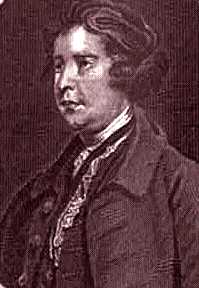
BURKE, Edmund, English statesman, born in Dublin, 1 January, 1730; died in Beaconsfield, England, 9 July, 1797. He was the son of a Dublin attorney, was graduated at Trinity College in 1748, studied law, and, going to London, wrote political articles for newspapers there. In 1755 he was offered a government place in America, and was anxious to take it, but was deterred by his father's opposition. He published in 1.756 his "Vindication of Natural Society" and the essay on "The Sublime and Beautiful," in 1757 "An Account of the European Settlements in America," and in 1758-'9 established, with Dodsley, "The Annual Register." In 1761-'5 he was the friend and adviser of William Gerard Hamilton, secretary to the lord-lieutenant of Ireland, and in 1765-'6 was secretary to the prime-minister, Rockingham, and entered parliament 14 January, 1766. He took an active part in the discussion of American questions, and proved himself an able and eloquent speaker. His thorough acquaintance with American affairs was rewarded, in November, 1771, by the appointment of agent for the colony of New York. On 19 April, 1774, he made a speech on American taxation, considered by many as the greatest effort of oratory ever heard in the house of commons. His speech of 22 March, 1775, recommending conciliatory measures toward the colonies, also excited general admiration. His earnestness in espousing the cause of the colonists displeased his constituents, and he defended his course in two able "Letters to Gentlemen of Bristol." At the opening of the November session of parliament in 1781, Burke ridiculed the king's speech, which, in spite of Cornwallis's surrender, insisted on the rights of the crown in America. He compared the ministry to men who would shear a wolf, and in the next year the combined attacks of Fox and himself on the conduct of the war. forced North to retire. During Rockingham's brie/f administration in 1782, Burke was a privy councilor and paymaster of the forces, a place he also held under the coalition ministry in 1783. He took a prominent part in the affairs of India, and, in January, 1786, began the prosecution of Warren Hastings. His speech on the opening of Hastings's trial, 10 February, 1788, was worthy of the occasion and of his great reputation. Though the impeachment of Hastings was not carried, the Herculean labors of Burke in behalf of India were not fruitless. In November, 1790, he published his great work in opposition to the French revolution, entitled "Reflections on the Revolution in France." On 6 May, 1791, an open rupture took place between Burke and Fox, who accused him of abandoning the principles of his party. Burke vindicated himself in his "Appeal from the New to the Old Whigs." In 1796 he wrote his "Letter to a Noble Lord," one of the most successful and popular of all his productions. The best edition of his works is that edited by George Nichols (12 vols., Boston, 1865-'7).
Unauthorized Site:
This site and its contents are not affiliated, connected,
associated with or authorized by the individual, family,
friends, or trademarked entities utilizing any part or
the subject's entire name. Any official or affiliated
sites that are related to this subject will be hyper
linked below upon submission
and Evisum, Inc. review.
Please join us in our mission to incorporate The Congressional Evolution of the United States of America discovery-based curriculum into the classroom of every primary and secondary school in the United States of America by July 2, 2026, the nation’s 250th birthday. , the United States of America: We The
People. Click Here