Appleton's Cyclopedia of American Biography, edited by James
Grant Wilson, John Fiske and Stanley L. Klos. Six volumes, New York: D. Appleton
and Company, 1887-1889 and 1999. Virtualology.com warns that these 19th Century
biographies contain errors and bias. We rely on volunteers to edit the historic
biographies on a continual basis. If you would like to edit this biographyplease
submit a rewritten biography in text form.
If acceptable, the new biography will be published above the 19th Century
Appleton's Cyclopedia Biography citing the volunteer editor
Virtual American Biographies
Over 30,000 personalities
with thousands of 19th Century illustrations, signatures, and exceptional life
stories. Virtualology.com
welcomes editing and additions to the
biographies. To become this site's editor or a contributor
Click Here
or e-mail Virtualology here.
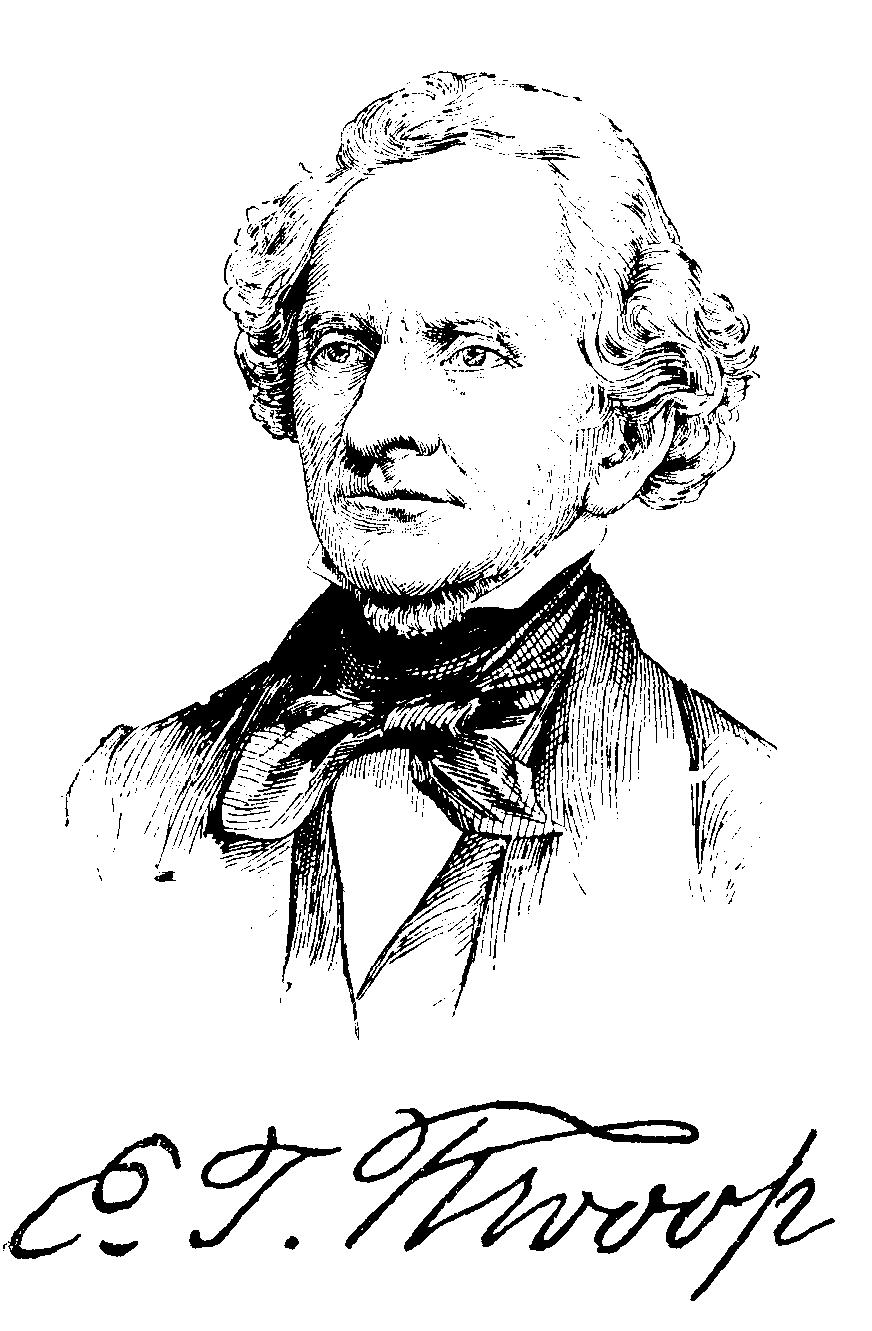
THROOP, Enos Thompson (troop), governor of New York, born in Johnstown, Montgomery County, New York, 21 August, 1784; died on his estate of Willowbrook, near Auburn, New York, 1 November, 1874. He received a classical education, studied law at Albany, and was admitted to the bar in 1806. During his residence at Albany, he became acquainted with Martin Van Buren, then also a law-student, and this acquaintance ripened into friendship. After admission to the bar, Mr. Throop began practice at Auburn, soon became active in politics as a member of the Republican party, and was appointed postmaster of the village, and in 1811 county clerk of Cayuga county. In 1814 he was elected a member of congress, as a supporter of the war measures of the administration. He took part in the debates upon the important measures to which the close of the war and the prostration of public and private credit gave rise. He also supported and voted for the act changing the compensation of congressmen from six dollars a, day to $1,800 per annum, a course which temporarily clouded his political fortunes. Popular dissatisfaction with his action was such that he was defeated at the election of 1816, which was held in April of that year, and thereupon resigned his seat for the remainder of his unexpired term. In April, 1823, he was appointed one of the eight circuit judges for which the constitution of 1821 provided. In 1828, induced chiefly by the solicitation of Martin Van Buren, Judge Throop consented to be placed upon the state ticket, as the Democratic candidate for lieutenant-governor, with Mr. Van Buren as the candidate for governor, a step which rendered it necessary for him to resign his judicial office. It was expected that Andrew Jackson would be elected president at the same election, in which event Vail Buren would be made secretary of state and the latter desired to leave the office of governor and the leadership of the party in the hands of a friend. These expectations were fulfilled, and Mr. Throop succeeded to the office of governor on 12 March, 1829. He was re-elected governor in 1830. During his first term the construction of the Chenango canal became one of the chief questions of state policy. He declared himself, in his message to the legislature, unalterably opposed to the plan. This step raised such a vehement opposition to him in the localities through which the proposed canal would pass, that in 1832 he declined to be presented as a candidate for a third term. In 1833 he was appointed by President Jackson naval officer at the port of New York, which office he held until 1838, when President Van Buren appointed him charge d'affaires of the United States to the kingdom of the Two Sicilies (Naples), where he remained until he was superseded in 1842. After spending two years in Paris, he returned to the United States, and resided upon an estate on the banks of Owasco lake near Auburn, New York In 1847 he removed to Michigan, where he purchased a farm of 800 acres, and became noted among agriculturists. Advancing years compelled him to give up farming, and in 1857 he returned to his former home, removing in 1868 to New York city, but a few years later again returning to his residence near Auburn.--His nephew, Montgomery Hunt, lawyer, born in Auburn, New York, 26 January, 1827, was educated in Geneva, Switzerland, and Naples. Italy, and at Hobart college" studied law, and was admitted to the bar in 1848. He practised in Utica, New York, from 1851 till 1864, first in partnership with his uncle, Ward Hunt, and after 1856 with Roscoe Conkling, then in New York city till 1870, when he was appointed a commissioner to revise the statutes of the state. Ha acted as chairman of the commission, which prepared the New York code of civil procedure that was enacted partly in 1877 and partly in 1880. Since 1878, when the codification was ended, Mr. Throop has devoted himself to legal authorship, changing his residence in 1880 from New York city to Albany. He has published " The Future" a Political Essay " (New York, 1864)" " Treatise on the Validity of Verbal Agreements" (Albany, 1870)" "Annotated Code of Civil Procedure (1880) ; The New York Justice's Manual " (1880)" "Digest of the Decisions of the Supreme Judicial Court of Massachusetts" (1887)" and "Revised Statutes of the State of New York" (8th ed., 1888).
Unauthorized Site:
This site and its contents are not affiliated, connected,
associated with or authorized by the individual, family,
friends, or trademarked entities utilizing any part or
the subject's entire name. Any official or affiliated
sites that are related to this subject will be hyper
linked below upon submission
and Evisum, Inc. review.
Please join us in our mission to incorporate The Congressional Evolution of the United States of America discovery-based curriculum into the classroom of every primary and secondary school in the United States of America by July 2, 2026, the nation’s 250th birthday. , the United States of America: We The
People. Click Here