New Page 1
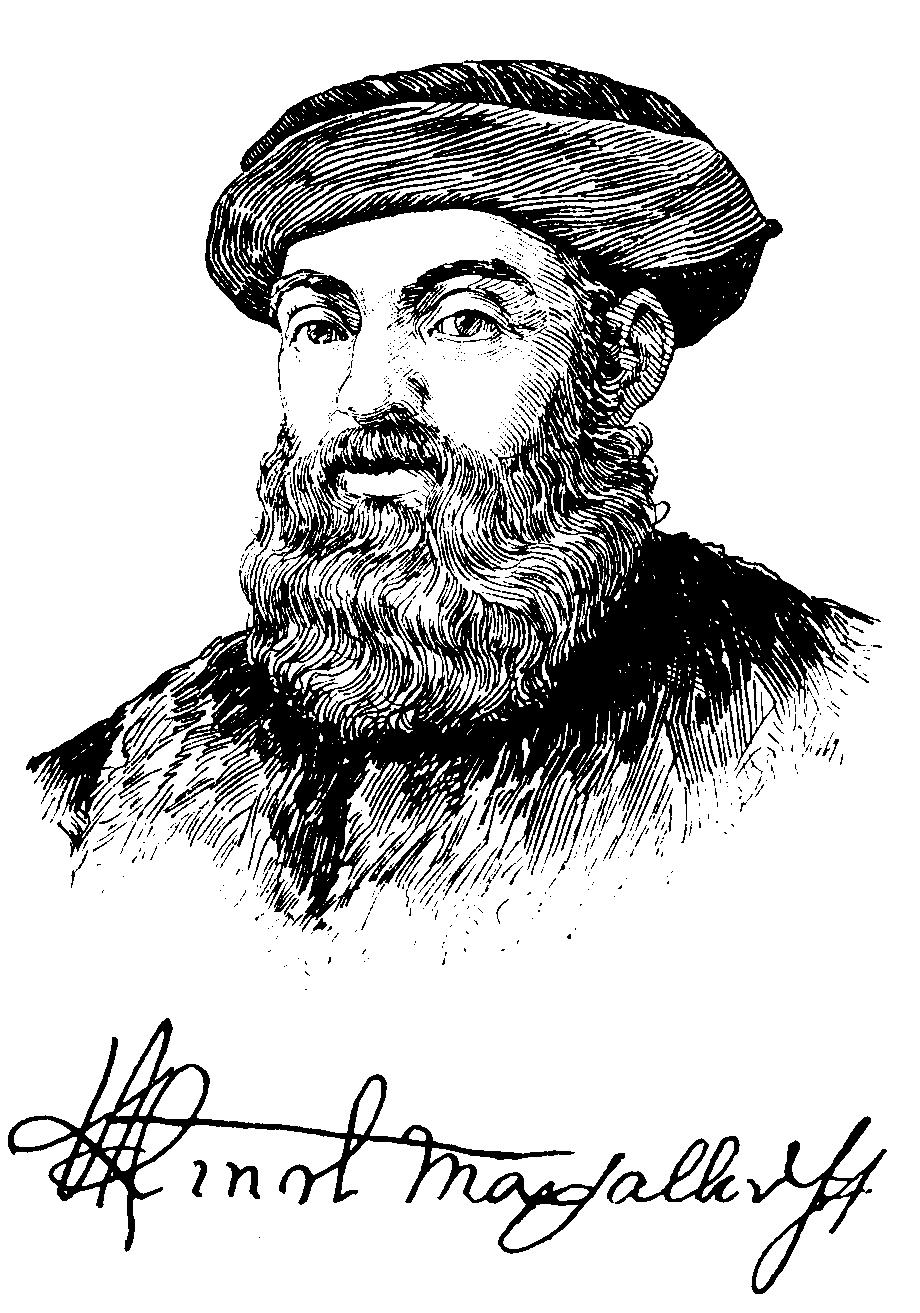
MAGELLAN, Fernando (ma-gel-yan'), Portuguese
navigator, born in Oporto, Portugal, in 1470; died in Mactan, one of the
Philippine islands, 17 April, 1521. His real name was Magalhaens, which the
Spaniards changed to Magallanes. He appears to have devoted himself to the study
of navigation, cosmography, and astronomy at a very early age, and, after
spending some time at the court of Portugal, served with success in the East
Indies.
Thinking that his services were ill-requited by his native
land, he turned his steps to Spain. He arrived in 1517 at Valladolid, where
Charles V was then residing, and was well received by Cardinal Jimenez, before
whom he laid his plan for finding a passage to the Moluccas around the southern
coast of America, instead of the usual route around the Cape of Good Hope. He
inspired both the emperor and cardinal with his own conviction, and met with
every encouragement from the royal council. An agreement was drawn up according
to which Magellan was to be admiral of the exploring fleet and governor of all
the lands he might discover.
The fleet of which he was given command consisted of five
vessels and carried eighty cannon. Magellan's flag-ship was named the
"Trinidad." Juan de Cartagena commanded the "San Antonio;" Luis de Mendoza the
"Victoria;" Gaspar de Quesada the " Concepcion," with Sebastian del Cano second
in command, who brought the "Victoria" to Spain after sailing around the globe;
and Rodriguez Serrano the "Santiago." Antonio Pigafetta, who afterward wrote an
account of the voyage, Elcano, a noted pilot (q. v.), and several priests
accompanied the expedition.
The squadron set sail from San Lucar, 20 September, 1519,
and after a rough passage of about two months reached what is now the Bay of Rio
Janeiro, where it took in fresh provisions. The admiral then skirted the coast,
keeping a careful watch for every bay and inlet. He entered the Rio de la Plata,
12 January, 1520, but, after sailing up the river for some days, he concluded
that it was not the strait of which he was in search, and continued his course
southward, he reached the port of San Julian on 31 March.
Here his captains rebelled, and a conspiracy was organized
against him. The crews, excited by the malcontents, complained of the rigor of
the climate and the privations they had to endure in such a barren country, and
finally insisted on Magellan's returning to Spain. He temporized for some days,
and then, knowing that most of the sailors were really devoted to him, he sent a
resolute follower on board the "Victoria," who stabbed Mendoza in the midst of
his crew. The body of the latter was quartered by Magellan's orders, and
Quesada, who shortly afterward fell into his hands, was visited with the same
punishment.
Not venturing to put Cartagena to death on account of his
rank, he set him on shore with a priest who had taken part in the revolt. These
misfortunes were followed by the loss of the "Santiago," but her crew escaped,
and was distributed among the other vessels.
The fleet left the Bay of San Julian about the middle of
October, and, following the coast very closely, reached the cape on the
northeast of the strait on 21 October This being the festival-day of St. Ursula
and her eleven thousand virgins, the cape was named Cape Virgins by Magellan. He
then cautiously crept along the unknown channel, and on 27 November doubled Cape
Victory, so named after one of his ships, and entered the Pacific Ocean. The
"San Antonio" had abandoned him in the middle of the strait and gone in search
of Juan de Cartagena.
After a Te Deum had been chanted and the vessels were
refitted, Magellan steered toward the northwest, determined to push on for the
Moluccas. He was for three months and twenty days without discovering land, and
his stock of provisions was almost exhausted when he came in sight of the
Ladrones, on 6 March, 1521. He discovered on 16 March the group of islands now
known as the Philippines, where his zeal for the conversion of the inhabitants
to Christianity led to his assassination.
Edited Appletons Encyclopedia, by John Looby Copyright © 2001 StanKlos.comTM
MAGELLAN, Fernando (ma-gel-yan'), Portuguese navigator, born in Oporto, Portugal, in 1470 ; died in Mactan, one of the Philippine islands, 17 April, 1521. His real name was Magalhaens, which the Spaniards changed to Magallanes. He appears to have devoted himself to the study of navigation, cosmography, and astronomy at a very early age, and, after spending some time at the court of Portugal, served with success in the East Indies. Thinking that his services were ill-requited by his native land, he turned his steps to Spain. He arrived in 1517 at Valladolid, where Charles V. was then residing, and was well received by Cardinal Jimenez, before whom he laid his plan for finding a passage to the Moluccas around the southern coast of America, instead of the usual route around the Cape of Good Hope. He inspired both the emperor and cardinal with his own conviction, and met with every encouragement from the royal council. An agreement was drawn up according to which Magellan was to be admiral of the exploring fleet and governor of all the lands he might discover. The fleet of which he was given command consisted of five vessels and carried eighty cannon. Magellan's flag-ship was named the "Trinidad." Juan de Cartagena commanded the "San Antonio" ; Luis de Mendoza the "Victoria"; Gaspar de Quesada the " Concepcion," with Sebastian del Cano second in command, who brought the "Victoria" to Spain after sailing around the globe; and Rodriguez Serrano the "Santiago." Antonio Pigafetta, who afterward wrote an account of the voyage, Elcano, a noted pilot (q. v.), and several priests accompanied the expedition. The squadron set sail from San Lucar, 20 September, 1519, and after a rough passage of about two months reached what is now the Bay of Rio Janeiro, where it took in fresh provisions. The admiral then skirted the coast, keeping a careful watch for every bay and inlet. He entered the Rio de la Plata, 12 January, 1520, but, after sailing up the river for some days, he concluded that it was not the strait of which he was in search, and continued his course southward, he reached the port of San Julian on 31 Parch. Here his captains rebelled, and a conspiracy was organized against him. The crews, excited by the malcontents, complained of the rigor of the climate and the privations they had to endure in such a barren country, and finally insisted on Magellan's returning to Spain. He temporized for some days, and then, knowing that most of the sailors were really devoted to him, he sent a resolute follower on board the "Victoria," who stabbed Mendoza in the midst of his crew. The body of the latter was quartered by Magellan's orders, and Quesada, who shortly afterward fell into his hands, was visited with the same punishment. Not venturing to put Cartagena to death on account of his rank, he set him on shore with a priest who had taken part in the revolt. These misfortunes were followed by the loss of the "Santiago," but her crew escaped, and was distributed among the other vessels. The fleet left the Bay of San Julian about the middle of October, and, following the coast very closely, reached the cape on the northeast of the strait on 21 October This being the festival-day of St. Ursula and her eleven thousand virgins, the cape was named Cape Virgins by Magellan. He then cautiously crept along the unknown channel, and on 27 November doubled Cape Victory, so named after one of his ships, and entered the Pacific ocean. The "San Antonio" had abandoned him in the middle of the strait and gone in search of Juan de Cartagena. After a Te Deum had been chanted and the vessels were refitted, Magellan steered toward the northwest, determined to push on for the Moluccas. He was for three months and twenty days without discovering land, and his stock of provisions was almost exhausted when he came in sight of the Ladrones, on 6 March, 1521. He discovered on 16 March the group of islands now known as the Philippines, where his zeal for the conversion of the inhabitants to Christianity led to his assassination.