Appleton's Cyclopedia of American Biography, edited by James
Grant Wilson, John Fiske and Stanley L. Klos. Six volumes, New York: D. Appleton
and Company, 1887-1889 and 1999. Virtualology.com warns that these 19th Century
biographies contain errors and bias. We rely on volunteers to edit the historic
biographies on a continual basis. If you would like to edit this biographyplease
submit a rewritten biography in text form.
If acceptable, the new biography will be published above the 19th Century
Appleton's Cyclopedia Biography citing the volunteer editor
Virtual American Biographies
Over 30,000 personalities
with thousands of 19th Century illustrations, signatures, and exceptional life
stories. Virtualology.com
welcomes editing and additions to the
biographies. To become this site's editor or a contributor
Click Here
or e-mail Virtualology here.
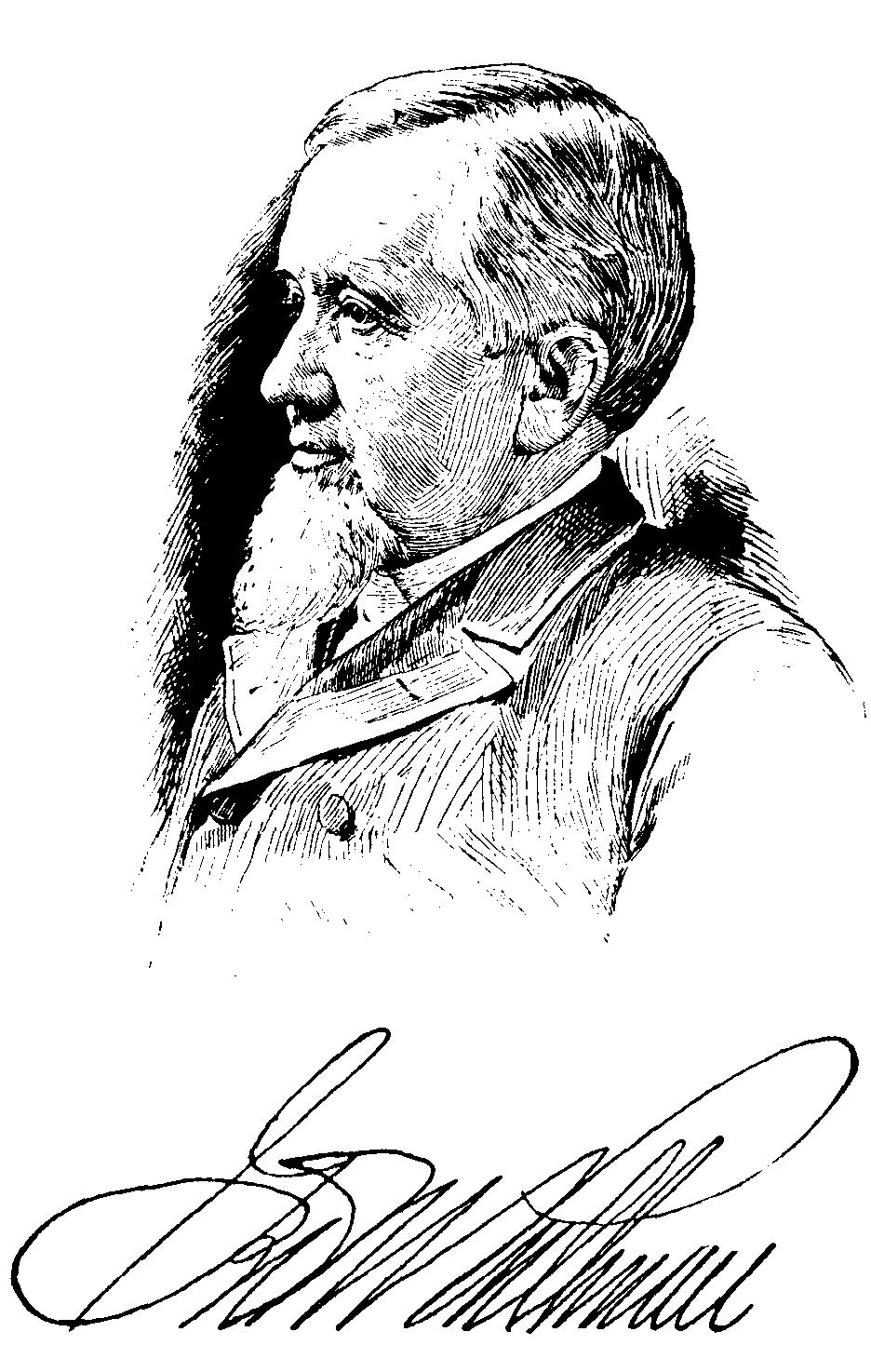
PULLMAN, George Mortimer, inventor, born in Chautauqua county, New York, 3 March, 1831. At fourteen he entered the employment of a country merchant, and at seventeen joined an elder brother in the cabinet-making business in Albion, New York At twenty-two he successfully undertook a contract for moving warehouses and other buildings, along the line of the Erie canal, then being widened by the state. In 1859 he removed to Chicago and engaged extensively in the then novel task of raising entire blocks of brick and stone buildings. In 1858 his attention was first directed to the discomfort of long-distance railway travelling, and he determined, if possible, to offer the public something better. In 1859 he remodelled two old day-coaches of the Chicago and Alton road into sleeping-cars, which at once found favor and established a demand for improved travelling accommodation. In 1863 he began the construction at Chicago of a sleeping-car upon the now well-known model, which was destined to associate his name inseparably with progress in railway equipment. It was named the "Pioneer," and cost about $18,000. From this small beginning he continued to develop his ideas for comfort and safety in railway travel, till Pullman cars are now known all over the world. The Pullman palace-car company, of which he is president, was organized in 1867, and it now operates over 1,400 cars on more than 100,000 miles of railway In 1887 he designed and established the system of "vestibuled trains," which virtually makes of an entire train a single car. They were first put in service upon the Pennsylvania trunk lines, and are now to be found on many other railroads In 1880, in obedience to the imperative demand of the Pullman company for increased shop-facilities, and to give effect to an idea he had long cherished of improving the social surroundings of the workmen, he founded near Chicago the industrial town of Pullman, which now contains over 11,000 inhabitants, 5,000 of whom are employed in the company's shops. Architecturally the town is picturesque, with broad streets, handsome public buildings, and attractive houses, supplied with every modern convenience, for the employes. According to mortMity statistics, it is one of the most healthful places in the world. Mr. Pullman has been identified with various public enterprises, among them the Metropolitan elevated railway system of New York, which was constructed and opened to the public by a corporation of which he was president.--His brother, James Minton, clergyman, born in Portland, Chautauqua County, New York, 21 August, 1836, was graduated at St. Lawrence divinity-school, Canton, New York, in 1860. He was pastor of the 1st Universalist church, Troy, New York, from 1861 till 1868, when he was called to the 6th Universalist church, New York city, where he remained until 1885. He organized and was first president of the Young men's Universalist association of New York city in 1869, was secretary of the Universalist general convention in 1868-'77, and chairman of the publication board of the New York state convention in 1869-'74. From 1870 till 1885 he was a trustee of St. Lawrence university, which gave him the degree of D. D. in 1879. Since 1885 he has been pastor of the 1st Universalist church in Lynn, Massachusetts, and he is president of the associated charities of that city. His standpoint is the ethical as opposed to the magical interpretation of Christianity. He edited the "Christian Leader" several years, and has published reviews and lectures.
Unauthorized Site:
This site and its contents are not affiliated, connected,
associated with or authorized by the individual, family,
friends, or trademarked entities utilizing any part or
the subject's entire name. Any official or affiliated
sites that are related to this subject will be hyper
linked below upon submission
and Evisum, Inc. review.
Please join us in our mission to incorporate The Congressional Evolution of the United States of America discovery-based curriculum into the classroom of every primary and secondary school in the United States of America by July 2, 2026, the nation’s 250th birthday. , the United States of America: We The
People. Click Here