Appleton's Cyclopedia of American Biography, edited by James
Grant Wilson, John Fiske and Stanley L. Klos. Six volumes, New York: D. Appleton
and Company, 1887-1889 and 1999. Virtualology.com warns that these 19th Century
biographies contain errors and bias. We rely on volunteers to edit the historic
biographies on a continual basis. If you would like to edit this biographyplease
submit a rewritten biography in text form.
If acceptable, the new biography will be published above the 19th Century
Appleton's Cyclopedia Biography citing the volunteer editor
Virtual American Biographies
Over 30,000 personalities
with thousands of 19th Century illustrations, signatures, and exceptional life
stories. Virtualology.com
welcomes editing and additions to the
biographies. To become this site's editor or a contributor
Click Here
or e-mail Virtualology here.
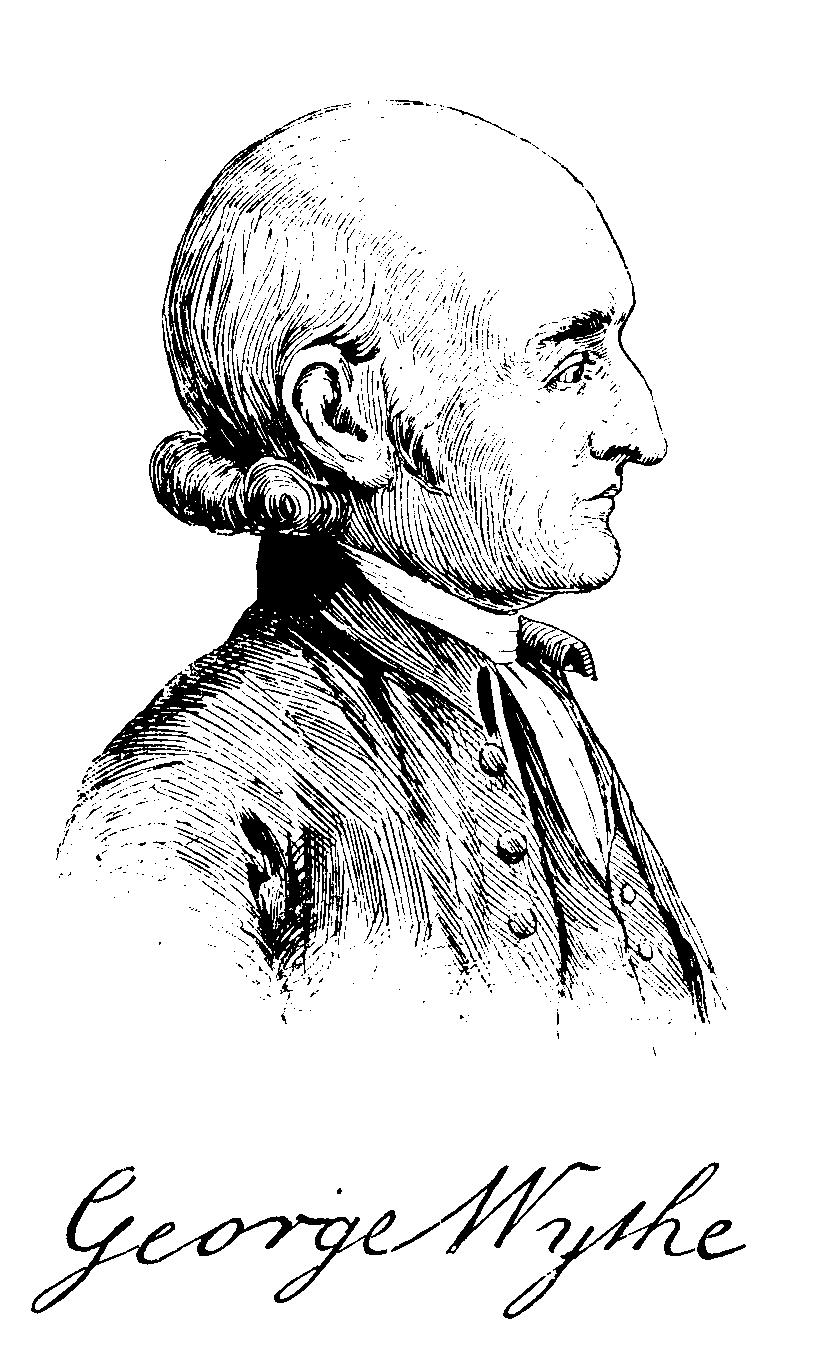
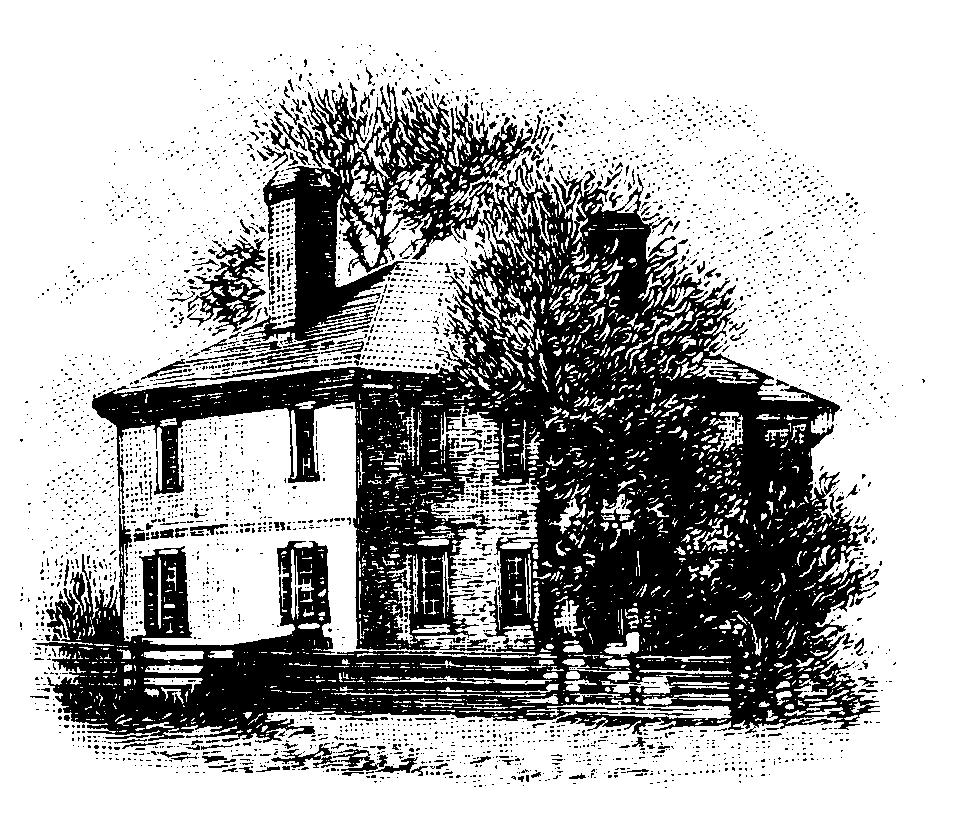
WYTHE, George, signer of the Declaration of Independence, born in Elizabeth City county, Virginia, in 1726; died in Richmond, Virginia, 8 June, 1806. His father was a wealthy planter, and his mother, who possessed unusual intelligence and learning, gave him his early education. Under her tuition he became an accomplished Latin and Greek scholar, an excellent mathematician acquired a liberal knowledge of the sciences, and was further instructed at William and Mary; but the death of both parents before he attained his majority and the consequent uncontrolled possession of a large fortune led him into extravagance and disipation. He reformed when he was about thirty years old, studied law under John Lewis, an eminent practitioner, and quickly rose to the front rank at the Virginia bar. Early in life he was chosen to the house of burgesses, where he was recognized as one of the leaders, and he continued to serve until the beginning of the Revolution. On 14 November, 1764, he was appointed a member of its committee to prepare and report a petition to the king, a memorial to the house of lords, and a remonstrance to the house of commons on the proposed stamp-act. He drew up the last-named paper, but it so far exceeded the demands of his colleagues in boldness and truth that it was viewed as bordering on treason, and accepted only after much modification. From that time he continued to exert all his influence in favor of the independence of the colonies, and in August, 1775, he was appointed a delegate to the Continental congress from Virginia, signing the Declaration of Independence on 4 July of the year. On 5 November, 1776, he was appointed by the legislature, with Thomas Jefferson, Edmund Pendleton, George Mason, and Thomas Ludwell Lee, on a committee to revise the state laws of British and colonial enactment, and to prepare bills for re-enacting them with such alterations as were required under the new government. Mason and Lee did not serve, but so industrious were the other three members of the committee that on 18 June, 1779, they had prepared 126 bills, which they reported to the assembly. He became speaker of the house of delegates in 1777, the same year was chosen one of the three judges of the chancery court of Virginia, and, on the reorganization of the court of equity, was constituted sole chancellor, which post he held for more than twenty years. Before the close of the Revolution, debts had been incurred between American and British merchants, and the recovery WYTHE of these was the subject of the 6th article of John. Jay's treaty with Great Britain, but popular feel-mg was strong against legal decrees in favor of British claimants. Chancellor Wythe was the first judge in the United States that decided the claims to be recoverable. He lost almost all his property during the Revolution, but he supplemented his small income as chancellor, which was £300 a year, by accepting the professorship of law in William and Mary, which he held in 1779-'89. In the latter year his arduous duties compelled his resignation, and he removed to Richmond, Virginia In December, 1786, he was chosen a member of the convention that framed the constitution of the United States, and he regularly attended its sessions, but, being absent on the last day, failed to sign the constitution, he was subsequently twice a presidential elector. In the latter part of his life he emancipated his slaves, furnishing them with means of support until they learned to take care of themselves. In the eighty-first year of his age, while he was still in the full vigor of his intellect and the exercise of the duties of the chancellorship, he was poisoned. His nephew, George Wvthe Sweeny, was tried for the crime, but was acquitted. William and Mary gave Judge Wythe the degree of LL.D. in 1790. He was twice married, but his only child died in infancy. Among his pupils were two presidents of the United States, a chief justice, and others who attained high rank in the legal profession. Thomas Jefferson, his law pupil and devoted adherent, said of him in notes that he made in 1820 for a biography of Wythe, which he never completed: "No man ever left behind him a character more venerated than George Wythe. His virtue was of the purest kind, his integrity inflexible, his justice exact. He might truly be called the Cato of his country, without the avarice of the Roman, for a more disinterested person never lived. He was of middle size, his face manly, comely, and engaging. Such was George Wythe, the honor of his own and the model of future times." The engraving shows his house in Williamsburg, Virginia He published "Decisions in Virginia by the High Court of Chancery, with Remarks upon Decrees by the Court of Appeals" (Richmond, 1795; 2d ed., with a memoir by Benjamin B. Minor (1852).
Unauthorized Site:
This site and its contents are not affiliated, connected,
associated with or authorized by the individual, family,
friends, or trademarked entities utilizing any part or
the subject's entire name. Any official or affiliated
sites that are related to this subject will be hyper
linked below upon submission
and Evisum, Inc. review.
Please join us in our mission to incorporate The Congressional Evolution of the United States of America discovery-based curriculum into the classroom of every primary and secondary school in the United States of America by July 2, 2026, the nation’s 250th birthday. , the United States of America: We The
People. Click Here