Appleton's Cyclopedia of American Biography, edited by James
Grant Wilson, John Fiske and Stanley L. Klos. Six volumes, New York: D. Appleton
and Company, 1887-1889 and 1999. Virtualology.com warns that these 19th Century
biographies contain errors and bias. We rely on volunteers to edit the historic
biographies on a continual basis. If you would like to edit this biographyplease
submit a rewritten biography in text form.
If acceptable, the new biography will be published above the 19th Century
Appleton's Cyclopedia Biography citing the volunteer editor
Virtual American Biographies
Over 30,000 personalities
with thousands of 19th Century illustrations, signatures, and exceptional life
stories. Virtualology.com
welcomes editing and additions to the
biographies. To become this site's editor or a contributor
Click Here
or e-mail Virtualology here.
DEXTER, Henry, sculptor, born in Nelson, Madison County, New York, 11 October 1806; died in Cambridge, Massachusetts, 23 June 1876. His father died when Henry was a child, and in 1817 he removed with his family to Pomfret, Connecticut, where he worked on a farm, and was afterward indentured to a blacksmith. After serving his apprenticeship he married, and began business for himself, continuing in it seven years. He excelled as a worker in metals, and often attributed his subsequent power of using the chisel to tiffs early training. The occupation had always been distasteful to him, however, and, determining to become an artist, he went to Providence, R. i., where, though self-taught, he had some success as a portrait painter. He removed in 1836 to Boston, and in the following year to Cambridge, where he passed the remainder of his life. His attention was turned to sculpture about 18/0, and he afterward confined himself to that art. He may be named with Crawford, Powers, and Hart as a pioneer of American sculpture; but, unlike them, he never left this country, holding with Pahner that it was not necessary for American artists to go to Italy either for inspiration or for instruction, and that our artists who live abroad lose their claim to be called distinctively American. Mr. Dexter never saw a sculptor model in clay, nor chisel the marble, until years after he was a master in his art. He achieved special success in his portrait busts, of which he made nearly 200. His first marble bust was that of Mayor Samuel Eliot, of Boston. His " Binney Child," in Mount Auburn cemetery, is said to be the first marble statue executed in this .country. In 1860 he modeled the busts of all the governors of the United States then in office, with the exception of the governors of California and Oregon, giving about a. week to each, and traveling 17,000 miles. The collection, numbering thirty-one busts, was intended for the capitol at Washington, but the civil war prevented the consummation of his plan. Other portrait busts by his hand are those of Charles Dickens, Longfellow, Agassiz, Henry Wilson, and Anson Burlingame. His statues include "Tile Backwoodsman," now at Wellesley College (1847); "The Cushing Children " (1848); "Gen. Joseph Warren at Bunker Hill" (1857); and " Nymph of the Ocean " (1870).
Unauthorized Site:
This site and its contents are not affiliated, connected,
associated with or authorized by the individual, family,
friends, or trademarked entities utilizing any part or
the subject's entire name. Any official or affiliated
sites that are related to this subject will be hyper
linked below upon submission
and Evisum, Inc. review.
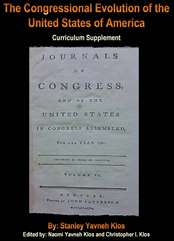
Please join us in our mission to incorporate The Congressional Evolution of the United States of America discovery-based curriculum into the classroom of every primary and secondary school in the United States of America by July 2, 2026, the nation’s 250th birthday. , the United States of America: We The
People. Click Here