Appleton's Cyclopedia of American Biography, edited by James
Grant Wilson, John Fiske and Stanley L. Klos. Six volumes, New York: D. Appleton
and Company, 1887-1889 and 1999. Virtualology.com warns that these 19th Century
biographies contain errors and bias. We rely on volunteers to edit the historic
biographies on a continual basis. If you would like to edit this biographyplease
submit a rewritten biography in text form.
If acceptable, the new biography will be published above the 19th Century
Appleton's Cyclopedia Biography citing the volunteer editor
Virtual American Biographies
Over 30,000 personalities
with thousands of 19th Century illustrations, signatures, and exceptional life
stories. Virtualology.com
welcomes editing and additions to the
biographies. To become this site's editor or a contributor
Click Here
or e-mail Virtualology here.
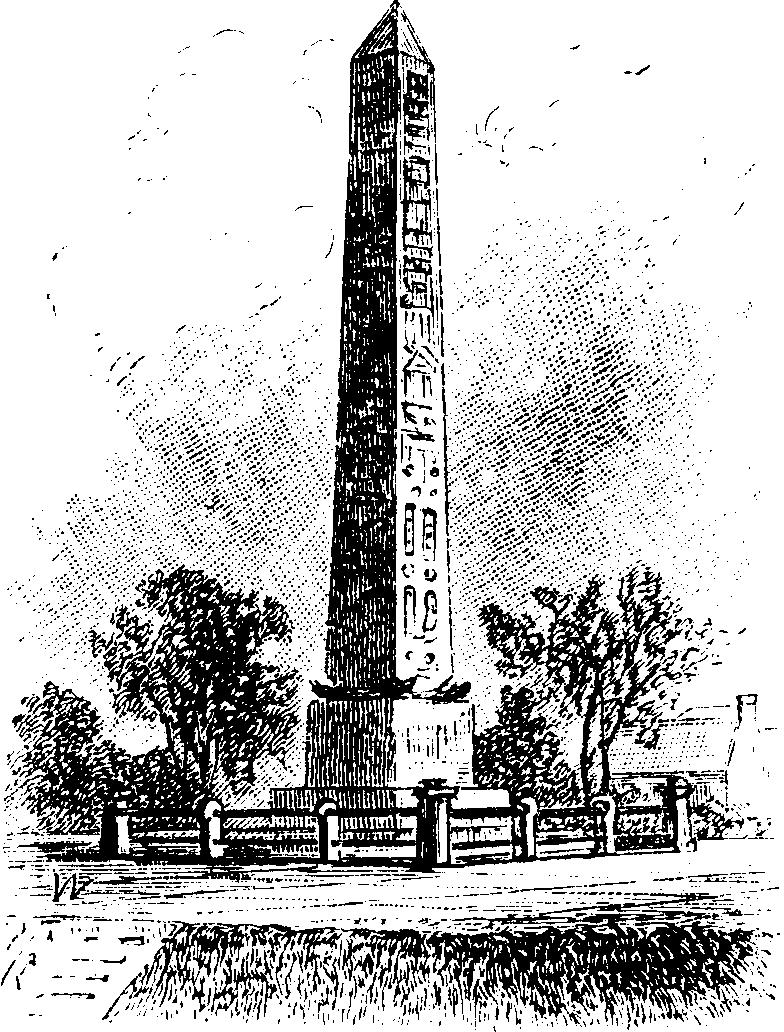
GORRINGE, Henry HoneyChurch, naval officer, born in Barbadoes, W. l., 11 August, 1841 ; died in New York, 7 July, 1885. He was the son of an English clergyman of the established Church, came to the United States at an early age, and entered the merchant-marine service. At the beginning of the civil war he enlisted in the National service as a common sailor, 13 July, 1862. Three months later he was attached to the Mississippi squadron, and by 1865 had risen through successive promotions for gallantry to the rank of acting-volunteer lieutenant. He was promoted to lieutenant-commander on 18 December 1868, and from 1869 till 1871 commanded the sloop "Portsmouth" in the South Atlantic squadron. He was engaged in the hydrographic office in Washington, D. C., from 1872 till 1876, when he was sent with the "Gettysburg" on special service in the Mediterranean, where he remained till 1878, contributing letters to the New York "Nation." He was brought into notice in 1880 by his work of transporting and erecting an Egyptian obelisk that had been offered to the United States by the khedive Ismail in 1879 at the opening of the Suez canal. On arriving in Alexandria on 16 October, 1879. Commander Gorringe began his operations with the assistance of 100 Arabs, and on 6 November had removed 1,730 cubic yards of earth from around the pedestal of the obelisk. By means of simple and original machinery devised by Gorringe, the monolith was removed from its pedestal and placed in a horizontal position on 6 December 1879. The iron steamer " Dessoug," owned by the Egyptian government, was then purchased from Mahomet Tewfik for £5,100, and the obelisk was introduced into the hold through an aperture made for the purpose. The mechanism by which the obelisk was confined in the vessel was entirely of Commander Gorringe's construction, and consisted of innumerable beams of steel and wood. The obelisk arrived in New York on 20 July, 1880. By the aid of iron tracks and cannon-balls the monolith was conveyed from the North River to Central Park, where, on 22 January 1881, it was erected on the same pedestal on which it had rested in Egypt. The height of the shaft is 69 feet. It was erected by Thothmes III. at Heliopolis about 1,600 B. C., and removed to Alexandria in 22 B. C. The total expense of its removal to New York and erection in Central Park was $103,732, and was paid by William H. Vanderbilt. Subsequently Commander Gorringe criticised naval matters in public with great freedom, and, on being called to account by the department, offered his resignation, which was accepted. He then engaged actively in forming the American ship-building company, in which he had a controlling interest. He secured several contracts for the construction of vessels, and leased the Reading railroad ship-yard at Port Richmond, Philadelphia, but owing to a want of capital the enterprise proved a failure. Several months before his death in jumping on a train while it was in motion, he received an injury from which he never recovered. The monument erected by friends over his grave at Sparkill, on the Hudson, New York, is an exact copy, on a reduced scale, of the obelisk that he transported from Egypt. (See illustration.) He published a "History of Egyptian Obelisks" (New York, 1885).
Unauthorized Site:
This site and its contents are not affiliated, connected,
associated with or authorized by the individual, family,
friends, or trademarked entities utilizing any part or
the subject's entire name. Any official or affiliated
sites that are related to this subject will be hyper
linked below upon submission
and Evisum, Inc. review.
Please join us in our mission to incorporate The Congressional Evolution of the United States of America discovery-based curriculum into the classroom of every primary and secondary school in the United States of America by July 2, 2026, the nation’s 250th birthday. , the United States of America: We The
People. Click Here