Appleton's Cyclopedia of American Biography, edited by James
Grant Wilson, John Fiske and Stanley L. Klos. Six volumes, New York: D. Appleton
and Company, 1887-1889 and 1999. Virtualology.com warns that these 19th Century
biographies contain errors and bias. We rely on volunteers to edit the historic
biographies on a continual basis. If you would like to edit this biographyplease
submit a rewritten biography in text form.
If acceptable, the new biography will be published above the 19th Century
Appleton's Cyclopedia Biography citing the volunteer editor
Virtual American Biographies
Over 30,000 personalities
with thousands of 19th Century illustrations, signatures, and exceptional life
stories. Virtualology.com
welcomes editing and additions to the
biographies. To become this site's editor or a contributor
Click Here
or e-mail Virtualology here.
EVANS, Hugh Davey, author, born in Baltimore, Maryland, 26 April 1792; died there, 16 July 1868. He left school at thirteen years of age on account of his health, and in 1810 began to study law. He was admitted to practice in Baltimore on 19 April 1815, took rank, while yet a young man, with Pinekney, Wirt, Reverdy Johnson, and the other leaders of the Maryland bar, and afterward attained eminence as a constitutional lawyer, He was prominent for many years in the councils of the Protestant Episcopal Church, and in 1843'56 edited "The True Catholic," a high Church periodical, He was also connected with the Philadelphia "Register" in 1853, contributing to it "Thoughts on Current Events," with the New York " Churchman" in 1854'6, and the New York "Church Monthly" in 1857'8, and in the two years last mentioned edited the "Monitor," a weekly paper published in Baltimore.
He was a prominent member of the Maryland colonization society, and prepared a code of laws for the Maryland colony in Liberia (Baltimore, 1847). He received the degree of LL.D. from St. James's College, Maryland, in 1852, and from that time till 1864 was lecturer there on civil and ecclesiastical law. During the civil war Mr. Evans was an earnest supporter of the National government, and in 1861 wrote to the London " Guardian" a letter in defense of the arrests made in Baltimore in that year, which attracted much attention. His published works include "Essay on Pleading" (Baltimore, 1827); "Maryland Common-Law Practice" (1837; revised ed., 1867); " Essays to prove the Validity of Anglican Ordinations," in reply to Archbishop Kenrick's book on the subject (Baltimore, 1844; second series, 2 vols., 1851); "Theophilus Americanus," an American adaptation, with additions, of Canon Wordsworth's "Theophilus Anglicanus" (Philadelphia, 1851); " Essay on the Episcopate of the Protestant Episcopal Church in the United States" (1855): and several pamphlets. After his death appeared his "Treatise on the Christian Doctrine of Marriage," which he considered his best work (New York, 1870), and a memoir by Rev. Hall Harrison, founded on recollections written by himself (Hartford, Connecticut, 1870)
Unauthorized Site:
This site and its contents are not affiliated, connected,
associated with or authorized by the individual, family,
friends, or trademarked entities utilizing any part or
the subject's entire name. Any official or affiliated
sites that are related to this subject will be hyper
linked below upon submission
and Evisum, Inc. review.
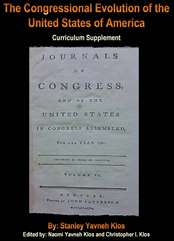
Please join us in our mission to incorporate The Congressional Evolution of the United States of America discovery-based curriculum into the classroom of every primary and secondary school in the United States of America by July 2, 2026, the nation’s 250th birthday. , the United States of America: We The
People. Click Here