Appleton's Cyclopedia of American Biography, edited by James
Grant Wilson, John Fiske and Stanley L. Klos. Six volumes, New York: D. Appleton
and Company, 1887-1889 and 1999. Virtualology.com warns that these 19th Century
biographies contain errors and bias. We rely on volunteers to edit the historic
biographies on a continual basis. If you would like to edit this biographyplease
submit a rewritten biography in text form.
If acceptable, the new biography will be published above the 19th Century
Appleton's Cyclopedia Biography citing the volunteer editor
Virtual American Biographies
Over 30,000 personalities
with thousands of 19th Century illustrations, signatures, and exceptional life
stories. Virtualology.com
welcomes editing and additions to the
biographies. To become this site's editor or a contributor
Click Here
or e-mail Virtualology here.
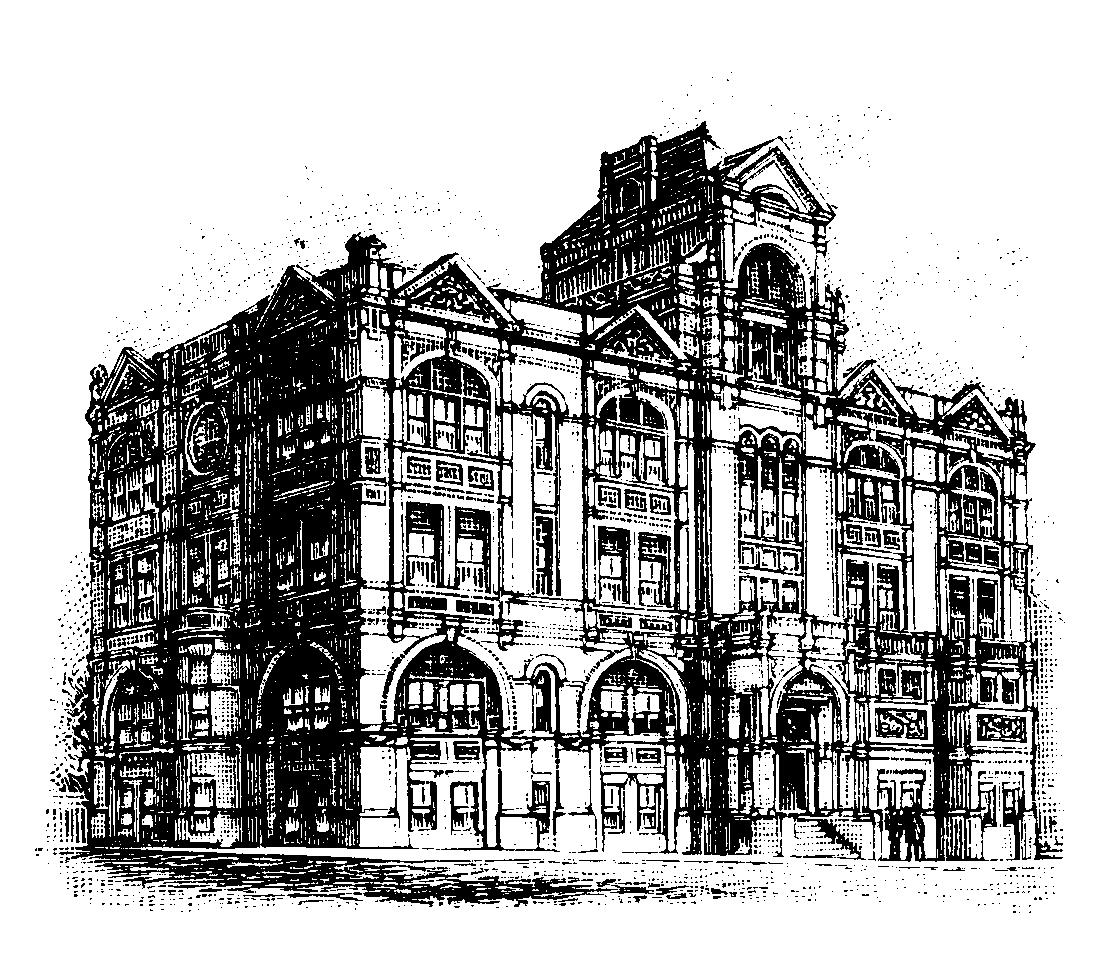
WELLING, James Clarke, educator, born in Trenton, New Jersey, 14 July, 1825. He was graduated at Princeton in 1844, and, after studying law, renounced that profession in 1848 to become associate principal of the New York collegiate school. In 1850 he was secured by Joseph Gales and William W. Seaton as literary editor of the "National Intelligencer" at Washington, and he was afterward associated with them in the political conduct of that journal, becoming charged in 1856 with its chief management, for which post he was qualified by his accurate scholarship, his facility in writing, and his judicial temperament. His editorship continued through the crisis of the civil war. Adhering to the old-line Whigs as against the Republican and the Democratic parties, he supported the Bell-Everett ticket for president and vice-president in 1860. Steadfastly resisting the disunion movement at the south in all its phases, he gave to the war for the Union his loyal support. He advocated Lincoln's proposition of emancipation with compensation to loyal owners, the abolition of slavery in the District of Columbia, and its abolition throughout the Union by constitutional amend-meat; but he questioned the validity of the emancipation proclamation, and strenuously opposed the constitutionality of military commissions for the trial of citizens. In loyal states, which practice was subsequently condemned by the supreme court. The discussions of the "Intelligencer" during this period often took the form of elaborate papers on questions of constitutional or international law, and exercised an acknowledged influence on public opinion. Some of them have been republished, and are still cited in works of history and jurisprudence. Dr. Welling withdrew from journalism in 1865, and spent the following year travelling in Europe for health and study. He had been previously appointed a clerk of the United States court of claims, and served in that office till 1867, when he was chosen president of St. John's college, Annapolis, Maryland During his presidency the number of students advanced from 90 to 250. In 1868 he received the honorary degree of LL. D. from Columbian college, Washington. In 1870 he was appointed professor of belles-lettres in Princeton, but he resigned the post in the following year to accept the presidency of Columbian college (now university). Under his administration that institution has been enlarged, has received a new charter from congress, erected a building in the heart of Washington (see illustration), added new professional schools, and laid the foundation of a free endowment. At the same time he has been connected with many literary, historical, and scientific societies. As president of the board of trustees of the Corcoran gallery of art since 1877 he has devoted much time to its development, visiting in 1887 the studios of the chief artists of Europe in its interest. In 1884 he was appointed a regent of the Smithsonian institution, and soon afterward he was elected chairman of its executive committee. He is an active member of the Philosophical and Anthropological societies of Washington, was chosen in 1884 president of the former, and has contributed valuable memoirs to the published proceedings of both bodies. He is president of the Copyright league of the District of Columbia. For many years he has been a contributor to periodicals.
Unauthorized Site:
This site and its contents are not affiliated, connected,
associated with or authorized by the individual, family,
friends, or trademarked entities utilizing any part or
the subject's entire name. Any official or affiliated
sites that are related to this subject will be hyper
linked below upon submission
and Evisum, Inc. review.
Please join us in our mission to incorporate The Congressional Evolution of the United States of America discovery-based curriculum into the classroom of every primary and secondary school in the United States of America by July 2, 2026, the nation’s 250th birthday. , the United States of America: We The
People. Click Here