Appleton's Cyclopedia of American Biography, edited by James
Grant Wilson, John Fiske and Stanley L. Klos. Six volumes, New York: D. Appleton
and Company, 1887-1889 and 1999. Virtualology.com warns that these 19th Century
biographies contain errors and bias. We rely on volunteers to edit the historic
biographies on a continual basis. If you would like to edit this biographyplease
submit a rewritten biography in text form.
If acceptable, the new biography will be published above the 19th Century
Appleton's Cyclopedia Biography citing the volunteer editor
Virtual American Biographies
Over 30,000 personalities
with thousands of 19th Century illustrations, signatures, and exceptional life
stories. Virtualology.com
welcomes editing and additions to the
biographies. To become this site's editor or a contributor
Click Here
or e-mail Virtualology here.
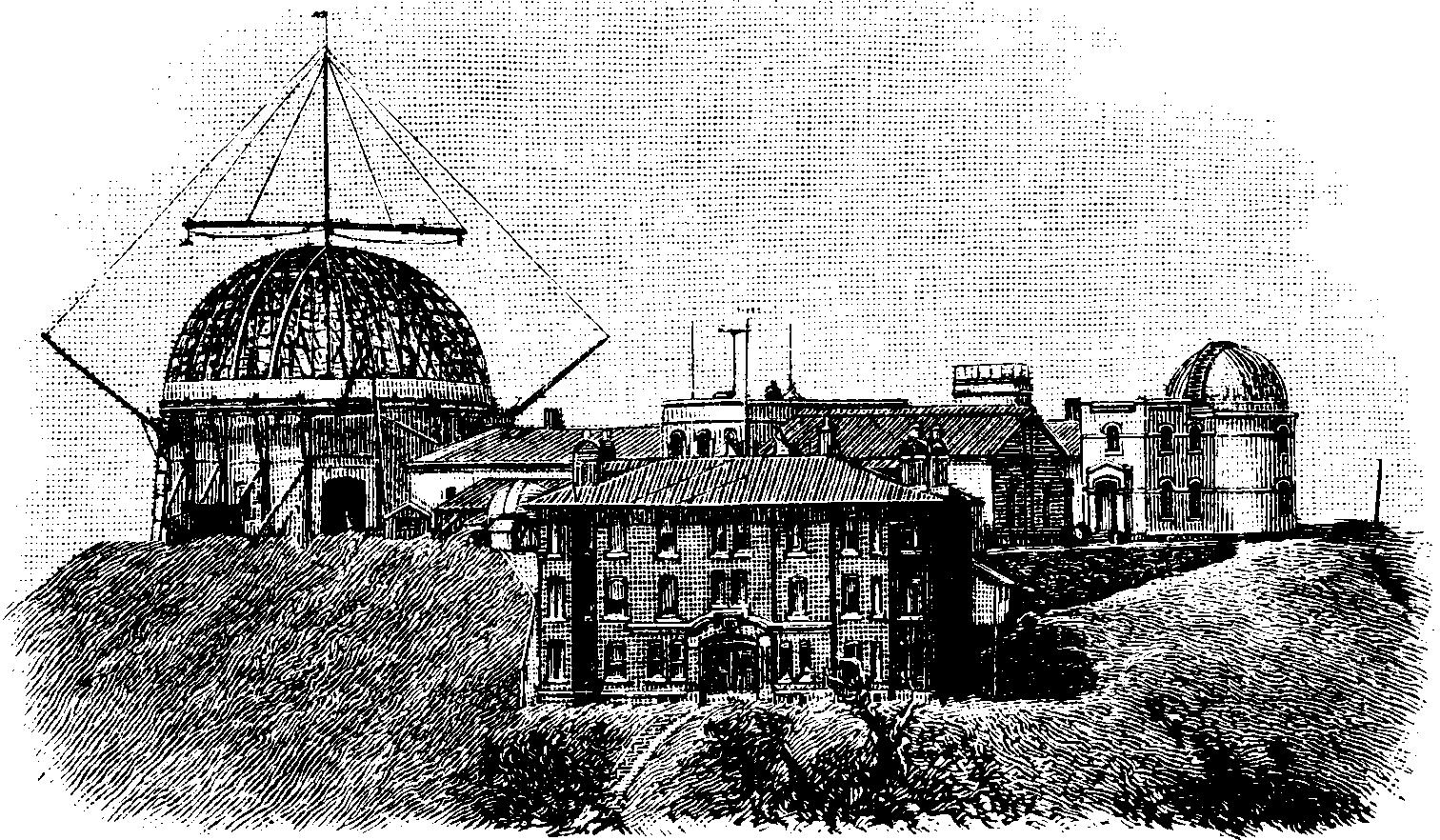
LICK, James, philanthropist, born in Fredericksburg, Pennsylvania, 25 August, 1796; died in San Francisco, California, 1 Oct., 1876. He received a common school education, and obtained employment as an organ and piano maker in Hanover, Pennsylvania, and then in Baltimore, Maryland In 1820 he established himself in business in Philadelphia, but a year later emigrated to Buenos Ayres, Where for some time he engaged in the manufacture of musical instruments. Subsequently he went to Valparaiso and various other places, but in 1847 settled in California, where he invested largely in real estate, and employed his means in other enterprises, which resulted in his accumulating a great fortune. The last years of his life were spent in San Francisco, where he was president of the Society of California pioneers. He had the reputation of being "unlovable, eccentric, solitary, selfish, and avaricious," and it is said that his disagreeable character was the result of disappointment in love. In his younger days he was attached to the daughter of a wealthy miller, but his suit was rejected by the father on account of Lick's poverty. The disappointed suitor then vowed to build a mill which should be far superior to that of the Pennsylvania miller, and in after-years erected one near San Jose at an expense of $200,000. The interior was finished in costly California woods, highly polished, and before it was burned it was regarded as one of the curiosities of the neighborhood. In 1874 he assigned real and personal property valued at about $3,000,000 to seven trustees for various public and philanthropic enterprises; but twice before his death he revoked this gift, requiring each time a new board of trustees. Besides many bequests to friends, relatives, and charities, he left $60,000 for the erection of a bronze monument in Golden Gate park to Francis Scott Key, the author of "The Star Spangled Banner," $100,000 for three groups of bronze statuary representing three historical periods of California history, to be erected in front of the city hall in San Francisco, $100,000 to found an old ladies' home in San Francisco, $150,000 for the building and maintenance of free public baths in that city, $540,000 to found and endow a California school of mechanical arts, and $700,000 to construct an observatory and erecting therein a telescope more powerful than any that had been made, the same to be a department of the University of California. During the present year (1887) the trustees who have had charge of the construction of this observatory since Mr. Lick's death will, when it is completed, transfer it to the regents of the University of California. (See illustration.) It is on the summit of Mount Hamilton, fifty miles south of San Francisco, on a reservation of 1,790 acres, embracing a circle of over one mile below the summit of the mountain. The telescope, which is the largest in the world, has an object glass of thirty-six inches clear aperture, and the dome is turned by hydraulic power and the floor is elevated and lowered by like means, whereby the chair is adjusted to any height to reach the eye piece of the telescope. The base of the pier sustaining the great equatorial telescope contains, in a vault within its foundations, the remains of James Lick, which were placed there in January, 1887, and above which the pier rises thirty feet.
Unauthorized Site:
This site and its contents are not affiliated, connected,
associated with or authorized by the individual, family,
friends, or trademarked entities utilizing any part or
the subject's entire name. Any official or affiliated
sites that are related to this subject will be hyper
linked below upon submission
and Evisum, Inc. review.
Please join us in our mission to incorporate The Congressional Evolution of the United States of America discovery-based curriculum into the classroom of every primary and secondary school in the United States of America by July 2, 2026, the nation’s 250th birthday. , the United States of America: We The
People. Click Here