Appleton's Cyclopedia of American Biography, edited by James
Grant Wilson, John Fiske and Stanley L. Klos. Six volumes, New York: D. Appleton
and Company, 1887-1889 and 1999. Virtualology.com warns that these 19th Century
biographies contain errors and bias. We rely on volunteers to edit the historic
biographies on a continual basis. If you would like to edit this biographyplease
submit a rewritten biography in text form.
If acceptable, the new biography will be published above the 19th Century
Appleton's Cyclopedia Biography citing the volunteer editor
Virtual American Biographies
Over 30,000 personalities
with thousands of 19th Century illustrations, signatures, and exceptional life
stories. Virtualology.com
welcomes editing and additions to the
biographies. To become this site's editor or a contributor
Click Here
or e-mail Virtualology here.
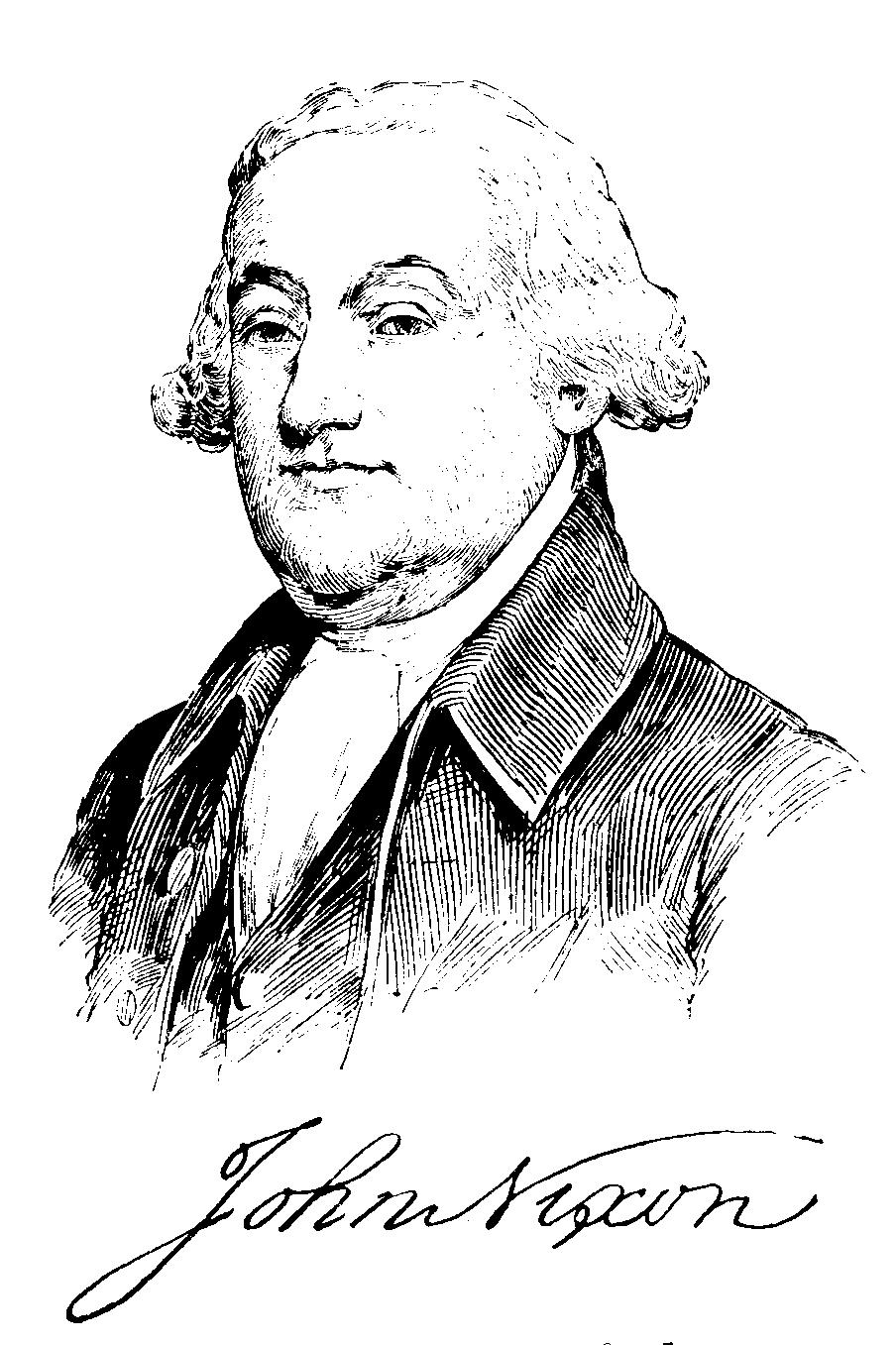
NIXON, John, soldier, born in Framingham, Massachusetts 4 March, 1725; died in Middlebury, Vermont, 24 March, 1815. When the expedition against Cape Breton was undertaken by Governor William Shirley in 1745 he joined the troops under Sir William Pepperell, and was at the capture of Louisburg. After serving in the army and navy for seven years he returned to his native place, but soon entered the army again as a captain and fought at Ticonderoga and in the battle of Lake George in 1755. Afterward falling into an ambuscade, he cut his way through the enemy and escaped, although he lost nearly all of his party. In the Revolution he led a company of minute-men at Lexington, and commanded a regiment at Bunker Hill, where he received a wound from which he never entirely recovered. He was appointed brigadier-general. 9 August, 1776, and intrusted with the command of Governor's island, New York harbor. He served under General Horatio Gates in 1777, and at the battle of Stillwater, where he commanded the 1st Massachusetts regiment, a cannon-ball passed so near his head as to impair permanently the sight of one eye and the hearing of one ear. Owing to failing health, he resigned his commission on 12 September, 1780, and in 1803 removed to Middlebury, Yr.--His brother, Thomas, soldier, born in Framing-ham, Massachusetts, 7 May, 1736; died at sea, 12 August, 1800, was ensign in the French war in 1756. He commanded a company of minute-men in 1775, and was afterward colonel of the 6th Massachusetts regiment, serving throughout the Revolution. About 1784 he removed to Southborough. He died on the voyage from Boston to Portland. Me.
Unauthorized Site:
This site and its contents are not affiliated, connected,
associated with or authorized by the individual, family,
friends, or trademarked entities utilizing any part or
the subject's entire name. Any official or affiliated
sites that are related to this subject will be hyper
linked below upon submission
and Evisum, Inc. review.
Please join us in our mission to incorporate The Congressional Evolution of the United States of America discovery-based curriculum into the classroom of every primary and secondary school in the United States of America by July 2, 2026, the nation’s 250th birthday. , the United States of America: We The
People. Click Here