Appleton's Cyclopedia of American Biography, edited by James
Grant Wilson, John Fiske and Stanley L. Klos. Six volumes, New York: D. Appleton
and Company, 1887-1889 and 1999. Virtualology.com warns that these 19th Century
biographies contain errors and bias. We rely on volunteers to edit the historic
biographies on a continual basis. If you would like to edit this biographyplease
submit a rewritten biography in text form.
If acceptable, the new biography will be published above the 19th Century
Appleton's Cyclopedia Biography citing the volunteer editor
Virtual American Biographies
Over 30,000 personalities
with thousands of 19th Century illustrations, signatures, and exceptional life
stories. Virtualology.com
welcomes editing and additions to the
biographies. To become this site's editor or a contributor
Click Here
or e-mail Virtualology here.
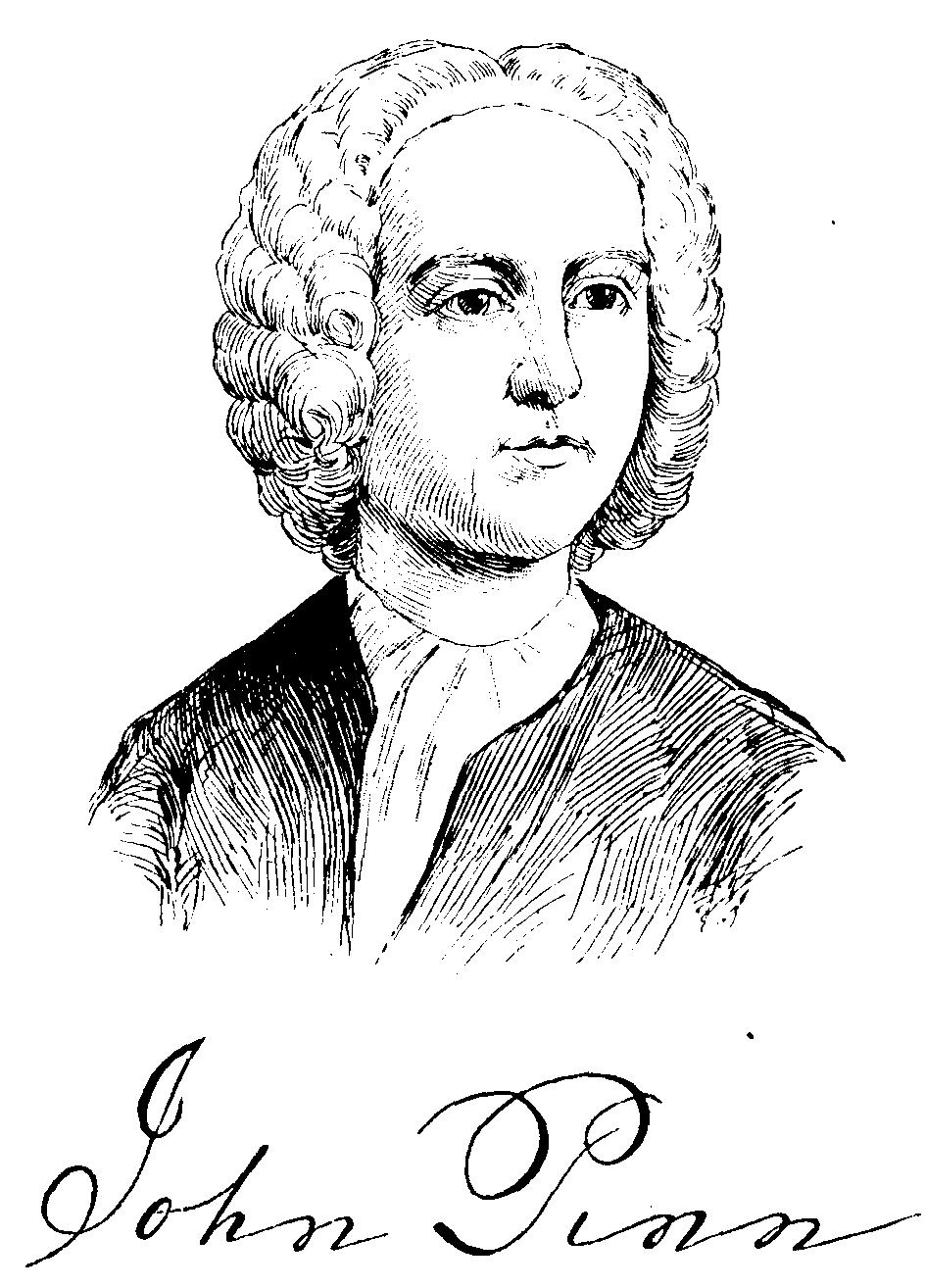
PENN, John, signer of the Declaration of Independence, born in Caroline county, Virginia, 17 May, 1741; died in North Carolina in September, 1788. He was the only child of Noses Penn, and Catherine, his wife, who was a daughter of John Taylor, of the same state and county. Owing to a singular neglect on the part of his parents, who could well afford to pay the expense of his tuition, at the age of eighteen, when his father died, he had only been instructed for a few years at a country school, and was largely self-educated. He studied law with his relative, Edmund Pendleton, was admitted to the bar in 1762, and displayed great ability and eloquence in practice. In 1774 he removed to Greenville county, North Carolina, and on 8 September, 1775, was chosen to the Continental congress to supply a vacancy, taking his seat on 12 October he signed the Declaration of Independence in 1776, and was re-elected in 1777 and in 1779. When Lord Cornwallis invaded North Carolina, Mr. Penn was placed in charge of the public affairs of that state, given almost dictatorial powers, and he discharged the duties of his trust with credit. In March, 1784, he was appointed receiver of taxes for North Carolina, which office he resigned in the following April. His reason for so doing was principally owing to the fact that the state, while eagerly maintaining the cause of independence by resolutions and declaration, refused to furnish the means by which it could be secured. Mr. Penn afterward resumed his station of a private citizen, and, being possessed of sufficient property, derived from his industry and patrimony, was employed in discharging his private duties with benevolence during the remainder of his life.
John Penn - Signer of the Declartion of Independence Biography by
Appleton's edited by Stanley L. Klos
John Penn
Signer of the Declaration of Independence
JOHN PENN was
born on Mary 17, 1741 in Caroline County, Virginia. He was a "transplanted"
patriot, as he would build his political and legal career in North Carolina.
He was the only child of Moses
Penn a moderately successful plantation owner and his wife, Catherine
Taylor. Penn received little formal education, although his parents could well
afford to pay the expense of his tuition. At the age of eighteen, upon the death
of his father, he had only been instructed for a few years at a country school
and was largely self-educated. At that time, he was urged to study law by his
mentor, Edmund Pendleton. Pendleton maintained a vastlaw library, which he put
at Penn's disposal. Penn studied hungrily and remarkably passed the bar
examination at Virginia at the age of twenty-one.
Penn was,
however, unable to forge a rewarding practice in Virginia so he moved with his
wife, Susannah Lyme, and their three children to Williamsboro, North
Carolina. There, he displayed great ability and eloquence, and his practice
flourished, as did his interest in politics. He soon became a leader in his
community. He was elected to the provincial legislature in 1775 and to the
Second Continental congress, taking his seat on October 12, filling a
vacancy. It was said that Penn, though very talkative in private, rarely spoke
in congress. However, he was very diligent in public business and voted
consistently for independence.
After
signing the Declaration, John Penn returned home and was chosen at once to
occupy an important position on the North Carolina board of war. His major task
was to keep the militia well supplied. His dedicated efforts in fact helped the
Americans force Lord Cornwallis into retreat before the end of 1780. In March of
1784, he was appointed receiver of taxes for North Carolina, but he resigned
that office the following April. His reason for doing so was the fact that the
state, while eagerly maintaining the cause of independence by resolutions and
declaration, refused to furnish the means by which it could be secured.
John Penn afterward resumed his life as a private
citizen due to the state of his health, and continued to practice law. He died
on September 14, 1788 at the age of forty-eight.
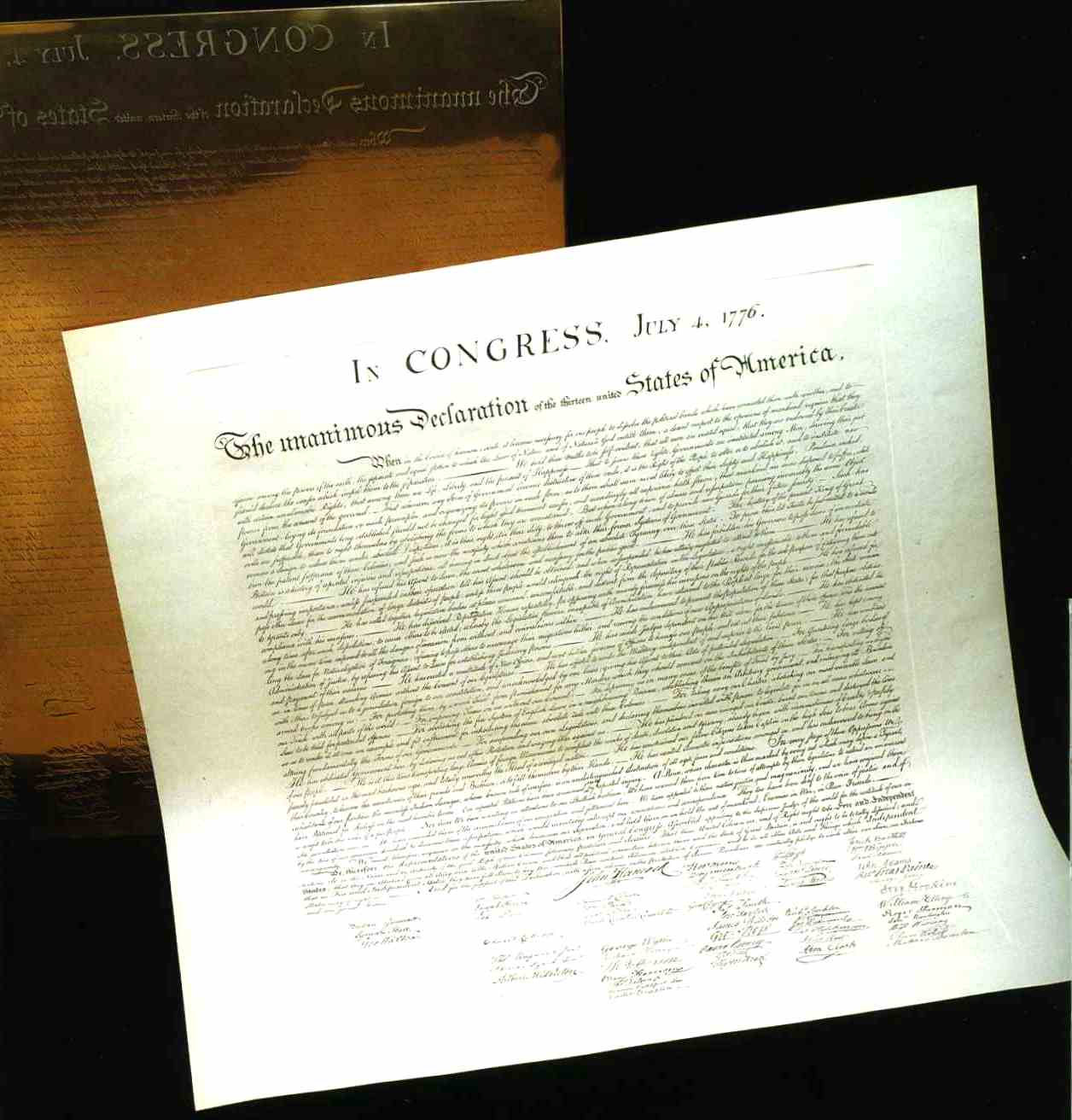
Declaration of Independence
A Brief History and early record of
the printings
Unauthorized Site:
This site and its contents are not affiliated, connected,
associated with or authorized by the individual, family,
friends, or trademarked entities utilizing any part or
the subject's entire name. Any official or affiliated
sites that are related to this subject will be hyper
linked below upon submission
and Evisum, Inc. review.
Please join us in our mission to incorporate The Congressional Evolution of the United States of America discovery-based curriculum into the classroom of every primary and secondary school in the United States of America by July 2, 2026, the nation’s 250th birthday. , the United States of America: We The
People. Click Here