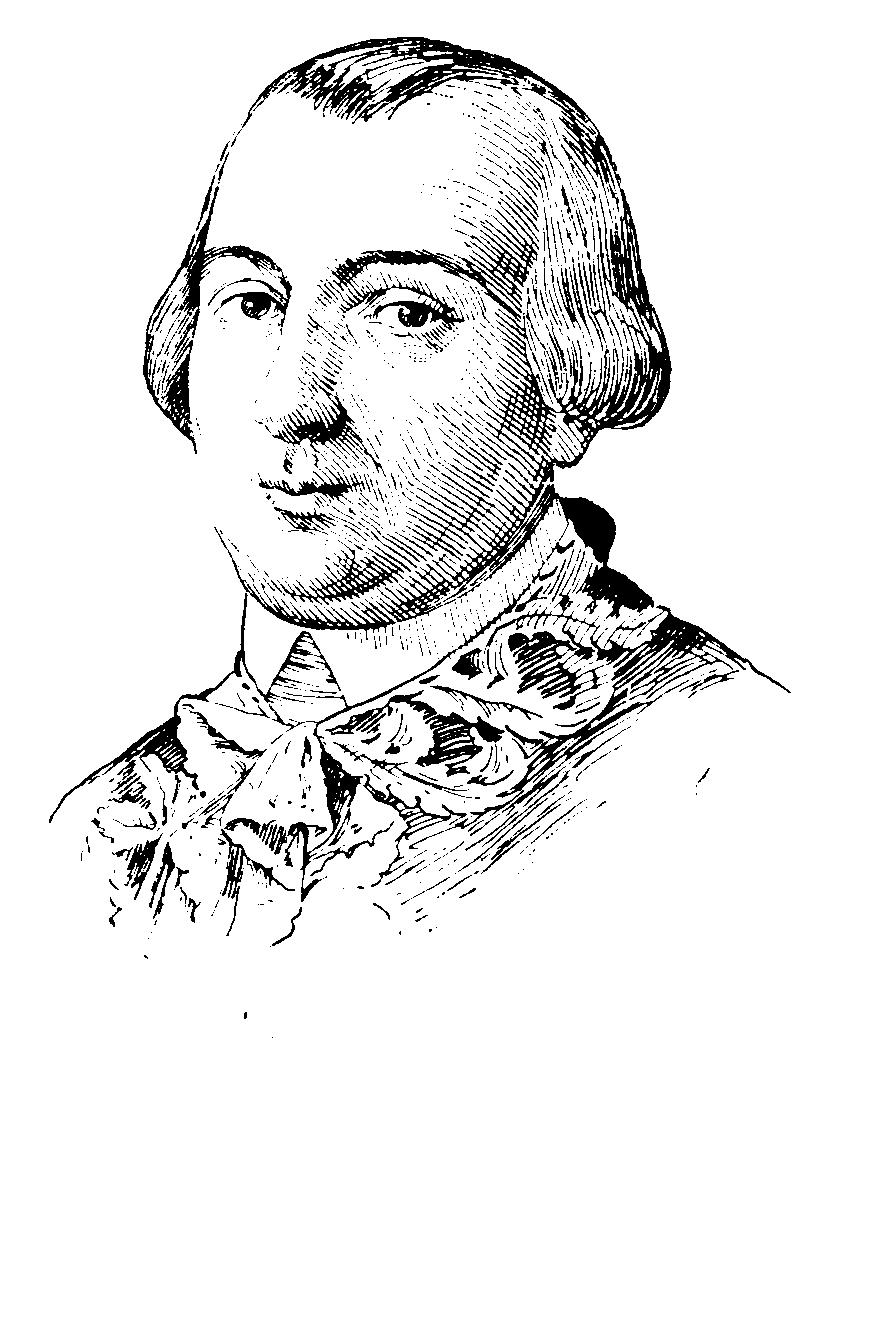
Appleton's Cyclopedia of American Biography, edited by James
Grant Wilson, John Fiske and Stanley L. Klos. Six volumes, New York: D. Appleton
and Company, 1887-1889 and 1999. Virtualology.com warns that these 19th Century
biographies contain errors and bias. We rely on volunteers to edit the historic
biographies on a continual basis. If you would like to edit this biographyplease
submit a rewritten biography in text form.
If acceptable, the new biography will be published above the 19th Century
Appleton's Cyclopedia Biography citing the volunteer editor
Virtual American Biographies
Over 30,000 personalities
with thousands of 19th Century illustrations, signatures, and exceptional life
stories. Virtualology.com
welcomes editing and additions to the
biographies. To become this site's editor or a contributor
Click Here
or e-mail Virtualology here.
GALVEZ, Jose de (gal'-veth), Marquis of Sonora, Spanish lawyer and statesman, born in Velez-Mallaga in 1729; died in Madrid in 1786. He was graduated in law at the University of Alcala de ltenares, and gained considerable distinction by his eloquence in the defense of several lawsuits. He became acquainted in Madrid with the French ambassador, Marquis de Duras, who engaged him as an assistant in the prosecution of claims at the Spanish court. There Galvez attracted the attention of Charles III.'s prime minister, the Marquis of Grimaldi, and became his private secretary. In 1764 he was appointed a member of the council of the Indies, and in 1771 sent on a mission to Mexico to settle difficulties that had arisen between the au-diencia and the proprietors of the mines regarding revenue. He soon arranged everything satisfactorily, introduced improvements into the administration, which saved several millions yearly to the government, and made several voyages into the interior to study the situation and the necessities of the country. He returned to Spain in 1774, and next year was appointed president of the council of the Indies, in which office, the most important in the kingdom after that of prime minister, he rendered great service to the state and the colonies. In 1779 he founded in the valley of Sonora in Mexico a colony, which soon prospered, and for which he was created a marquis.--His brother, Matias, born in Velez-Malaga in 1731 ; died in the City of Mexico, 3 November, 1784, entered the administration through the influence of his brother Jose, and obtained rapid promotion, being appointed in 1781 captain- general of Guatemala. There he laid in 1782 the foundation of the new cathedral, after the removal of the capital from old Guatemala, which had been ruined by the earthquakes of 1773. In the same year war began with England, and the British forces occupied several places on the Athmtie coast, but Galvez in 1782-'3 successively drove them from Omoa, Roatan, San Juan, Rio Tinto, and Bluefields, and in recompense was appointed in the latter year viceroy of Mexico. During his short administration he had the Streets of the capital cleaned and paved, and patronized the Academy of fine arts, for which he ordered from Italy plaster models of the principal art-treasures. During his administration Alejandro Valdes began to publish " La Gazeta," the first newspaper of Mexico. He also proposed to the home government the establishment of a bank of loans, for which he had abundant subscriptions, and, although the idea was not executed in his time, he may be considered as the originator of the banking system in Spanish America. In 1784 the small-pox ravaged Mexico, and Galvez was active in mitigating the sufferings of the poorer class.--His son, Bernardo, born in Malaga in 1755; died in the City of Mexico, 30 November, 1786, was called to court at the age of sixteen years by his uncle, the minister, and entered as cadet in the regiment of Walloon guards. Wishing to perfect himself in military science, he obtained leave of absence in 1772 and went to France, where he served three years in the regiment of Cantabria, and was promoted lieutenant. In 1775, when Charles III. declared war against Algiers, Galvez returned to Spain and served as captain in the expedition of General O'Reilly. He distinguished himself in several encounters with the Moors, rose to the rank of colonel, and on his return in the same year was given the rank of brigadier. Early in 1776 he was appointed second in command to the governor of Louisiana, Luis de Unzaga, and after the pro- motion of the latter to be captain-general of Caracas, toward the end of the year, took charge of the government. He made great improvements in several branches of the administration, and gathered and colonized several tribes of wandering Indians, whom he succeeded in civilizing. In 1778 the Continental congress sent Captain Willing as agent to New Orleans, and Galvez assisted him secretly with arms and ammunition and $70,000 in cash. Spain offered her mediation between the colonies and Great Britain, and, her offer being repulsed by the latter, declared war on 16 June, 1779. Galvez immediately formed a plan of campaign, and, although he had only a small military force under his command, he did not wait for re-enforcements, but, organizing volunteer regiments, marched northward on the eastern River bank. He took Fort Manchac on 27 August, and in September captured Baton Rouge, Fort Panmure, and Fort Natchez. In October he received re-enforcements from Havana, and was made a major general. He then invested Mobile with his combined forces, and in February, 1780, captured Fort Charlotte, forcing the City to surrender. His army, with the organized militia, soon rose to 14,000 men, and he invaded the northwestern part of Florida, defeating the British in several encounters, and besieged Pensacola, but, being unable to attack it from the sea-side for want of siege artillery and a fleet, went in January, 1781, to Havana, and returned in February with the necessary material. The British capitulated on 9 May, and, together with 800 prisoners and the armament, the whole west coast fell into the hands of the Spanish. This feat of Galvez was celebrated by M. de Poydras in a poem which was published at the expense of the king of France. After the signature of peace at Versailles, 3 September, 1783. Galvez was rewarded by the title of count and the rank of lieu-tenant-general, and was appointed captain-general of Cuba. On the death of his father he was promoted viceroy of Mexico, taking charge of the government, 17 June, 1785. He improved the working of the mines, augmenting the crown revenue from them, while at the same time he protected their owners from the unjust exactions of the revenue officers, rebuilt the old theatre, and repaired the causeways of the Piedad and Tlalpam. In 1785 a famine desolated the province, and an epidemic broke out in the following year, and Galvez did all in his power to alleviate the public sufferings, giving large contributions from his private purse for the relief of the poor. He also constructed on the site of the ancient summer palace of the Montezumas, Chapultepec, a palace for himself and his successors at the expense of over $300,000, and, as it was built like a strong fortress with bastions and heavy artillery, his enemies calumniated him at the court, insinuating that he intended to declare himself independent of Spain. The home government began to manifest some distrust, and this preyed on Galvez's mind. He became melancholy arid reserved, seeking his only distraction in the chase. In consequence of violent overexertion he fell ill and died after a few days in the archiepiscopal palace of Tacubaya.
Unauthorized Site:
This site and its contents are not affiliated, connected,
associated with or authorized by the individual, family,
friends, or trademarked entities utilizing any part or
the subject's entire name. Any official or affiliated
sites that are related to this subject will be hyper
linked below upon submission
and Evisum, Inc. review.
Please join us in our mission to incorporate The Congressional Evolution of the United States of America discovery-based curriculum into the classroom of every primary and secondary school in the United States of America by July 2, 2026, the nation’s 250th birthday. , the United States of America: We The
People. Click Here