New Page 1
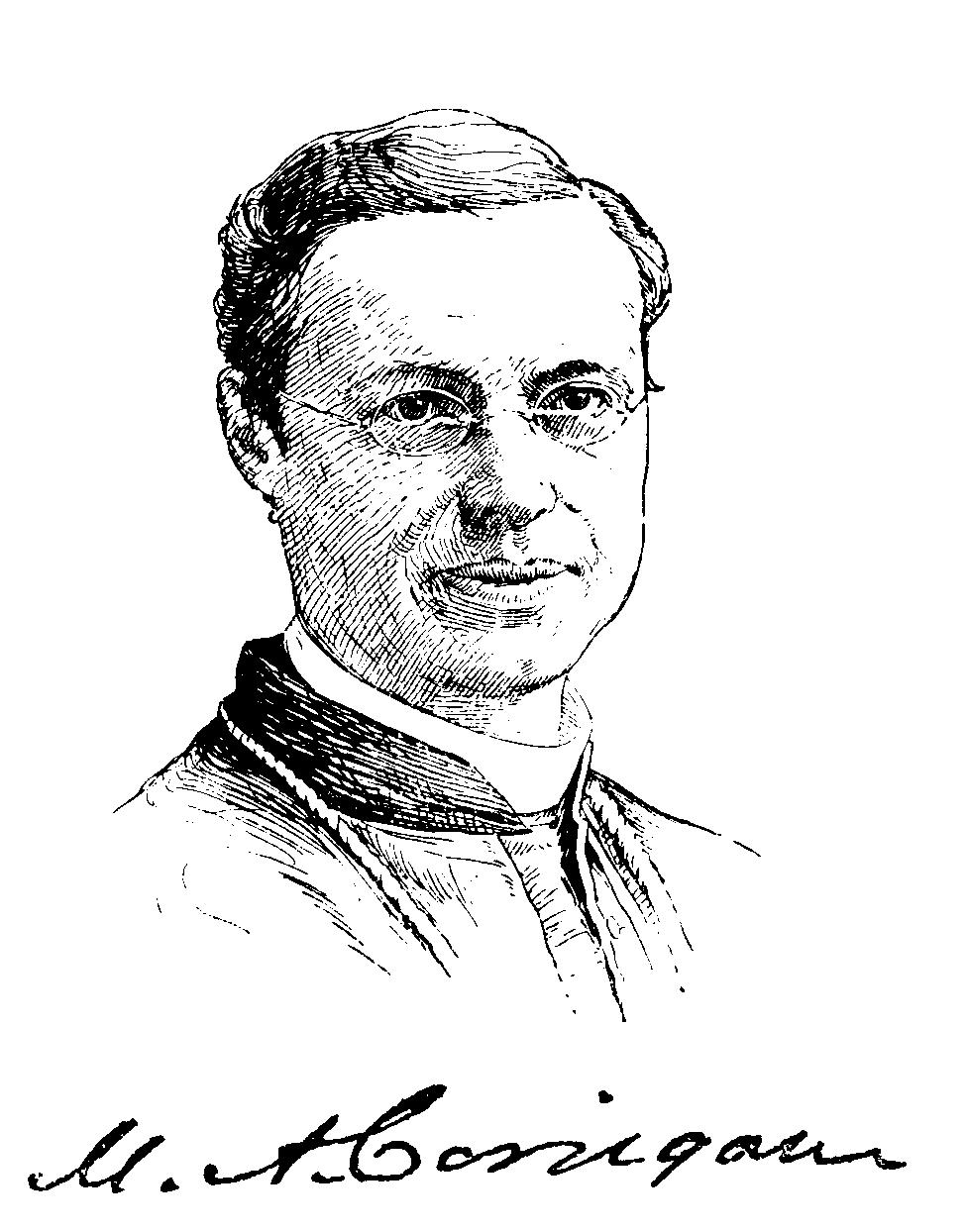
CORRIGAN, Michael Augustine, R. C. prelate, born in Newark,
New Jersey, 13 August, 1839; died 5 May 1902 in New York. His early education
was received at St. Mary's College, Wilmington, Del., and in 1859 he was
graduated at Mount St. Mary's, Emmettsburg, Maryland.
It is curious to note, in connection with Archbishop
Corrigan's successful appeal to the United States government to protect the
property of the American College at Rome from being assumed by the Italian
government, that he was one of the twelve students that first entered that
College.
Cardinal Patrizi ordained him a priest at Rome on 19
September, 1863. In 1864 he received the degree of D.D. in public competition.
He was appointed to the chair of dogmatic theology and sacred scripture in Seton
Hall College, Orange, New Jersey, and in 1868 became its president.
In March, 1873, Pope Plus IX appointed Dr. Corrigan to the
see of Newark, he having administered the affairs of that diocese during the
absence of Bishop Bayley at the Vatican council in 1870. As bishop, Dr. Corrigan
showed a combination of firmness and gentleness, which commanded the admiration
of his ecclesiastical superiors. Churches, charitable institutions, and
religious communities arose in the diocese. His energy, his grasp of the
smallest details of every plan, his power of administration, and his liberality
were notable.
During his administration the Jesuits and Dominicans were
introduced by him, a Catholic protectory for boys founded in Denville, a home of
the Good Shepherd in Newark, a hospital in charge of the Little Sisters of the
Poor, and a convent for the Dominican Nuns of the Perpetual Adoration. In 1880
the Catholic schools of New Jersey had increased to 150, with nearly 30,000
pupils, the churches to 150, and the priests to 172.
Bishop Corrigan had been made coadjutor, with the right of
succession, to Cardinal McCloskey, archbishop of New York, under the title of
Archbishop of Petra, on 26 September, 1880, and thereafter performed all of the
practical work of the archdiocese.
In 1884 he was summoned to Rome to consult with the pope on
the work of the proposed Plenary Council, and represented New York in that body.
Dr. Corrigan, when early in 1886 he received the pallium, was the youngest
archbishop, excepting Archbishop Seghers, in the American episcopate.
On 10 October, 1885, Cardinal McCloskey died, and
Archbishop Corrigan became metropolitan of the Diocese of New York. He was no
longer archbishop, in title, of a deserted strip of Arabian soil, but the chief
spiritual ruler of one of the most important dioceses in the world. He was not
obliged to wait, according to the usual custom, for the pallium, in order to
exercise his functions. By a special act of courtesy done to a prelate who had
so far remarkably distinguished himself in the apostolic virtues befitting his
state, Rome permitted him to perform the acts of his office as soon as he
succeeded to the archbishopric.
Archbishop Corrigan is a scholar, with a keen interest in
modern literature. He has, in the pulpit, the art of convincing and stimulating;
and the modulations of a voice, trained in the best schools, give variety and
interest even to the most abstract theological theme. He is not a great pulpit
orator, in the rhetorical sense of the phrase, but a genial and pleasant talker,
who never fails to soften and charm his audiences. His administration of the
archdiocese of New York has already shown the results to be expected from his
successful career in Newark. He principally influenced the fourth provincial
council and fourth synod of New York. He has prepared a manual on the regulation
of such assemblies.
Edited Appletons Encyclopedia, by John Looby Copyright © 2001 StanKlos.comTM
CORRIGAN, Michael Augustine, R. C. prelate, born in Newark, New Jersey, 13 August, 1839. His early education was received at St. Mary's College, Wilmington, Del., and in 1859 he was graduated at Mount St. Mary's, Emmettsburg, Maryland It is curious to note, in connection with Archbishop Corrigan's successful appeal to the United States government to protect the property of the American College at Rome from being assumed by the Italian government, that he was one of the twelve students that first entered that College. Cardinal Patrizi ordained him a priest at Rome on 19 September, 1863. In 1864 he received the degree of D.D. in public competition. He was appointed to the chair of dogmatic theology and sacred scripture in Seton Hall College, Orange, New Jersey, and in 1868 became its president. In March, 1873, Pope Plus IX. appointed Dr. Corrigan to the see of Newark, he having administered the affairs of that diocese during the absence of Bishop Bayley at the Vatican council in 1870. As bishop, Dr. Corrigan showed a combination of firmness. and gentleness, which commanded the admiration of his ecclesiastical superiors. Churches, charitable institutions, and religious communities arose in the diocese. His energy, his grasp of the smallest details of every plan, his power of administration, and his liberality were notable. During his administration the Jesuits and Dominicans were introduced by him, a Catholic protectory for boys founded in Denville, a home of the Good Shepherd in Newark, a hospital in charge of the Little Sisters of the Poor, and a convent for the Dominican Nuns of the Perpetual Adoration. In 1880 the Catholic schools of New Jersey had increased to 150, with nearly 30,000 pupils, the churches to 150, and the priests to 172. Bishop Corrigan had been made coadjutor, with the right of succession, to Cardinal McCloskey, archbishop of New York, under the title of Archbishop of Petra, on 26 September, 1880, and thereafter performed all of the practical work of the archdiocese. In 1884 he was summoned to Rome to advise with the pope as to the work of the proposed Plenary council, and represented New York in that body. Dr. Corrigan, when early in 1886 he received the pallium, was the youngest archbishop, excepting Archbishop Seghers, in the American episcopate. On 10 October, 1885, Cardinal McCloskey died, and Archbishop Corrigan became metropolitan of the diocese of New York. He was no longer archbishop, in title, of a deserted strip of Arabian soil, but the chief spiritual ruler of one of the most important dioceses in the world. He was not obliged to wait, according to the usual custom, for the pallium, in order to exercise his functions. By a special act of courtesy done to a prelate who had so far remarkably distinguished himself in the apostolic virtues befitting his state, Rome permitted him to perform the acts of his office as soon as he succeeded to the archbishopric. Archbishop Corrigan is a scholar, with a keen interest in modern literature. He has, in the pulpit, the art of convincing and stimulating ; and the modulations of a voice, trained in the best schools, give variety and interest even to the most abstract theological theme. He is not a great pulpit orator, in the rhetorical sense of the phrase, but a genial and pleasant talker, who never fails to soften and charm his audiences. His administration of the archdiocese of New York has already shown the results to be expected from his successful career in Newark. He principally influenced the fourth provincial council and fourth synod of New York. He has prepared a manual on the regulation of such assemblies.