Appleton's Cyclopedia of American Biography, edited by James
Grant Wilson, John Fiske and Stanley L. Klos. Six volumes, New York: D. Appleton
and Company, 1887-1889 and 1999. Virtualology.com warns that these 19th Century
biographies contain errors and bias. We rely on volunteers to edit the historic
biographies on a continual basis. If you would like to edit this biographyplease
submit a rewritten biography in text form.
If acceptable, the new biography will be published above the 19th Century
Appleton's Cyclopedia Biography citing the volunteer editor
Virtual American Biographies
Over 30,000 personalities
with thousands of 19th Century illustrations, signatures, and exceptional life
stories. Virtualology.com
welcomes editing and additions to the
biographies. To become this site's editor or a contributor
Click Here
or e-mail Virtualology here.
OTTERBEIN, Philip William, clergyman, born in Dillenburg, Germany, 4 June, 1726; died in Baltimore, Maryland, 17 November, 1813. He was ordained as a minister of the German Reformed church at Her-born, Germany, in 1749, and was one of the clergymen that were brought over in 1752 by Michael Schlatter under the auspices of the synod of North and South Holland to preach to the Germans of Pennsylvania. He was first settled at Lancaster, Pennsylvania Otterbein was possessed of an ardent missionary spirit, and was a powerful orator. He made extensive tours, associated himself with revivalists of other churches, and adopted prayer-meetings, class-meetings, and open-air meetings in groves. He also encouraged eloquent laymen to pray and exhort, some of whom became regular preachers of various denominations. These new measures, borrowed in part from the practices of the Methodists, aroused opposition among the conservative members of his own and other churches. He left Lancaster for Tulpehocken in 1758, in 1760 went to Frederick, Maryland, and in 1765 was settled at York, Pennsylvania In all his pastorates his novel methods excited antagonism. He was in Europe in 1770-'1, and after his return preached again at York until 1774, when he removed to Baltimore. His numerous disciples desired to form a new religious society, while he wished them to continue their church connections and labor for a revival of religion in the existing religious bodies. They could not induce him to sever his relations with the Reformed church, though a few weeks before his death he ordained a preacher for the new sect, which assumed the name of United Brethren of Christ.
Unauthorized Site:
This site and its contents are not affiliated, connected,
associated with or authorized by the individual, family,
friends, or trademarked entities utilizing any part or
the subject's entire name. Any official or affiliated
sites that are related to this subject will be hyper
linked below upon submission
and Evisum, Inc. review.
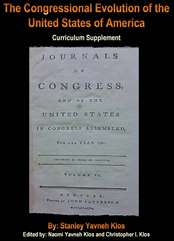
Please join us in our mission to incorporate The Congressional Evolution of the United States of America discovery-based curriculum into the classroom of every primary and secondary school in the United States of America by July 2, 2026, the nation’s 250th birthday. , the United States of America: We The
People. Click Here