Appleton's Cyclopedia of American Biography, edited by James
Grant Wilson, John Fiske and Stanley L. Klos. Six volumes, New York: D. Appleton
and Company, 1887-1889 and 1999. Virtualology.com warns that these 19th Century
biographies contain errors and bias. We rely on volunteers to edit the historic
biographies on a continual basis. If you would like to edit this biographyplease
submit a rewritten biography in text form.
If acceptable, the new biography will be published above the 19th Century
Appleton's Cyclopedia Biography citing the volunteer editor
Virtual American Biographies
Over 30,000 personalities
with thousands of 19th Century illustrations, signatures, and exceptional life
stories. Virtualology.com
welcomes editing and additions to the
biographies. To become this site's editor or a contributor
Click Here
or e-mail Virtualology here.
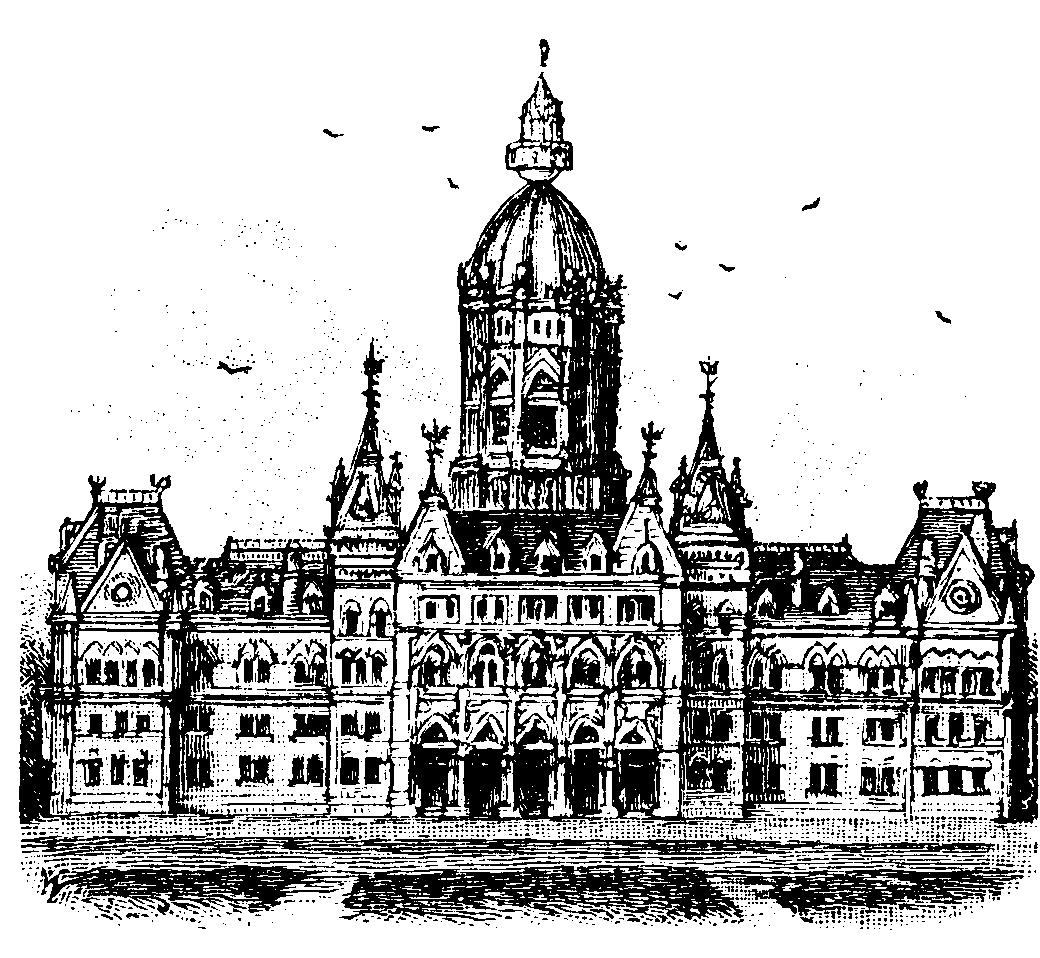
UPJOHN, Richard, architect, born in Shaftesbury, England, 22 January, 1802 ; died in Garrison's, Putnam County, New York, 16 August, 1878. He received a fair education, and then was apprenticed to a builder and cabinet-maker, in which trade he became a master-mechanic and continued at it until 1829. In that year he came to the United States and settled in New Bedford, Massachusetts, where he followed his trade He removed to Boston in 1833, and assisted in the architectural designs of the city court-house. His earliest work was the entrances to the Boston common, and then he designed and built St. John's church in Bangor, Maine In 1839 he was called to New York city to take charge of the proposed alterations in Trinity church, which were finally abandoned, with a view to the erection of a new structure. In the preparation of the design for the new edifice the power and scope of Mr. Upjohn's skill were first made apparent, and his professional career as an architect was thereafter assured. Trinity church was completed in 1846, and was then the noblest in conception and purest in detail of all ecclesiastical structures in this country. (See illustration, page 3020 His success gained for him the building of other churches that are noted for the purity of their style, and are chiefly Gothic. Among those in New York city are the churches of the Ascension and the Holy Communion, Trinity chapel, and St. Thomas's, and, in Brooklyn. Christ and Grace churches and the Church of the Pilgrims. His civic works were mostly in the style of the Italian renaissance. In New York city these include the Trinity building and the Corn Exchange bank. His domestic buildings embody many varieties of style and are scattered throughout the country. His last years were spent at Garrison's, on Hudson river, where he designed St. Philip's church on the Highlands, which, on a small scale, is typical of the Gothic tendency of his taste. Mr. Upjohn was president of the American institute of architects from 1857 till 1876.--His son, Richard Michell, architect, born in Shaftesbury, England, 7 March, 1828, came to New York in 1829. He attended school until 1846, and then entered his father's office. In 1851 he went abroad for further study, but in 1852 returned, and later entered into partnership with his father. Nr. Upjohn has served on commissions--national, state, and municipal--that have been appointed to consider plans and to devise improvements. Besides his association with his father in various architectural works, "he has made many independent designs," among which are the churches of St. Peter, Albany ; St. Paul, Brooklyn ; Central Congregational, Boston ; and the cathedral at Fond du Lac, Wisconsin ; also the library building of Hobart college, Geneva, New York, the capitol at Hartford, Connecticut (shown in the illustration), and many other buildings in various parts of the country.
Unauthorized Site:
This site and its contents are not affiliated, connected,
associated with or authorized by the individual, family,
friends, or trademarked entities utilizing any part or
the subject's entire name. Any official or affiliated
sites that are related to this subject will be hyper
linked below upon submission
and Evisum, Inc. review.
Please join us in our mission to incorporate The Congressional Evolution of the United States of America discovery-based curriculum into the classroom of every primary and secondary school in the United States of America by July 2, 2026, the nation’s 250th birthday. , the United States of America: We The
People. Click Here