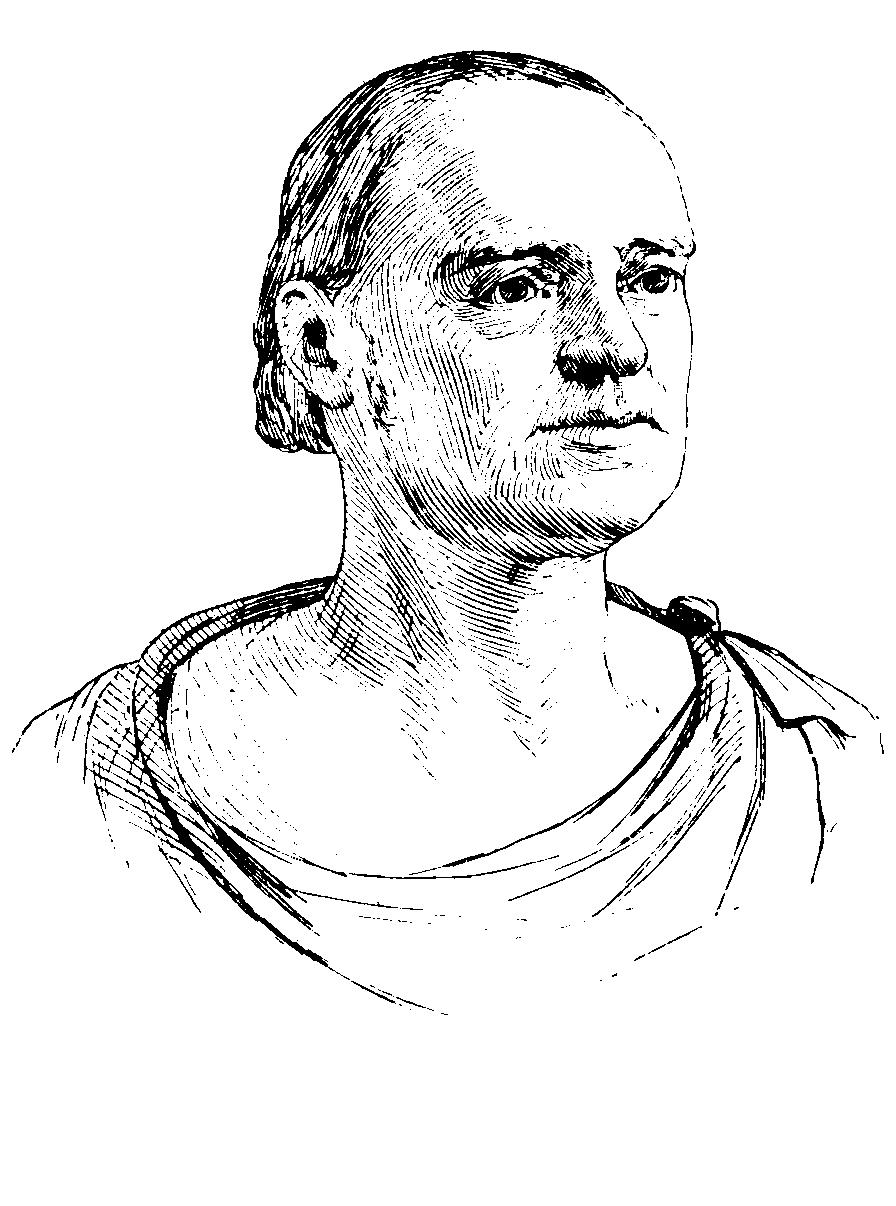
Robert Carter Nicholas,Statesman and Treasurer of Virginia
Robert Carter Nicholas
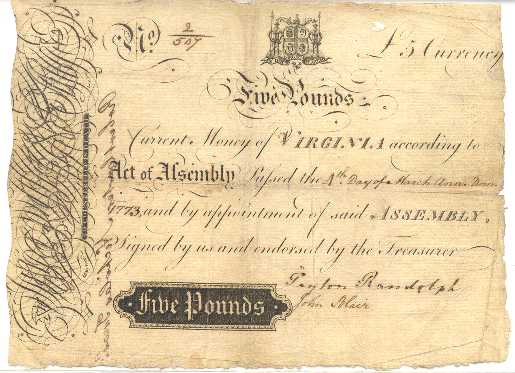
Treasurer Virginia Colony
To
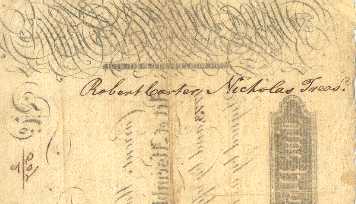
View 1773 Autographed Note
Click Here and
Here
NICHOLAS, Robert Carter,
statesman, born in Hanover, Virginia, in 1715; died there in 1780. His father,
Dr. George Nicholas, emigrated to Virginia about 1700. After graduation at
William and Mary College, the Robert studied law, and practiced with much
success. He represented James City in the house of burgesses, in which he
continued until the house of delegates was organized in 1777, and was a member
of this body until 1779, when he was appointed a judge of the high court of
chancery, and consequently of the court of appeals.
From 1764 till 1776 he was a conspicuous member of the party of which
Richard Bland, Peyton Randolph, and Edmund Pendleton were leaders, and in 1774
voted against the stamp-act resolutions of Patrick Henry. From 1766 till 1777 he
was treasurer of the colony, and in 1773 he was a member of the committee of
correspondence. He was also a member of all of the important conventions, and
president pro tempore of the one that met in July, 1775.
His son, George Nicholas, statesman, born in Hanover, Virginia, about 1755 ;
died in Kentucky in 1799, was graduated at William and Mary in 1772, was major
of the 2d Virginia regiment in 1777, and afterward became colonel. He was an
active member of the convention that ratified the Federal constitution, and was
a member of the house of delegates, in whose deliberations he had great
influence. In 1790 he removed to Kentucky, and was chosen a member of the
convention that framed the constitution of that state, meeting at Danville,
Kentucky, on 1 April, 1792. The constitution was largely the work of Mr.
Nicholas. He was the first attorney-general of Kentucky.--Another son, Wilson
Cary, governor of Virginia, born in Hanover, Virginia, about 1757; died in
Milton, Virginia, 10 October, 1820, was graduated at William and Mary college.
He was an officer in the Revolutionary army, and commanded Washington's
life-guard until it was disbanded in 1783. He was a member of the convention
that ratified the constitution of the United States, and was elected a United
States senator, in place of Henry Tazewell, as a Democrat, serving from 3
January, 1800, till his resignation, 17 December, 1804. He was collector of the
ports of Norfolk and Portsmouth in 1804-'7.
Henry S. Randall, in his life of Jefferson, says of him and his brothers
" No Virginia family contributed more to Mr. Jefferson's personal success
than the powerful family of the Nicholases -- powerful in talents, powerful in
probity, powerful in their numbers and union. On every page of Mr. Jefferson's
political history the names of George, John, Wilson Cary. and Philip Norborne
Nicholas are written."
--Another son, John Nicholas, jurist, born in Williamsburg, Virginia, 19
January, 1761" died in Geneva, New York, 31 December, 1819, was elected to
congress as a Democrat, serving from 2 December, 1793, till 3 March, 1801. He
removed to Geneva, New York, in 1803, and devoted himself to agricultural
pursuits. From 1806 till 1809 he was a state senator, and he was first judge of
the court of common pleas in Ontario county from 1806 until his death. He was
elected to congress, serving from 26 October, 1807, till 27 November, 1809, and
from 1814 till 1817 he was governor of Virginia.
-Another son, Philip Norborne Nicholas, jurist, born in Williamsburg,
Virginia, in 1773; died in Richmond, Virginia, 18 August, 1849, was named for
Philip Norborne Berkeley, Baron de Botetourt. He became a lawyer at an early
age, and before reaching his twenty-first year was appointed attorney-general of
Virginia. For many years he was president of the Farmers' bank of Virginia, and
was judge of the general court of Virginia from about 1823 till his death. He
was largely interested in the politics of his state, and was a member of the "
Richmond Junta," which, with the "Richmond Enquirer," influenced to a great
extent the Democratic party in the state of Virginia and in the country at
large. He strongly opposed the doctrine of nullification in a series of able
articles in the "Richmond Enquirer," signed "Agricola."
--George's son, Robert Carter Nicholas, senator, born in Hanover, Virginia,
about 1793 ; died in Terrebonne parish, Louisiana, 24 December, 1857, was
graduated at William and Mary in 1810. He served in the war of 1812, and was
appointed captain in the 20th infantry on 12 March, 1812, major of the 12th
infantry, 3 March, 1813, and lieutenant-colonel of the 44th infantry, 20 August,
1814. He was transferred to the 30th infantry on 14 November, 1814, and served
on the Canadiem frontier. He was mustered out in June, 1815, and removed to
Louisiana, where he engaged in sugar-planting. He was charge d'affaires to
Naples, subsequently became secretary of state of Louisiana, and was elected a
United States senator, as a Democrat, serving from 4 March, 1836, till 3 March,
1841. In 1851 he became superintendent of public instruction in
Louisiana.--Another son of George, Samuel Smith, jurist, born in Lexington,
Kentucky, 1796; died in Louisville, Kentucky, 27 November, 1869, was first a
met-chant in New Orleans, and afterward practised law with success in
Louisville, Kentucky In 1831 he was appointed judge of the court of appeals, and
he was subsequently a member of the state legislature. He assisted in preparing
the revised code of Kentucky, and was the author of a series of essays on
"Constitutional Law" (Louisville, about 1857).