Appleton's Cyclopedia of American Biography, edited by James
Grant Wilson, John Fiske and Stanley L. Klos. Six volumes, New York: D. Appleton
and Company, 1887-1889 and 1999. Virtualology.com warns that these 19th Century
biographies contain errors and bias. We rely on volunteers to edit the historic
biographies on a continual basis. If you would like to edit this biographyplease
submit a rewritten biography in text form.
If acceptable, the new biography will be published above the 19th Century
Appleton's Cyclopedia Biography citing the volunteer editor
Virtual American Biographies
Over 30,000 personalities
with thousands of 19th Century illustrations, signatures, and exceptional life
stories. Virtualology.com
welcomes editing and additions to the
biographies. To become this site's editor or a contributor
Click Here
or e-mail Virtualology here.
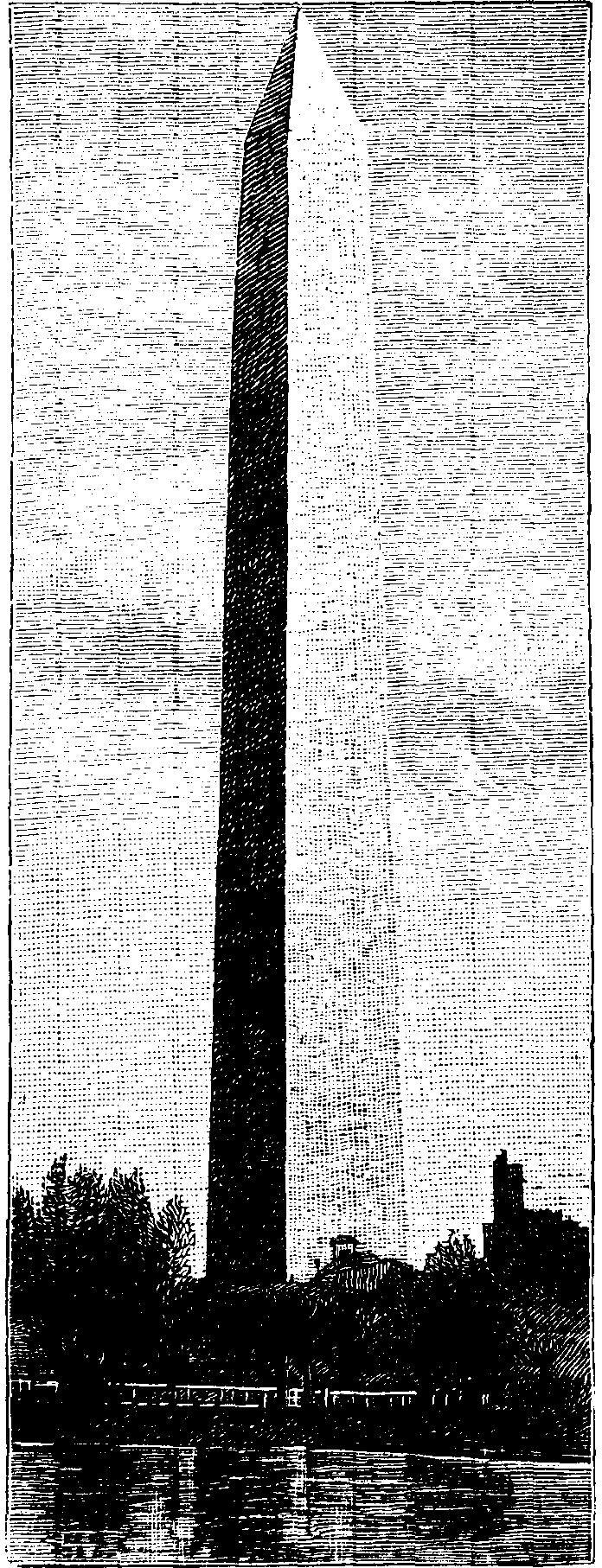
MILLS, Robert, architect, born in Charleston, South Carolina, 12 August, 1781; died in Washington, D. C., 3 March, 1855. He studied architecture under Benjamin H. Latrobe, and designed several buildings in Pennsylvania, among which were the fire-proof wings of Independence hall, Philadelphia, the capitol in Harrisburg, and the single-arch bridge across the Schuylkill. Subsequently he erected several United States custom-houses and marine hospitals. In 1820 he returned to South Carolina, and there became state architect and engineer. He was recalled to Washington in 1830, appointed United States architect, and supervised the building of the United States post-office, patent-office, and treasury buildings. The original design of the Washington monument, the loftiest structure ever erected by man, was made by him. It included a granite shaft faced with white marble, "600 feet high, 55 feet square at the base, 30 feet square at the top, surrounded at its base by a circular colonnade or pantheon, in which to place statues of the nation's illustrious (lead. with vaults beneath for the reception of their remains." The plan for the circular colonnade was never carried out, but, under the auspices of the Washington national monument society, the construction of the monument was begun in 1848 on the very spot selected by Washington himself for a memorial of the American Revolution. Funds amounting to nearly 8250,000 were contributed by the people of the United States of all ages and from all quarters of the Union, and the construction continued until 1856, when it reached a height of over 156 feet. The financial embarrassments of the time led to the discontinuance of the work, and it was not until 1877 when, by act of congress, its completion was authorized, and Colonel Thomas L. Casey, of the United States engineers, placed in charge. Various modifications of the original plan were made by him, including the building of an entire new base, which was found to be necessary, until finally it was dedicated, in the presence of President Arthur and his cabinet, on 22 February, 1885. The address of the occasion was written by Robert C. Winthrop, who in 1848 had delivered an oration on the laying of the corner-stone. As shown in the accompanying illustration, the monument is 555 feet 5 1/8-inches, the shaft being 500 feet 5 1/8 inches high, and the pyramidion 55 feet. The topmost point is 597 feet 3 inches above mean low water in the Potomac, and 596 feet 9"36 inches above the mean level of the Atlantic at Sandy Hook, New York, as determined. 1 December, 1884, by the United States coast and geodetic survey. Mr. Mills published "Statistics of South Carolina" with "Atlas of South Carolina" (Charleston, 1826) ; "The American Pharos or Light-house Guide" (Washington, 1832) ; and "Guide to the National Executive Offices" (1842).
Unauthorized Site:
This site and its contents are not affiliated, connected,
associated with or authorized by the individual, family,
friends, or trademarked entities utilizing any part or
the subject's entire name. Any official or affiliated
sites that are related to this subject will be hyper
linked below upon submission
and Evisum, Inc. review.
Please join us in our mission to incorporate The Congressional Evolution of the United States of America discovery-based curriculum into the classroom of every primary and secondary school in the United States of America by July 2, 2026, the nation’s 250th birthday. , the United States of America: We The
People. Click Here