Appleton's Cyclopedia of American Biography, edited by James
Grant Wilson, John Fiske and Stanley L. Klos. Six volumes, New York: D. Appleton
and Company, 1887-1889 and 1999. Virtualology.com warns that these 19th Century
biographies contain errors and bias. We rely on volunteers to edit the historic
biographies on a continual basis. If you would like to edit this biographyplease
submit a rewritten biography in text form.
If acceptable, the new biography will be published above the 19th Century
Appleton's Cyclopedia Biography citing the volunteer editor
Virtual American Biographies
Over 30,000 personalities
with thousands of 19th Century illustrations, signatures, and exceptional life
stories. Virtualology.com
welcomes editing and additions to the
biographies. To become this site's editor or a contributor
Click Here
or e-mail Virtualology here.
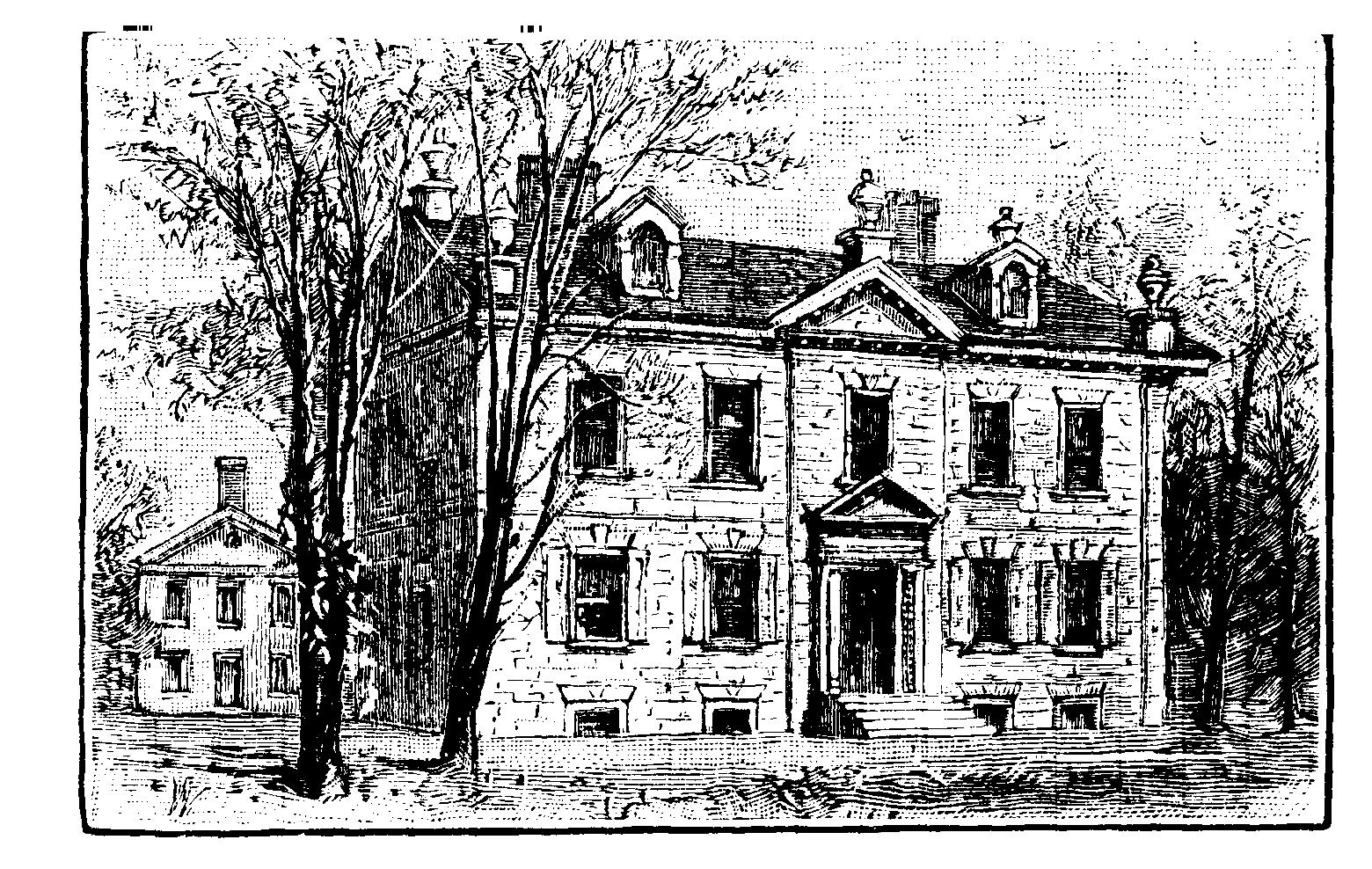
CHEW, Samuel, jurist, born in Maryland about 1690; died 16 June, 1744. He was a son of Col. Samuel, from Chewton, in Somersetshire, England, who came to Maryland with Lord Baltimore in 1671. The son embraced the Quaker doctrines, was for a time a practising physician, and afterward became a judge, and was chief justice of the district of Newcastle. He was influential among the Quakers, but provoked criticism by an address to the grand jury of Newcastle on the lawfulness of resistance to an armed enemy (1741; reprinted in 1775).--His son, Benjamin, jurist, born at West River, Anne Arundel County, Maryland, 29 November, 1722; died 20 January, 1810. He studied law with Andrew Hamilton, an eminent Philadelphia lawyer, and in London, settled in 1743 on the Delaware, removed to Philadelphia in 1745, was recorder from 1755 till 1772, register of wills, attorney general, resigning in 1766, and in 1774 became chief justice of Pennsylvania. He was also for several years speaker of the house of delegates of the three lower counties in Delaware. When the revolution began, both parties courted his support, but after the Declaration of Independence he opposed the patriots, and, because he declined to give a parole in 1777, was imprisoned in Fredericksburg, Virginia From 1790 until the abolition of that court in 1806 he was president of the high court of errors and appeals. Chief-Justice Chew resided in Germantown, in a spacious stone mansion, still standing (1886), which is represented in the accompanying illustration. During the battle of Germantown, 4 October, 1777, the doors of the house were riddled by bullets, and cannon-balls passed through its walls and shattered the statuary in the surrounding grounds. At the opening of the battle, when the central American column, under Washington, descended the main street, they first overwhelmed a small British outpost under Col. Musgrave. Most of the British were scattered, but Musgrave, with a small party of infantry, took refuge in Chew's house, and set up a fire from the windows. The Americans opened an artillery-fire upon the house, but its stone walls were too solid to be beaten down by the three-pound and six-pound field-pieces of that day; and so Maxwell's brigade was left to besiege the house, while the main American column pressed on. The chief effect of this incident was to retard and weaken the American charge, and to give the British time to prepare for it.
Unauthorized Site:
This site and its contents are not affiliated, connected,
associated with or authorized by the individual, family,
friends, or trademarked entities utilizing any part or
the subject's entire name. Any official or affiliated
sites that are related to this subject will be hyper
linked below upon submission
and Evisum, Inc. review.
Please join us in our mission to incorporate The Congressional Evolution of the United States of America discovery-based curriculum into the classroom of every primary and secondary school in the United States of America by July 2, 2026, the nation’s 250th birthday. , the United States of America: We The
People. Click Here