Appleton's Cyclopedia of American Biography, edited by James
Grant Wilson, John Fiske and Stanley L. Klos. Six volumes, New York: D. Appleton
and Company, 1887-1889 and 1999. Virtualology.com warns that these 19th Century
biographies contain errors and bias. We rely on volunteers to edit the historic
biographies on a continual basis. If you would like to edit this biographyplease
submit a rewritten biography in text form.
If acceptable, the new biography will be published above the 19th Century
Appleton's Cyclopedia Biography citing the volunteer editor
Virtual American Biographies
Over 30,000 personalities
with thousands of 19th Century illustrations, signatures, and exceptional life
stories. Virtualology.com
welcomes editing and additions to the
biographies. To become this site's editor or a contributor
Click Here
or e-mail Virtualology here.
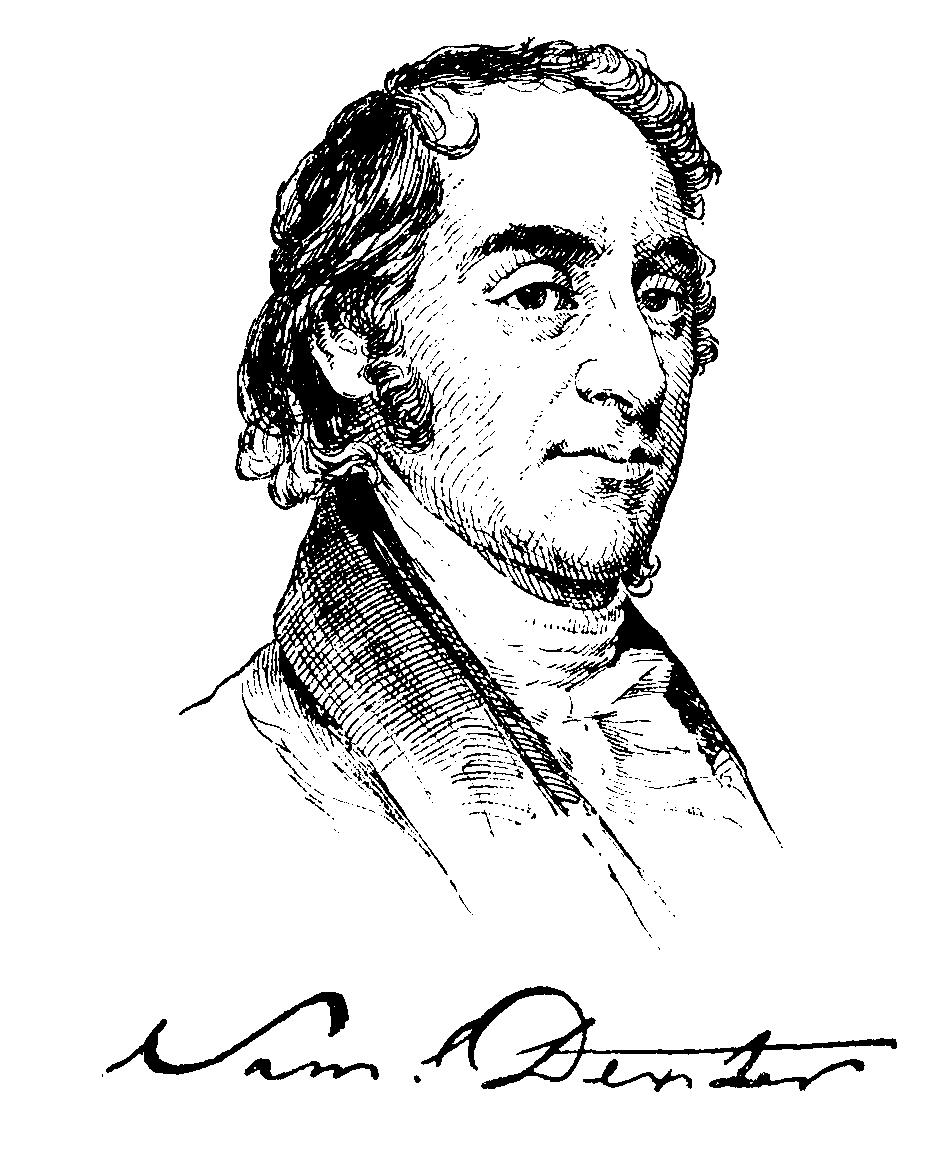
DEXTER, Samuel, merchant, born in 1726: died in Mendon, Massachusetts, in 1810. He was the son of Rev. Samuel Dexter, of Dedham, Massachusetts, who was graduated at Harvard in 1720. He accumulated a competency in mercantile pursuits in Boston before he had reached the age of fifty, and devoted much time to historical studies. In the discussion between the mother country and her colonies that preceded the Revolution, Mr. Dexter took very strong ground, basing his views on the legislative precedents in which he was well versed. While not displaying the ardor of Otis, Warren, or Hawley, nor, on some questions, perhaps, the firmness of Adams. he labored not less zealously than they, in company with such men as Bowdoin and Winthrop, to inform the people on the important questions then in debate, and to confute and expose the fallacies of Govs. Bernard and Hutchinson. He and his friends pointed out the danger of the policy pursued by the British ministry, and sought to convince their fellow citizens that all that was dear to them was at stake. He was a member of the governor's council before the Revolution, and for several years between 1765 and 1775 served on the more important committees of both the house and the council. In 1776'7, and subsequently, he was chosen one of the supreme executive council of the state. In his later years he retired from public service and devoted much time to religious investigations. These led him to reject the doctrines of Calvin, and to incline strongly toward the Arminian. At his death he left a legacy of $5,000 to Harvard for the encouragement of biblical criticism. He also bequeathed $40 to clergyman, on condition that the latter should deliver a funeral sermon in his memory without making any mention of his name, the discourse to be based on the text, "The things which are seen are temporal; but the things which are not seen are eternal."
His son, Samuel, jurist, born in Boston, 14 May 1761; died in Athens, New York, 3 May 1816, was graduated at Harvard in 1781, and. having studied law at Worcester, Massachusetts, with Levi Lincoln, was admitted to the bar in 1784. After practicing for some years in Worcester and Middlesex counties, he removed to Boston, which he made his home for the remainder of his life. He was a member of the Massachusetts House of Representatives in 1788'90, served in the lower house at Washington in 1793'5, and was elected to the U.S. senate, in which body he sat from 2 December 1799, until June 1800, when he resigned, on being' appointed secretary of war by President Adams. This office he held until 31 December 1800, when he was named secretary of the treasury, which place he filled until the inauguration of President Jefferson. He then returned to the practice of the law, appearing every winter at Washington in important cases before the U. S. Supreme Court. He was a close reasoner and an able logician, and in pleading chose to rely more on the strength of his arguments than on ad captandum appeals to the jury; vet he could be pathetic and impressive in addressing himself to the feelings and the moral sense, He began life a decided federalist, but gradually separated from the party, supporting President Jefferson's war policy, and in 1812 going with the republicans in advocating a contest with England. But he never considered himself a member of the latter organization, and, on being nominated as the republican candidate for governor of Massachusetts, in 1816, a few weeks before his death, he published an address to the electors, declaring that he differed radically with that party. His name was not withdrawn, however, and a majority defeated him for his opponent of 2,000 out of 47,000 votes. In 1815 he was offered a special embassy to Spain by President Madison, but declined it. In 1813 he received the degree of LL. D. from Harvard. He was the first president of the first society formed in Massachusetts for the promotion of temperance, in which question he took great interest. He died of scarlet fever, in the prime of life. while visiting Athens, New York, to attend the wedding of his son. He was the author of the reply of the senate to the address of President Adams on the death of Washington, and published a " Letter on Freemasonry": "Progress of Science," a poem (1780); and " Speeches and Political Papers," besides political pamphlets.
His son, Franklin, lawyer, born in Charlestown, Massachusetts, 5 November 1793; died in Beverly, Massachusetts, 14 August 1857, was graduated at Harvard in 1812, and in 1857 received from that College the degree of LL.D. He studied for the bar, and soon attained a good position in his profession. He filled many public offices, and was elected to both branches of the state legislature. In 1836 he was a member of a select committee on the revised statutes. He served as U. S. district attorney from 1841 till 1845, and was reappointed by President Taylor in 1849. His reputation for professional learning and logical acuteness was greatly increased by his able defense of the Knapps, who were tried for the murder of Captain White, of Salem, in 1830, Daniel Webster being employed for the prosecution.
Unauthorized Site:
This site and its contents are not affiliated, connected,
associated with or authorized by the individual, family,
friends, or trademarked entities utilizing any part or
the subject's entire name. Any official or affiliated
sites that are related to this subject will be hyper
linked below upon submission
and Evisum, Inc. review.
Please join us in our mission to incorporate The Congressional Evolution of the United States of America discovery-based curriculum into the classroom of every primary and secondary school in the United States of America by July 2, 2026, the nation’s 250th birthday. , the United States of America: We The
People. Click Here