Appleton's Cyclopedia of American Biography, edited by James
Grant Wilson, John Fiske and Stanley L. Klos. Six volumes, New York: D. Appleton
and Company, 1887-1889 and 1999. Virtualology.com warns that these 19th Century
biographies contain errors and bias. We rely on volunteers to edit the historic
biographies on a continual basis. If you would like to edit this biographyplease
submit a rewritten biography in text form.
If acceptable, the new biography will be published above the 19th Century
Appleton's Cyclopedia Biography citing the volunteer editor
Virtual American Biographies
Over 30,000 personalities
with thousands of 19th Century illustrations, signatures, and exceptional life
stories. Virtualology.com
welcomes editing and additions to the
biographies. To become this site's editor or a contributor
Click Here
or e-mail Virtualology here.
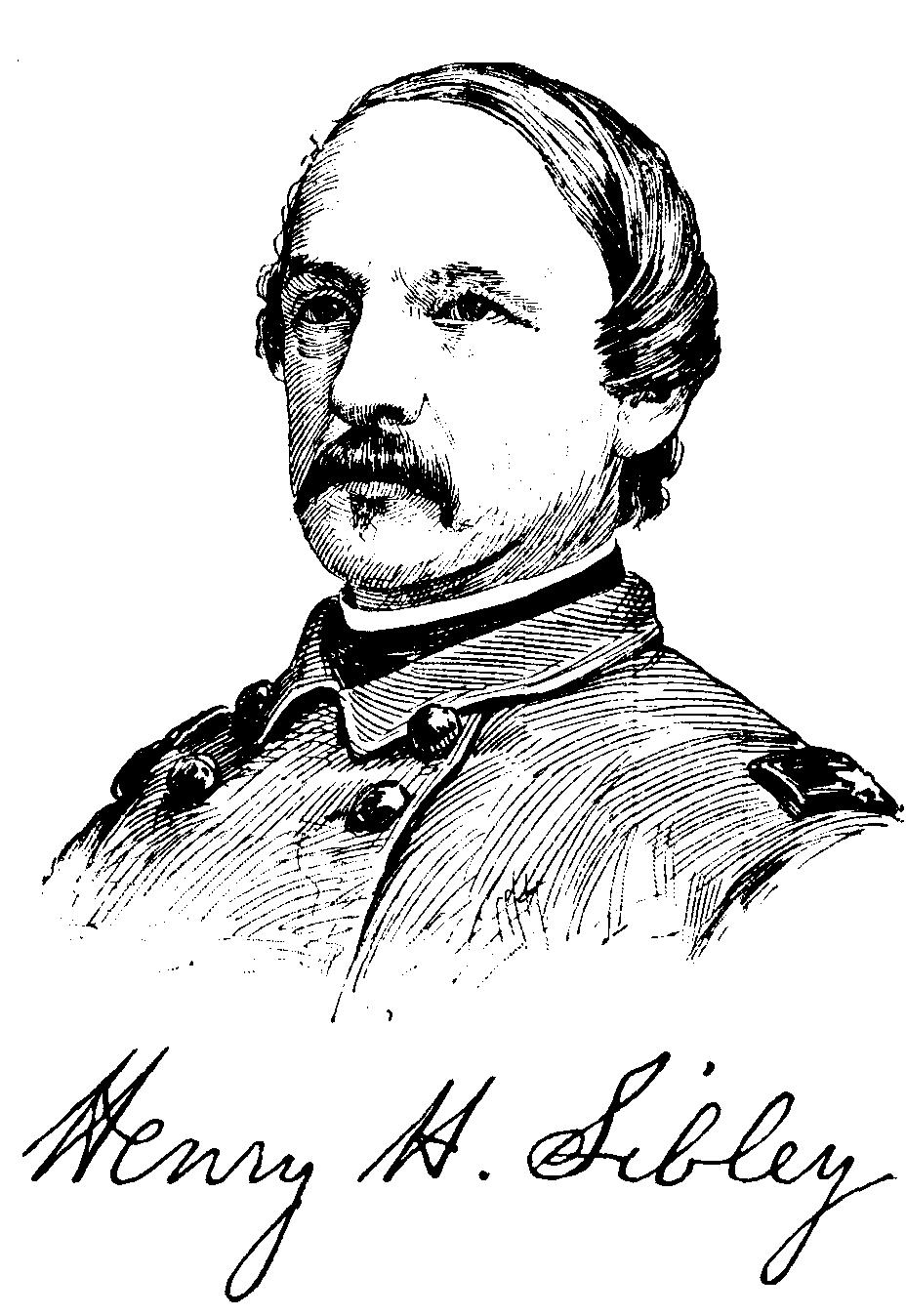
SIBLEY, Solomon, jurist, born in Sutton, Massachusetts, 7 October, 1769'; died in Detroit, Michigan, 4 April, 1846. He studied law, and began practice in Marietta, Ohio, in 1795, removing in the following year to Cincinnati, and a year later to Detroit, Michigan He was elected to the first legislature of the Northwestern territory in 1799, and was a delegate to congress from the territory of Michigan in 1820-'3. He was appointed a judge of the supreme court of Michigan, and held that office until he was compelled by deafness to resign in 1836.--His son, Henry Hastings, pioneer, born in Detroit, Michigan, 20 February, 1811, received a classical education, and began the study of law, but abandoned it to engage in mercantile business at Sault Sainte Marie, soon afterward entered the employment of the American fur company, became a partner, and on 7 November, 1834, during one of his trips, reached the mouth of the Minnesota river, and was so delighted with the spot that he made it his permanent home, building at Mendota the first stone house within the present limits of the state of Minnesota. He devoted much of his time to the sports of the frontier, which he described in graphic style in the " Spirit of the Times" and "Turf, Field, and Farm," over the pen-name of "Hal, a Dacotah." When the state of Wisconsin was admitted into the Union, 29 May, 1848, the western boundary was fixed at St. Croix river, leaving an area of about 23,000 square miles, on the east of Mississippi river, including some organized counties, without a government. The acting governor of the territory issued a proclamation providing for the election of a delegate to represent this district in congress, and Mr. Sibley was chosen in November, 1848. After much delay and discussion, he was admitted to his seat, 15 January, 1849, and secured the passage of an act creating* the territory of Minnesota, which embraced the rest of Wisconsin and a vast area west of the Mississippi. He was elected a delegate to congress from Minnesota in 1849, and reelected in 1851, when he declined longer to be a candidate. He was a member of the Democratic branch of the convention that framed in 1857 the state constitution that was adopted by the people in November of the same "year. The state was admit/' on 11 May, 1858, and he was inaugurated as governor in the same month. He opposed the loan of state credit to railroad companies, and, when a constitutional amendment was carried authorizing the issue of bonds, he refused to send them out except on security of trust deeds from the companies giving a priority of lien upon all their property. But this ruling was negatived by the decision of the supreme court, thus leaving the way open for the issue of an indefinite amount of first mortgage bonds, and resulting in the bankruptcy of the companies and the repudiation of the bonds by the people of Minnesota. When the great Sioux rising" occurred on the Iowa and Minnesota frontier in 1862 (see LITTLE CROW) he commanded the white forces composed of volunteer citizens. Notwithstanding the delay in procuring arms and ammunition, only five weeks elapsed before the decisive battle of Wood Lake, 23 September, broke the power of the savages. Their capture followed two days later. He was commissioned brigadier-general of volunteers, and afterward brevetted major-general. He was appointed a member of the board of Indian commissioners during President Grant's administration, and in 1871 was elected to the legislature, where, during the ensuing session, he made a rigorous speech against the repudiation of the state railroad bonds, being thus instrumental in restoring the credit of Minnesota. He received the degree of LL.D. from Princeton in 1888. General Sibley has held the offices of president of the Chamber of commerce of St. Paul, where he resides, of the board of regents of the State university, and of the State historical society, to whose "Collections" he has made many contributions.
Unauthorized Site:
This site and its contents are not affiliated, connected,
associated with or authorized by the individual, family,
friends, or trademarked entities utilizing any part or
the subject's entire name. Any official or affiliated
sites that are related to this subject will be hyper
linked below upon submission
and Evisum, Inc. review.
Please join us in our mission to incorporate The Congressional Evolution of the United States of America discovery-based curriculum into the classroom of every primary and secondary school in the United States of America by July 2, 2026, the nation’s 250th birthday. , the United States of America: We The
People. Click Here