Appleton's Cyclopedia of American Biography, edited by James
Grant Wilson, John Fiske and Stanley L. Klos. Six volumes, New York: D. Appleton
and Company, 1887-1889 and 1999. Virtualology.com warns that these 19th Century
biographies contain errors and bias. We rely on volunteers to edit the historic
biographies on a continual basis. If you would like to edit this biographyplease
submit a rewritten biography in text form.
If acceptable, the new biography will be published above the 19th Century
Appleton's Cyclopedia Biography citing the volunteer editor
Virtual American Biographies
Over 30,000 personalities
with thousands of 19th Century illustrations, signatures, and exceptional life
stories. Virtualology.com
welcomes editing and additions to the
biographies. To become this site's editor or a contributor
Click Here
or e-mail Virtualology here.
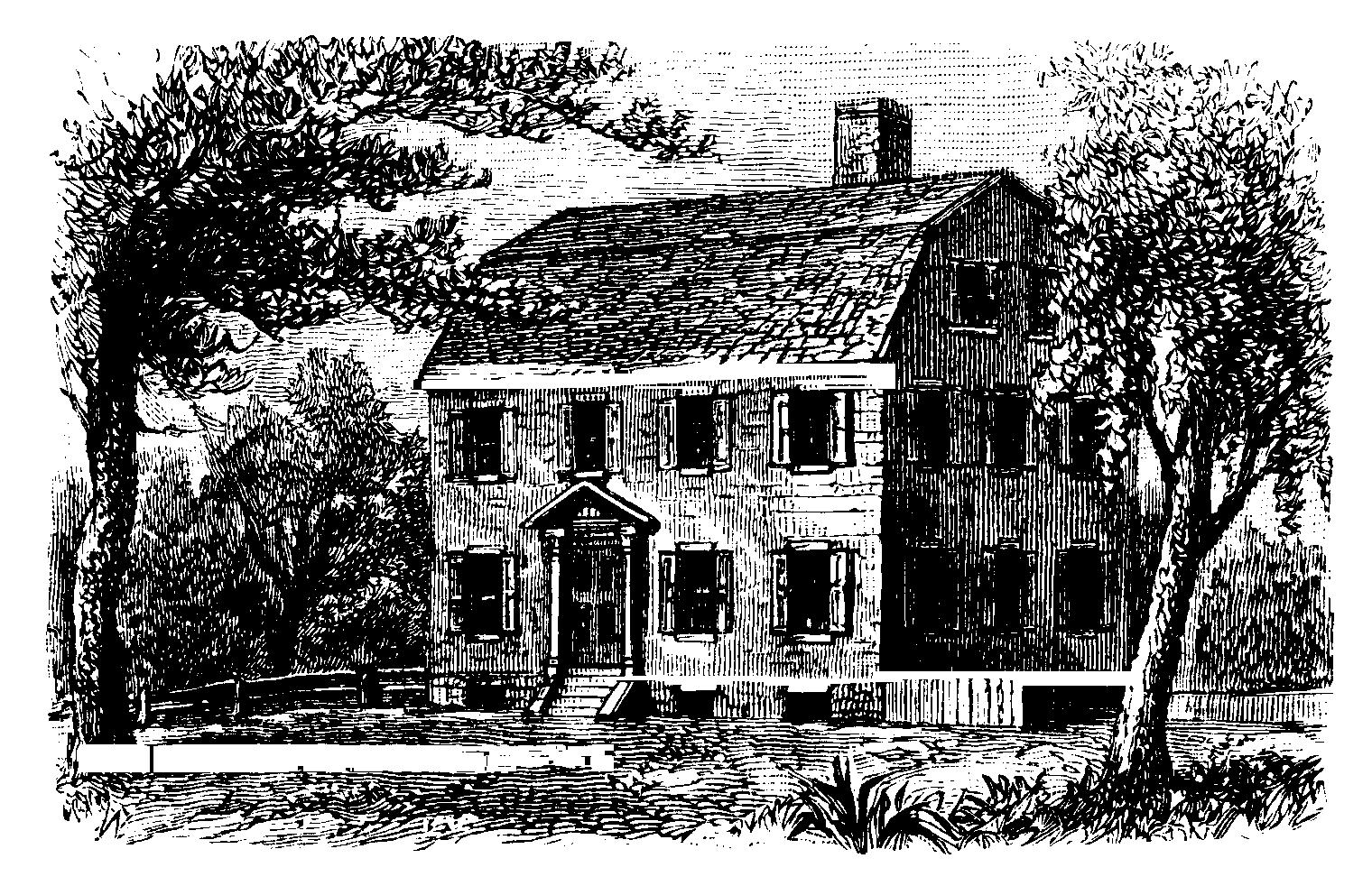
BARTON, William, soldier, born in Warren, Bristol County, Rhode Island, 26 May 1748; died in Providence, Rhode Island, 22 October 1831. He received a common-school education, and when the war began was working at his trade, that of a hatter. On hearing of the battle of Bunker Hill, he shouldered a musket and joined the army. In 1777 he conceived the exploit that made him famous, that of capturing the British general, Robert Prescott, who had made himself offensive to the Rhode Island Whig s by his overbearing conduct. On the night of 10 July with thirty-eight men in four whale-boats, Barton crossed Narragansett bay, passed unobserved three British frigates, and, landing about half way between Newport and Bristol ferry, went to the farm-house, represented in the engraving, where Prescott had his headquarters. The guards were surprised, the door of Prescott's room was broken in by a Negro in the party, who used his head as a battering-ram, and the general was hurried away half dressed and taken to Warwick point, and afterward to Washington's headquarters in New Jersey. For this exploit congress gave Barton a sword, and he was brevetted colonel. He was very proud of his deed, and it is said that at the retreat of the British from Warren, in 1778, he called after one of the enemy's officers, challenging him to single combat, and announcing himself as " the man who took Prescott." During this same retreat Barton was wounded and disabled for some time. He was afterward a member of the state convention that adopted the federal constitution. Some time later Barton's right to a piece of land in Vermont was contested, and, as he refused to pay a judgment, he was detained in Danville, Vermont, for fourteen years. Lafayette, on his visit in 1825, paid the claim without Barton's knowledge, and set him free. It is said by some writers that the land in question was granted to Barton by congress: but Mrs. Catharine R. Williams, in her life of Barton ("Biographies of Revolutionary Heroes," Providence, 1839), says that he purchased it.
Unauthorized Site:
This site and its contents are not affiliated, connected,
associated with or authorized by the individual, family,
friends, or trademarked entities utilizing any part or
the subject's entire name. Any official or affiliated
sites that are related to this subject will be hyper
linked below upon submission
and Evisum, Inc. review.
Please join us in our mission to incorporate The Congressional Evolution of the United States of America discovery-based curriculum into the classroom of every primary and secondary school in the United States of America by July 2, 2026, the nation’s 250th birthday. , the United States of America: We The
People. Click Here