Appleton's Cyclopedia of American Biography, edited by James
Grant Wilson, John Fiske and Stanley L. Klos. Six volumes, New York: D. Appleton
and Company, 1887-1889 and 1999. Virtualology.com warns that these 19th Century
biographies contain errors and bias. We rely on volunteers to edit the historic
biographies on a continual basis. If you would like to edit this biographyplease
submit a rewritten biography in text form.
If acceptable, the new biography will be published above the 19th Century
Appleton's Cyclopedia Biography citing the volunteer editor
Virtual American Biographies
Over 30,000 personalities
with thousands of 19th Century illustrations, signatures, and exceptional life
stories. Virtualology.com
welcomes editing and additions to the
biographies. To become this site's editor or a contributor
Click Here
or e-mail Virtualology here.
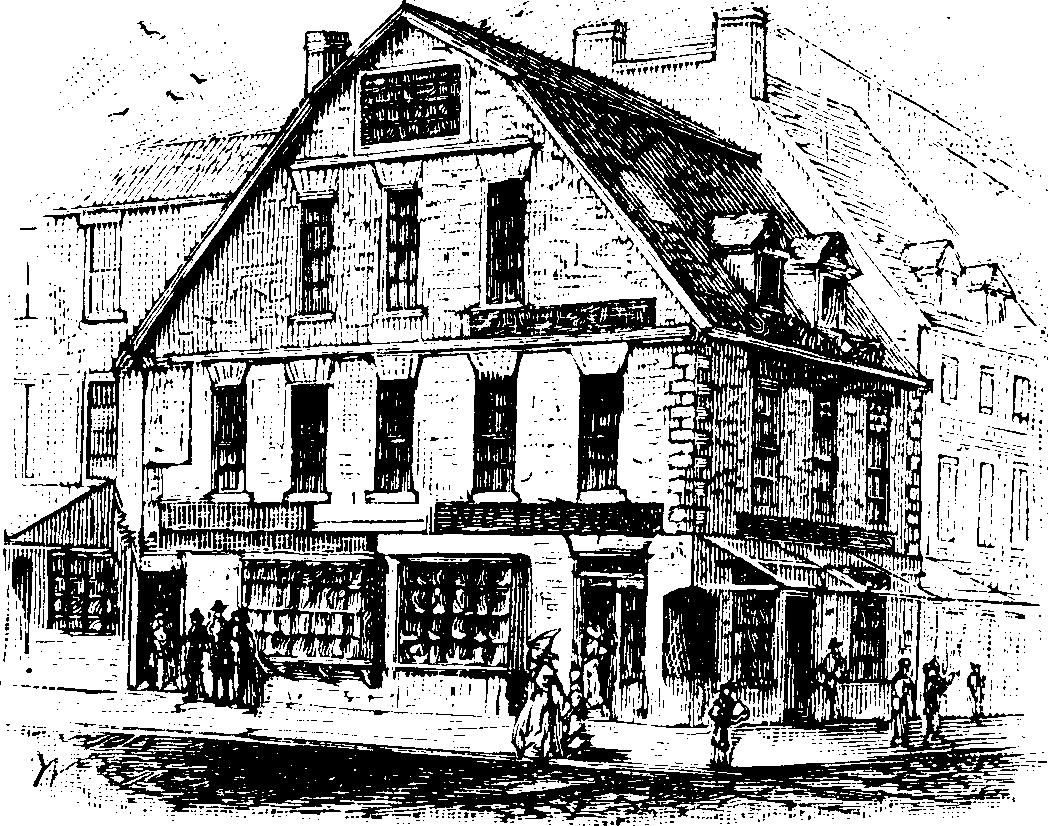
TICKNOR, William Davis, publisher, born in Lebanon, New Hampshire, 6 August, 1810: died in Philadelphia, Pennsylvania, 10 April, 1864. In youth he was employed in the office of his uncle, Benjamin, a money-broker, and he afterward became teller in the old Columbian bank of Boston. He began the business of a publisher in Boston in 1832, in connection with John Allen, under the firm-name of Allen and Ticknor, successors of the old publishing-house of Carter, Hendee, and Co. In the following year Mr. Allen retired, leaving Mr. Ticknor to carry on the business for twelve years. This he did under his own name, which will be found on the title-pages of the early American editions of Tennyson and many New England authors. In 1845 John Reed and James T. Fields became his partners, and the imprint was changed to Ticknor, Reed, and Fields, but the legal firm-name remained William D. Ticknor and Co. during Mr. Ticknor's lifetime. On the retirement of Mr. Reed, in 1854, the style became Ticknor and Fields, continuing as such for about ten years. During this period the last-named firm purchased and continued to publish the "Atlantic Monthly" and the "North American Review," On the death of Mr. Ticknor his interest was continued in behalf of his son, Howard M., and James R. Osgood. Among the important events of this epoch were the establishment of "Our Young Folks" (1864), edited by Howard M. Tick-nor, and of "Every Saturday" (1866), edited by Thomas Bailey Aldrich. In 1868 the younger Ticknor retired, and a new copartnership was formed among the other members, under the firm name of Fields, Osgood, and Co. In 1870 Benjamin H. Ticknor was admitted, and in 1871 Mr. Fields withdrew, when the firm became James R. Osgoodand Co. In 1885 it became Ticknor and Co., consisting of Benjamin H, and Thomas B Ticknor and George F. Godfrey. Prom the beginning the publications of the house were characterized by intrinsic merit and by the neatness and correctness of their typography. The interests of American writers met with unusual consideration, and it became a mark of distinction for young writers to have secured them as publishers. William D. Ticknor was one of the first of American publishers to make payment for the works of foreign authors, beginning with £100 to Tennyson in 1842. The house always continued this custom, and it is probably not too much to say that its example did more than any other one thing to establish a principle that is now so generally recognized and acted upon. For three decades the curtained office of their establishment in the quaint, old building at the corner of Washington and School streets, seen in the illustration, was the resort of Dickens, Emerson, Hawthorne, Holmes, Longfellow, Lowell, Sumner, Thackeray, Whipple, and Whittier. This building (the oldest but one now standing in Boston), one of the landmarks of the city, was built immediately after the great fire of 1711, and was occupied for various domestic and mercantile purposes, at one time being an apothecary-shop kept by the father of James Freeman Clarke, until in 1828 it became the book-store of Carter, Hendee, and Co., from whom it passed to Allen and Tick-nor. It remained in the hands of William D. Ticknor and his immediate successors until 1866, when increasing business required their removal to Tremont street ; but it is still a book-store.
Unauthorized Site:
This site and its contents are not affiliated, connected,
associated with or authorized by the individual, family,
friends, or trademarked entities utilizing any part or
the subject's entire name. Any official or affiliated
sites that are related to this subject will be hyper
linked below upon submission
and Evisum, Inc. review.
Please join us in our mission to incorporate The Congressional Evolution of the United States of America discovery-based curriculum into the classroom of every primary and secondary school in the United States of America by July 2, 2026, the nation’s 250th birthday. , the United States of America: We The
People. Click Here