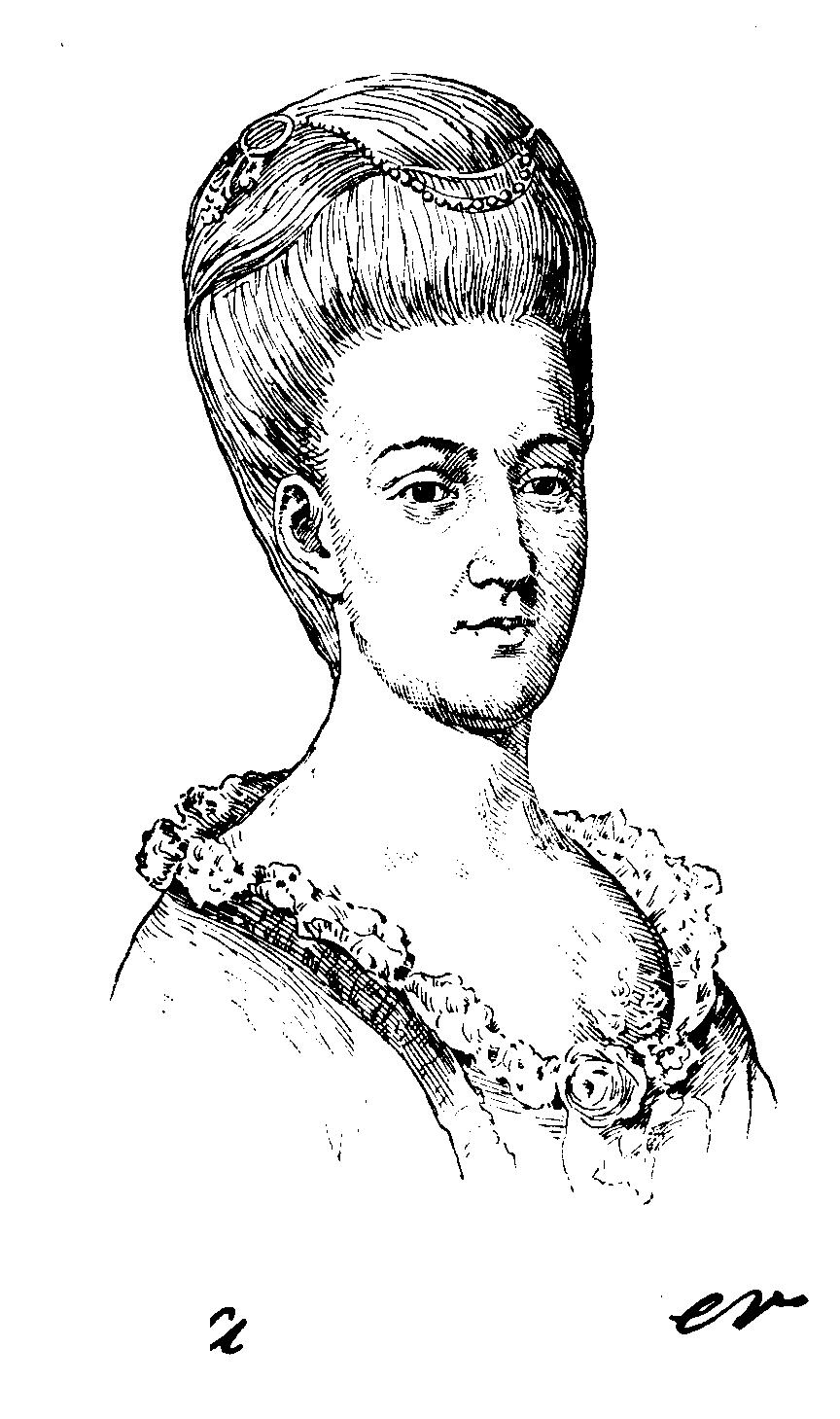
Appleton's Cyclopedia of American Biography, edited by James
Grant Wilson, John Fiske and Stanley L. Klos. Six volumes, New York: D. Appleton
and Company, 1887-1889 and 1999. Virtualology.com warns that these 19th Century
biographies contain errors and bias. We rely on volunteers to edit the historic
biographies on a continual basis. If you would like to edit this biographyplease
submit a rewritten biography in text form.
If acceptable, the new biography will be published above the 19th Century
Appleton's Cyclopedia Biography citing the volunteer editor
Virtual American Biographies
Over 30,000 personalities
with thousands of 19th Century illustrations, signatures, and exceptional life
stories. Virtualology.com
welcomes editing and additions to the
biographies. To become this site's editor or a contributor
Click Here
or e-mail Virtualology here.
DUER, William, statesman, born in Devonshire, England, 18 March 1747; died in New York City, 7 May 1799. He was the third son of John Duer, a planter of Antigua, who had a villa in Devonshire. His mother was Frances Frye, daughter of Sir Frederick Frye, who held a command in the West Indies, where she married John Duer. After being sent to Eton, and while still under age, he was put into the army as ensign, and accompanied Lord Clive as aide-de-camp on his return to India, as governor general, in 1762. As he suffered severely from the climate, Lord Clive sent him back to England, where he remained five years until his father's death. Having left the army, he went to Antigua, and thence to New York, for the first time in 1768, to arrange for a regular and constant supply of lumber for the plantations in Antigua and Dominica. This brought him into contact with General Schuyler, by whom he was induced to buy a large tract of land at, Fort Miller, on the upper Hudson, including the falls, and here he erected large sawmills. He was appointed colonel of militia, judge of the County courts, member of the New York provincial congress, and member of the committee of safety. In 1773 he went again to England, and obtained a contract to supply the Royal navy with timber for masts and spars.
He was one of the committee that drafted the first constitution of New York in the convention of 1777. In 1777'8 he was a delegate to the Continental congress, and in 1789 secretary of the treasury board, until the organization of the finance department under the National convention. He was a member of the state legislature, and assistant secretary of the treasury under Coy. Hamilton. Mr. Duer's failure in 1792 produced the first financial panic caused by speculation that New York had ever witnessed. The loss was estimated at $3,000,000, and impoverished many in all classes.
On 27 July 1779, he married Catherine, second daughter of General William Alexander, the claimant of the Scottish earldom of Stifling. The marriage took place at his county seat, " The Buildings," near Baskingridge, New Jersey, which was designed to imitate the residence of an English nobleman, with all the appointments of an English country seat. She was descended from James Alexander, the De Peysters, Livingstons, and Schuylers, and occupied a brilliant place in the society of the period.
His eldest son, William Alexander Duer, jurist, born in Rhinebeck, New York, 8 September 1780; died in New York, 30 May 1858, studied law in Philadelphia, and with Nathaniel Pendleton in New York. During the quasi war with France in 1798 he obtained the appointment of midshipman in the navy, and served under Decatur. On the adjustment of the French question, he resumed his studies with Pendleton, and was admitted t9 the bar in 1802. He engaged in business with Edward Livingston, who was then district attorney and mayor of New York, and, after his removal to New Orleans, formed a professional partnership with his brother-in-law, Beverley Robinson. About this time he contributed to a partisan weekly paper called the "Corrector," conducted by Dr. Peter Irving in support of Aaron Burr. Mr. Duet shortly afterward joined Livingston at New Orleans, and studied Spanish civil law. He was successful, but, owing to the climate and to his marriage with the daughter of William Denning, a prominent Whig of New York, he was induced to resume practice in the latter City. Here he contributed literary articles to the " Morning Chronicle," the newspaper of his friend Peter Irving. He next opened an office in Rhinebeck, and in 1814 was elected to the state assembly, where he was appointed chairman of a committee on Colleges and academies, and succeeded in passing a bill, which is the original of the existing law on the subject of the common school income.
He was also chairman of the committee that arranged the constitutionality of the state law vesting the right of navigation in Livingston and Fulton, and throughout his service bore a prominent part in promoting canal legislation. He was judge of the Supreme Court from 1822 till 1829, when he was elected president of Columbia College, where he remained until failing health compelled him to resign in 1842. During his administration he delivered to the senior class a course of lectures on the constitutional jurisprudence of the United States (published in 1833; revised ed., 1856). He delivered a eulogy on President Monroe from the portico of the City hall. After his retirement he resided in Morristown, New Jersey, where he wrote the life of his grandfather, Lord Stirling (published by the Historical society of New Jersey).
In 1847 he delivered an address in the College chapel before the literary societies of Columbia, and in 1848 an historical address before the St. Nicholas society, which gives early reminiscences of New York, and describes the scenes connected with the inauguration of President Washington, both of which were published. He was the author of two pamphlets addressed to Cadwallader D. Colden on the "Steamboat Controversy," and the "Life of William Alexander, Earl of Stifling" (New York, 1847).
Another son, John Duer, jurist, born in Albany, New York, 7 October 1782; died on Staten Island, 8 August 1858, entered the army in his sixteenth year, but after two years left the service for the study of law. He began practice in Orange County, New York, and removed to New York City about 1820, where he acquired reputation as an insurance lawyer. He was a delegate to the State constitutional convention in 1821, and in 1825 was appointed one of the commissioners to revise the statutes law of the state, and afforded valuable assistance in the preparation of the first half of the work. He was elected an associate judge of the superior court, and, on the death of Judge Oakley in 1857, became chief justice. He has published "A Lecture on the Law of Representations in Marine Insurance, with Notes and Illustrations" (New York, 1844); "A Treatise on the Law and Practice of Marine Insurante," which has become a standard authority in the United States (2 vols., 1845'6); "A Discourse on the Life, Character, and Public Services of James Kent, Chancellor of the State of New York," delivered by request before the judiciary and bar of the City and County of New York (12 April 1848); "Three of the Revised Statutes of the State," in connection with Benjamin F. Butler and John C. Spencer; and at the time o{ his death was editing Duer's reports of the decisions of the superior court, the sixth volume of which he left incomplete.
William Duer, son of William Alexander, lawyer, born in New York City, 25 May 1805, was graduated at Columbia in 1824, studied law, and removed to Oswego in 1828. In 1832 he was an unsuccessful candidate for the legislature, and in that year returned to New York, and went thence to New Orleans. In 1835 he again resided in Oswego, and was a member of the New York legislature in 1840, and district attorney for Oswego County from 1845 till 1847. He was twice elected to congress as a Whig, serving from 1847 till 1851.
Unauthorized Site:
This site and its contents are not affiliated, connected,
associated with or authorized by the individual, family,
friends, or trademarked entities utilizing any part or
the subject's entire name. Any official or affiliated
sites that are related to this subject will be hyper
linked below upon submission
and Evisum, Inc. review.
Please join us in our mission to incorporate The Congressional Evolution of the United States of America discovery-based curriculum into the classroom of every primary and secondary school in the United States of America by July 2, 2026, the nation’s 250th birthday. , the United States of America: We The
People. Click Here