Appleton's Cyclopedia of American Biography, edited by James
Grant Wilson, John Fiske and Stanley L. Klos. Six volumes, New York: D. Appleton
and Company, 1887-1889 and 1999. Virtualology.com warns that these 19th Century
biographies contain errors and bias. We rely on volunteers to edit the historic
biographies on a continual basis. If you would like to edit this biographyplease
submit a rewritten biography in text form.
If acceptable, the new biography will be published above the 19th Century
Appleton's Cyclopedia Biography citing the volunteer editor
Virtual American Biographies
Over 30,000 personalities
with thousands of 19th Century illustrations, signatures, and exceptional life
stories. Virtualology.com
welcomes editing and additions to the
biographies. To become this site's editor or a contributor
Click Here
or e-mail Virtualology here.
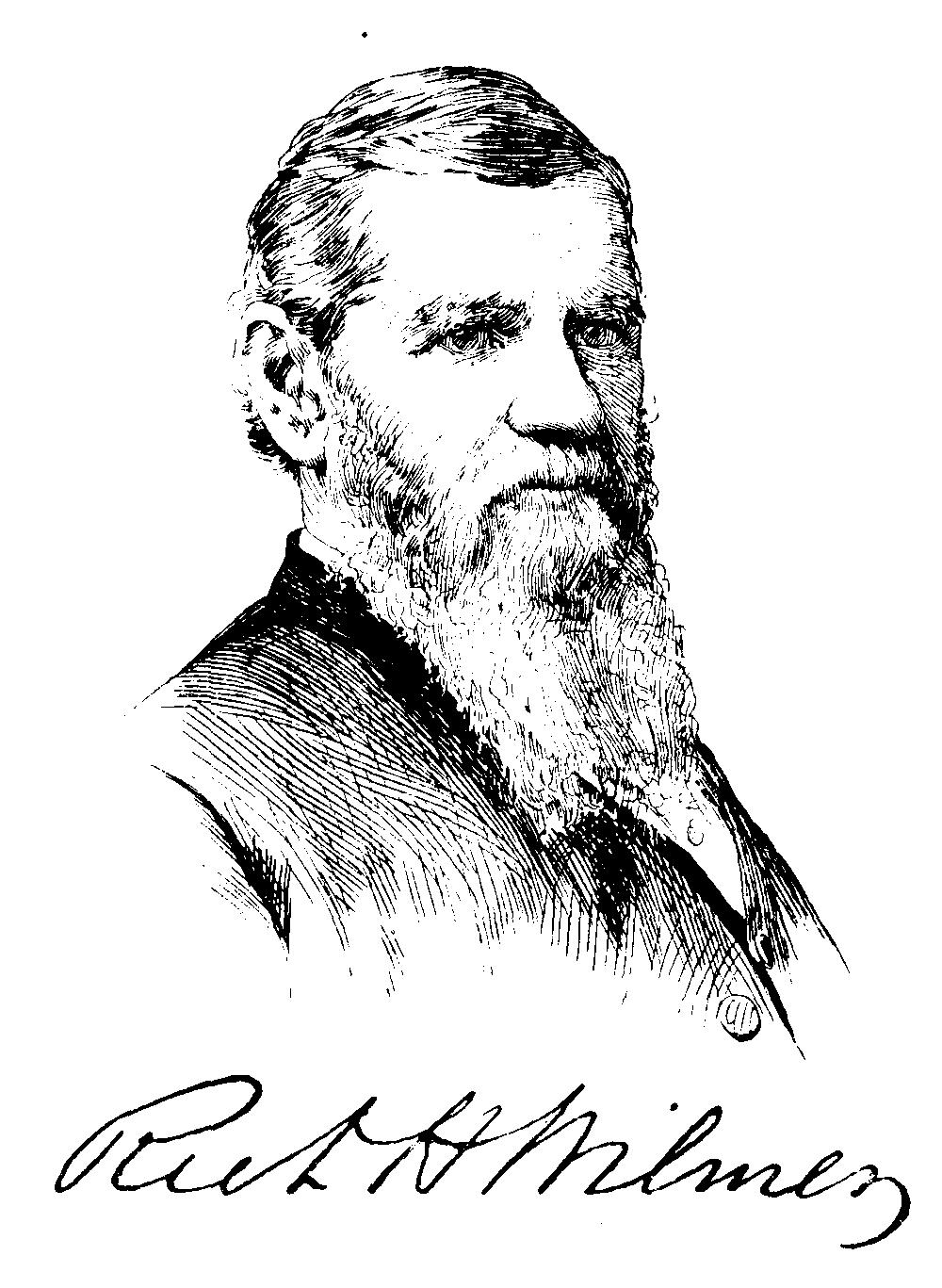
WILMER, William Holland, clergyman, born in Kent county, Maryland, 29 October, 1782 ; died in Williamsburg, Virginia, 24 July, 1827. His ancestors were early settlers of Maryland, and his uncle, James J. Wilmer, a clergyman of the Episcopal church, was secretary of the first meeting of the clergy of the United States in 1783. On his motion the "Church of England in the colonies " adopted the name of the Protestant Episcopal church. William was educated at Washington college in Kent county, and was for some time occupied in mercantile pursuits. He was admitted to orders in 1808 by Bishop Claggett, and was rector of Chester parish, Maryland, in 1808-'12, and of St. Paul's, Alexandria, Virginia, in 1812-'22. He was elected rector of St. John's, Washington city, in 1816, but declined. In 1819 he began the publication of the "Washington Theological Repertory," and he continued in connection with it until 1826. During his pastorate in Alexandria he built the present St. Paul's church, was an originator of the Education society of the District of Columbia, and its president for several years, aiding in preparing for orders the first graduates of the Virginia Protestant Episcopal seminary, of which he was a founder. When it was removed from Fairfax Court-House to Alexandria in 1823, he was appointed professor of systematic theology, ecclesiastical history, and church polity, and he was chosen assistant rector of the Monumental church, Richmond, Virginia, in 1826, but declined. The same year he became president of William and Mary college, and rector of the church in Williamsburg, which posts he held till his death. Dr. Wilmer was very active and efficient in trying to resuscitate the Episcopal church in Virginia, and used his pen freely and effectually. He was a delegate to general conventions in '1821-'6, and president of the house of clerical and lay deputies. he received the degree of D. D. from Brown in 1820. He published numerous sermons on special occasions (1813-'20); many able articles in the " Theological Repertory" (1819-'26); "Episcopal Manual " (1815); and " Controversy with Baxter, a Jesuit Priest" (1818).--His son, Richard Hooker, P. E. bishop, born in Alexandria, Virginia, 15 March, 1816, was graduated at Yale in 1836, and at the Theological seminary of Virginia in 1839, was ordained in the Monumental church, Richmond, Virginia, on Easter-day, 18411, and was rector of numerous churches, chiefly in Virginia, till 1864, when he was consecrated bishop of Alabama in St. Paul's church, Richmond, Virginia, 6 March, 1862 He received the decree of D. D. from William and Mary college, Virginia, in 1850, and that of LL. D. from the University of Oxford, England, in 1867, and from the University of Alabama in 1880. At the close of the civil war Bishop Wilmer recommended to the clergy of his diocese the omission of the prayer "for the president and all in civil authority," on the ground that only military government existed in Alabama, whereupon General George H. Thomas suspended him and his clergy from their functions; but the order was afterward set aside by President Johnson. He is the author of "The Recent Past, from a Southern Standpoint: Reminiscences of a Grandfather" (New York, 1887). --William Holland's nephew, Joseph Pere Bell, P. E. bishop, born in Kent county, Maryland, 11 February, 1812; died in New Orleans, Louisiana, 2 December, 1878, was educated at Kenyon college, and the Protestant Episcopal theological seminary, Alexandria, Virginia. He was ordered deacon in July, 1834, and ordained priest in May, 1838, and, after serving for a few months as chaplain at the University of Virginia, was appointed in 1839 a chaplain in the United States army. He resigned his commission in 1843, was in charge successively of Hungar's parish, Northampton County, and St, . Paul's parish, Goochland County, Virginia, became rector of St. Mark's church, Philadelphia, in 1848, continuing there till the beginning of the civil war, when he resigned, and settled on his plantation in Albemarle county, Virginia. He went to England in 1863 to purchase Bibles for the Confederate army, was captured on his return voyage, and for a short time confined in the old Capitol prison, Washington, D.C. He became bishop of Louisiana in 1866. The diocese at that time was in a disorganized condition, but he devoted himself with great energy to reconstructing churches that had been burned, and supplying vacant pulpits, and was successful in restoring the affairs of the diocese to a prosperous condition. Bishop Wilmer was popularly classed with the high church party, he was noted as an eloquent speaker, and a popular pulpit orator.
Unauthorized Site:
This site and its contents are not affiliated, connected,
associated with or authorized by the individual, family,
friends, or trademarked entities utilizing any part or
the subject's entire name. Any official or affiliated
sites that are related to this subject will be hyper
linked below upon submission
and Evisum, Inc. review.
Please join us in our mission to incorporate The Congressional Evolution of the United States of America discovery-based curriculum into the classroom of every primary and secondary school in the United States of America by July 2, 2026, the nation’s 250th birthday. , the United States of America: We The
People. Click Here