Appleton's Cyclopedia of American Biography, edited by James
Grant Wilson, John Fiske and Stanley L. Klos. Six volumes, New York: D. Appleton
and Company, 1887-1889 and 1999. Virtualology.com warns that these 19th Century
biographies contain errors and bias. We rely on volunteers to edit the historic
biographies on a continual basis. If you would like to edit this biographyplease
submit a rewritten biography in text form.
If acceptable, the new biography will be published above the 19th Century
Appleton's Cyclopedia Biography citing the volunteer editor
Virtual American Biographies
Over 30,000 personalities
with thousands of 19th Century illustrations, signatures, and exceptional life
stories. Virtualology.com
welcomes editing and additions to the
biographies. To become this site's editor or a contributor
Click Here
or e-mail Virtualology here.
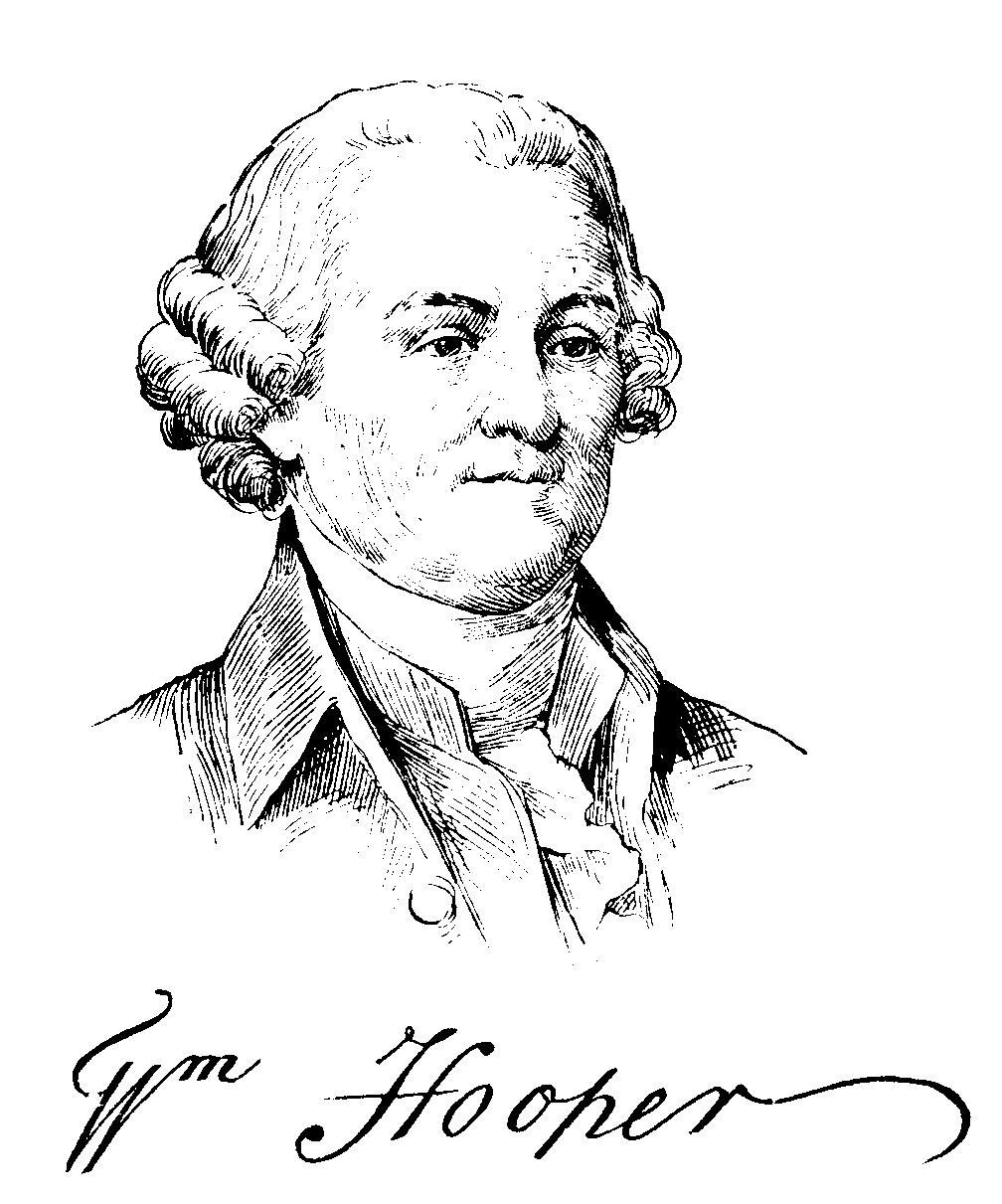
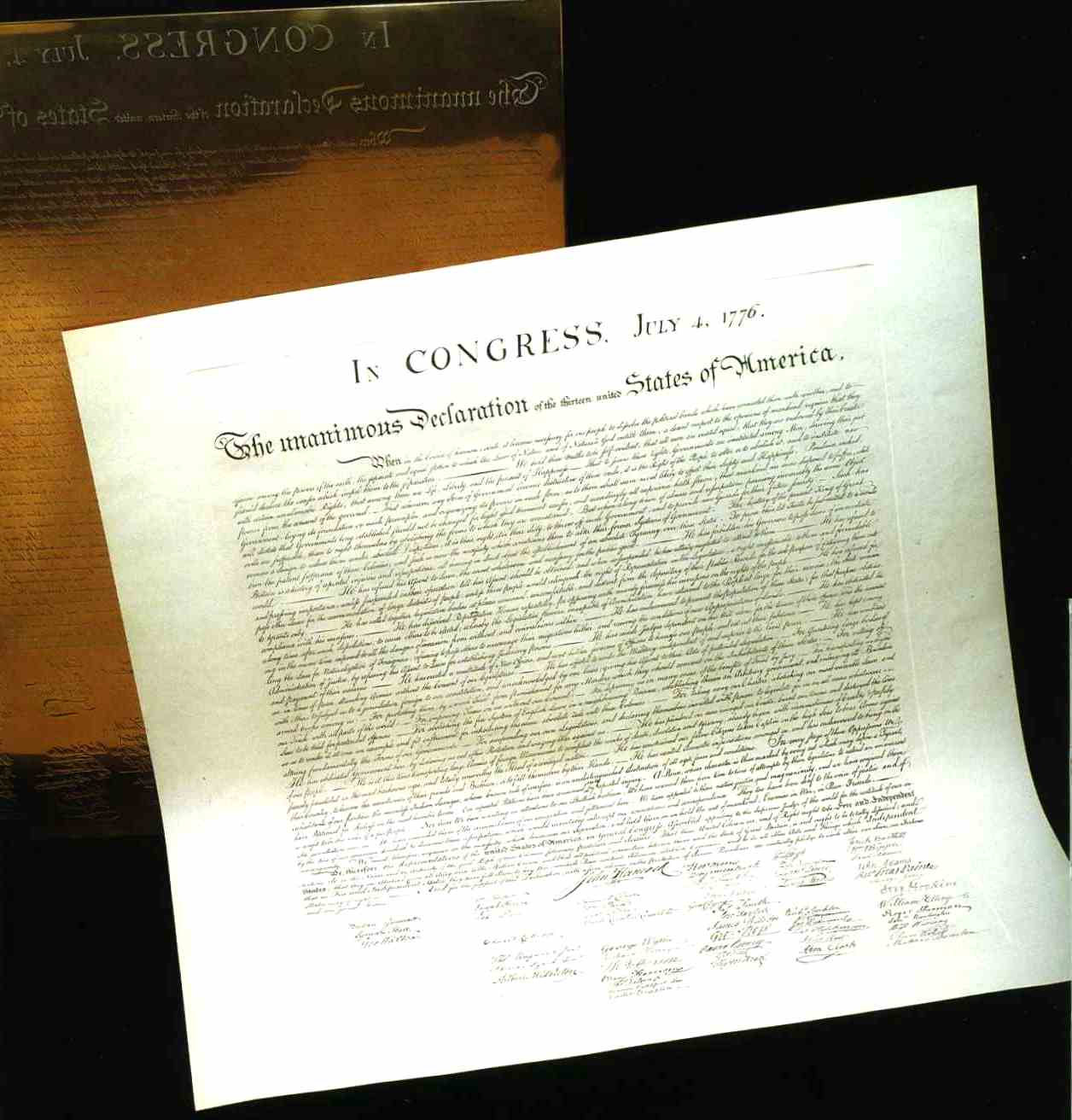
H00PER, William, clergyman, born near Kelso, Scotland, in 1702; died in Boston, Massachusetts, 14 April, 1767. He was graduated at Edinburgh university, and came to New England a short time before he was appointed pastor of the West Congregational church in Boston, Massachusetts, which charge he held from 18 May, 1737, till 19 November, 1746. He then became an Episcopalian, and went to England to receive orders. On his return in 1747 he was appointed rector of Trinity church, Boston, which post he occupied till his death. He published several sermons, including one with the title "The Apostles neither impostors nor Enthusiasts" (1742).--His son, William, signer of the Declaration of Independence, born in Boston, Massachusetts, 17 June, 1742; died in Hillsborough, North Carolina, in October, 1790, was graduated at Harvard in 1760. He studied law under James Otis, and in 1767 settled in Wilmington, North Carolina He soon attained a high legal reputation, held many important public offices, and was noted for his social qualities and hospitality. In 1770 he took an active part in behalf of the government against the insurgents that were known as "regulators," a body composed of the lowest class, who finally attempted to seize the government. By William Hooper's advice the militia of the province were called out, and after a severe battle succeeded in quelling the rioters, who numbered about 3,000. Hooper represented Wilmington in the general assembly of 1773, in which he signalized himself by his opposition to the arbitrary measures of the crown, and published a series of successful essays under the signature of "Hampden," opposing one of the government's bills. He was elected to the Continental congress of 1774, and placed on two important committees, that to draw up a statement of colonial rights, and that to examine and report the statutes affecting trade and manufactures. He was again elected to congress in 1775, was appointed chairman of a committee to report an address to the inhabitants of Jamaica, and served on various important committees. In January, 1776, he was associated with Franklin and Livingston on the committee that recommended the erection of a monument to General Montgomery. During the spring of 1776 he was speaker of the conventions of Hillsborough and Halifax, North Carolina, and wrote an eloquent address to the British people. After signing the Declaration of Independence on 4 July, 1776, and serving on the committees for regulating the post office, the treasury, secret correspondence, appeals from the admiralty courts, and the laws relating to captures, he was again elected to congress, but resigned his seat on account of the embarrassed condition of his private affairs. He resided at his country seat at Masonboro sound, about eight miles from Wilmington, until he was compelled to seek safety in flight, owing to the occupation of that place by the British. After the evacuation in November, 1781, he returned, but shortly afterward removed to Hillsboro. In 1786 he was appointed by congress one of the judges of a special commission, to settle a boundary dispute between New York and Massachusetts. He also filled public offices in the state until he retired from active life in 1787.
Lyman Hall - Signer of the Declartion of Independence Biography by
Appleton's edited by Stanley L. Klos
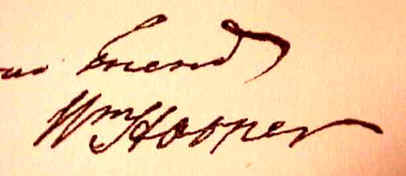
William Hooper
Signer of the Declaration of Independence
WILLIAM
HOOPER was born on June 28, 1742 in Boston.His
father, a Scotch Congregationalist minister, wanted him to be a man of the
cloth.However, Hooper chose law.He
graduated from Harvard College in 1760, then worked in the law offices of James
Otis, an aggressive opponent of British rule and taxation.
Hooper
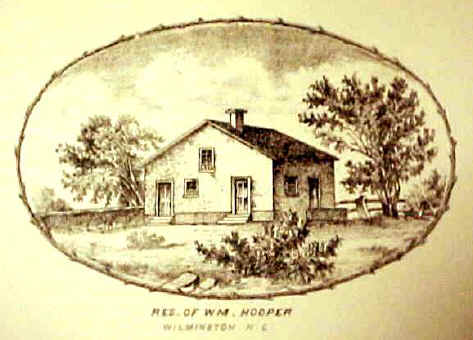
moved to Wilmington, North Carolina after he passed his bar examination.He
married Anne Clark, her family a member of the gentry of the Cape Fear district,
and became a successful lawyer.They
eventually had three children, two sons and a daughter.He
was so popular that in 1770 he was appointed deputy attorney general for the
Colony of North Carolina.In 1773 he
was elected to the colonial legislature, followed in 1774 by his election to the
Continental congress.
Hooper was of medium height, but his
appearance was delicate and he was slender. He was intelligent, polite and
engaging, although towards those that he didn't know well, he was somewhat
reserved.He was distinguished for
his powers of conversation and as a lawyer he was distinguished for his
professional knowledge, and unflagging enthusiasm in respect to business.Towards
his fellow lawyers he maintained a high and honorable course of conduct and
particularly towards the younger members of the bar.As
a politician, he was characterized for judgment, ardor, and constancy.In
times of the greatest political difficulty and danger, he was calm, but
resolute. He never desponded but trusted the justice of his country's cause, he
had an unshaken confidence that heaven would protect and deliver her.
By
the time he arrived at the Second Continental congress, Hooper was dead set
against British rule.He continued
to condemn Britain's hold over the colonies.Interestingly,
his father supported the King and was unhappy with his son's political belief in
total freedom for Americans.Hooper
did not advocate violence, but he could see that compromise with Britain was not
possible.
In January 1776, Hooper was
appointed, with Franklin and Livingston, to a committee to develop a method of
honoring the memory of General Montgomery, who had recently fallen at Quebec.
This committee recommended the erection of a monument, which, while it expressed
the respect and affection of the colonies, would record the patriotic zeal and
fidelity, enterprise and perseverance of General Montgomery.In
observance with the recommendation of the committee, a monument was erected by
congress in the city of New York.
In the spring of 1776, Hooper's
private business so greatly needed his attention in North Carolina, that he did
not attend congress. He returned in time to cast his vote for and sign the
Declaration of Independence. On December 20, 1776, he was elected a
delegate to congress for the third time.However,
the situation at home in North Carolina made it impossible for him to spend more
time away in Philadelphia.Accordingly,
in February 1777, he resigned his seat in congress.
Hooper continued his law practice
and remained for a while on the North Carolina state legislature.During
the Revolutionary War, the British tried, but were unable to capture Hooper or
harm his family.They did in
vindictiveness, however, torch his estate and leave his property completely
devastated when they captured Wilmington.Hooper
moved to Hillsboro where he remained to some extent in public life as a state
legislator, but never regained his early prominence.Like
many other patriots, he did not allow himself to wallow in his misery. While to
others his prospects appeared doubtful, he would always point to some brighter
spots on the canvass, and he focused on these.
In 1787 Hooper's health became
considerably impaired. He gradually relaxed from public and professional
efforts, and a short time later he retired, which was something he had always
wanted to do.Hooper died in
Hillsboro, North Carolina on October 14, 1790 at the age of forty-eight.
Unauthorized Site:
This site and its contents are not affiliated, connected,
associated with or authorized by the individual, family,
friends, or trademarked entities utilizing any part or
the subject's entire name. Any official or affiliated
sites that are related to this subject will be hyper
linked below upon submission
and Evisum, Inc. review.
Please join us in our mission to incorporate The Congressional Evolution of the United States of America discovery-based curriculum into the classroom of every primary and secondary school in the United States of America by July 2, 2026, the nation’s 250th birthday. , the United States of America: We The
People. Click Here